


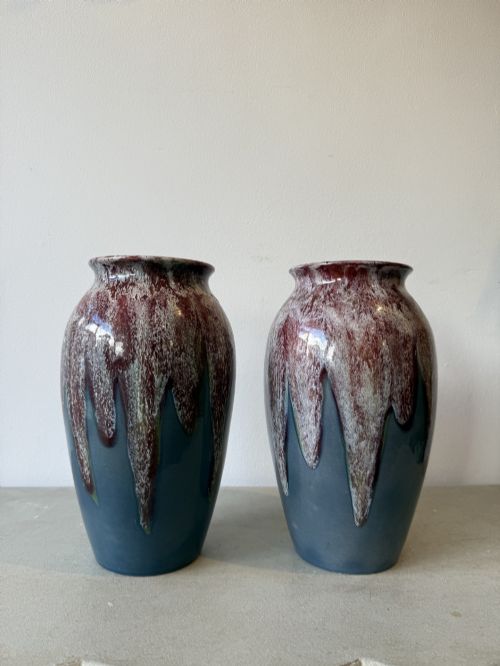


Vintage Stoneware Vase Pair
These vintage stoneware vase pair selections bring robust form and patterned surface detail into a room, offering matched symmetry for a mantelpiece or side table.
Vintage Stoneware Vase Pair
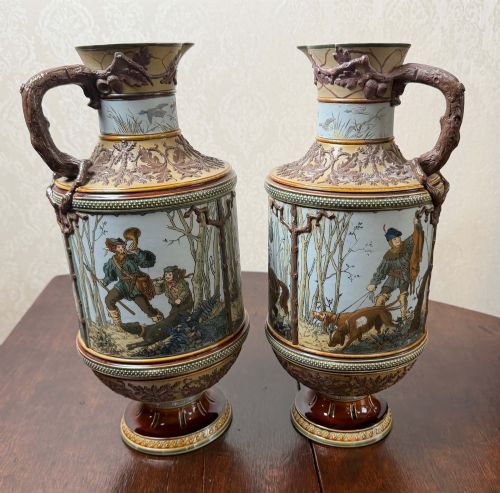
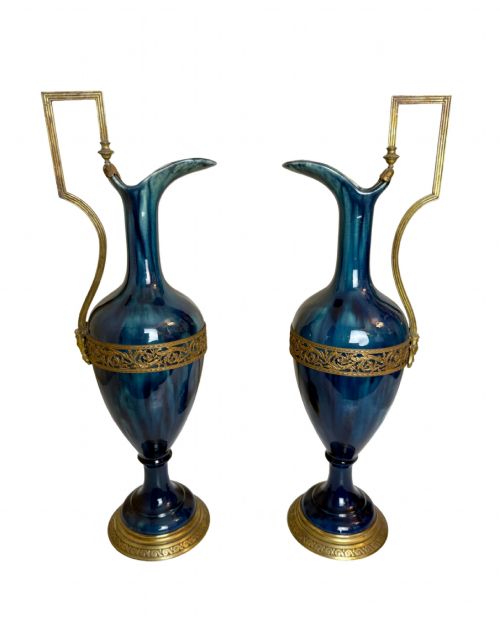
Most examples found in this range originate from British potteries like Royal Doulton, alongside continental European workshops and Japanese kilns. Forms vary from simple shaped vases to ewers and decorative urns finished with glazes, enamel, or applied textures.
Materials and methods
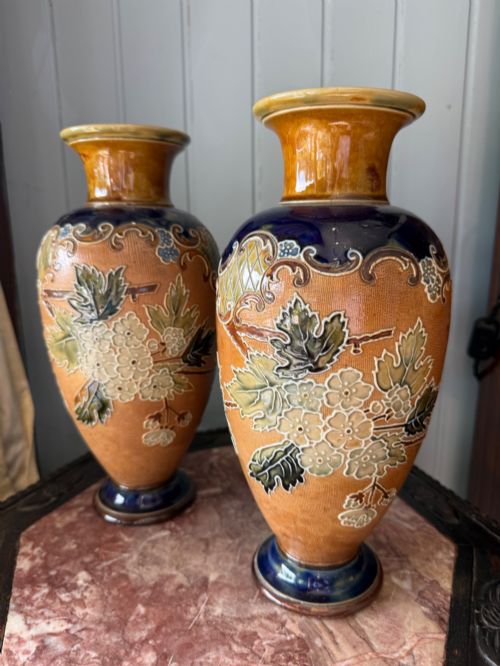
The pieces rely on dense stoneware and red clay bodies fired at high temperatures to achieve durability. Workshops applied specialised glazes, enamel decorations, and surface patterns such as Slater's Patent lacework textures directly onto the clay.
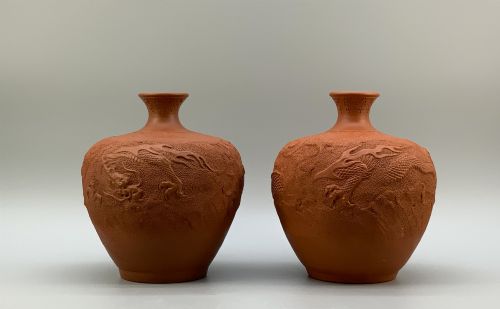
Makers shaped the vessels on the potter's wheel or used moulds for intricate relief work, incorporating dragon and phoenix motifs or floral enamel detailing before a final kiln firing.
Vintage Stoneware Vase Pair Retail Price Guide 2026
Typical asking prices for vintage stoneware vase pair among the pieces listed under this phrase on Sellingantiques today, from the lower quarter to the upper quarter. They describe what is for sale here now, not the wider market.
Keep an eye out for dragons and phoenixes keeping watch over your mantelpiece from Japanese red clay surfaces.
Judging the range
Quality separates standard production items from distinguished studio pieces through the crispness of applied ornament and the depth of the glaze. Hand-painted enamel floral decor and named artistic output command greater attention than plain commercial production.
The precision of the matching within a pair determines visual balance. Subtle variations in height, symmetry, or glaze coverage reflect the individual hand of the maker and alter the overall presence of the set.
Royal Doulton·Royal Doulton Lambeth·Mettlach Pottery·Tokoname
The Vintage Stoneware Vase Pair Glossary
- Stoneware
- A robust type of pottery fired at high temperatures until the clay body becomes vitrified and impermeable to water. It provides a heavy, durable base for decorative glazes.
- Ewer
- A large jug with a wide spout and a curved handle, often produced as a decorative display piece rather than for practical use.
- Slater's Patent
- A decorative technique involving the impression of lace or woven fabric textures directly into the damp clay surface before glazing.
- Enamel
- Opaque glass-like paint applied over the fired ceramic body and heated again to fuse it permanently to the surface.
- Terracotta
- Unglazed or glazed fired red clay possessing a porous structure and a warm reddish-brown colour tone.
Vintage Stoneware Vase Pair: Frequently Asked Questions
How do I style a vintage stoneware vase pair?
Display matched pairs symmetrically on a mantelpiece, sideboard, or entrance hall table to draw the eye and anchor the room's decor.
Keep surrounding items minimal so the textured glazes and distinct forms of the vessels remain the focal point.
Can I use these vases for fresh flowers?
Many stoneware and ceramic vessels hold water safely due to their vitrified clay bodies and interior glazing.
Check the interior condition of older pieces first, as porous materials or historic repairs might make dry stems the safer choice.
How do I distinguish Arts and Crafts from Art Nouveau?
Arts and Crafts pieces emphasise sturdy construction, hand-tooled textures, and motifs drawn from traditional craftsmanship and nature. Art Nouveau examples favour flowing, asymmetrical lines, sinuous floral patterns, and organic curves.
Both styles appear frequently across the Victorian and Edwardian periods represented here.
What is the history behind Mettlach pottery?
Mettlach pottery refers to wares produced by the Villeroy & Boch factory in the German town of Mettlach during the nineteenth century. These pieces are recognised for specialised techniques like incised and coloured clay inlay work.
They represent continental European contributions alongside British and Japanese pieces in the selection.