

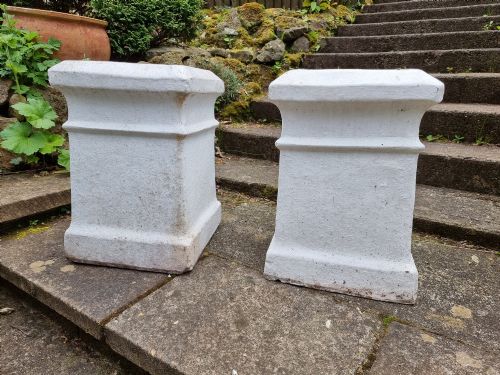
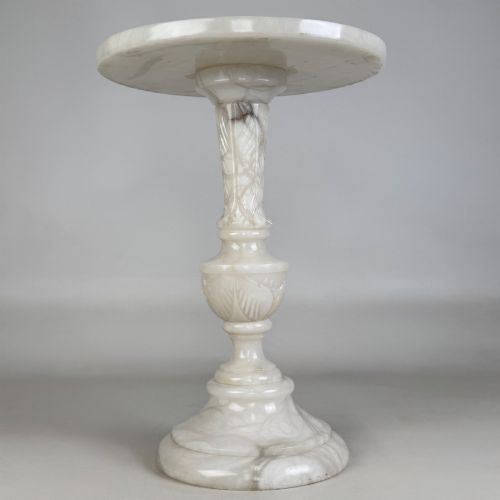


Vintage Stone Plant Stand
These vintage stone plant stands offer a solid classical presence for displaying greenery, bringing architectural weight and natural texture into a room.
Vintage Stone Plant Stand
A vintage stone plant stand serves to elevate botanical displays, utilising sturdy materials like marble, alabaster, onyx, stoneware and terracotta to support plants or decorative objects. These items range from architectural columns and garden plinths to indoor side tables and torchere pedestals.
The selections span the nineteenth century through the 1930s, encompassing Victorian, Neoclassical and Art Deco styles. Buyers will frequently encounter carved marble columns, alabaster stands and stoneware plinths among the available pieces.
How they were made
Makers shaped these stands through carving and masonry techniques applied directly to dense natural stones. Alabaster, various marbles including Arabescato, and onyx were worked into smooth cylindrical columns, multi-tiered tables and pedestals.
Stoneware and terracotta pieces relied on moulding and firing methods suited to architectural salvage and garden use. Brass components occasionally joined stone elements in 1930s designs, as seen in multi-tier plant stands.
Vintage Stone Plant Stand Retail Price Guide 2026
Typical asking prices for vintage stone plant stand among the pieces listed under this phrase on Sellingantiques today, from the lower quarter to the upper quarter. They describe what is for sale here now, not the wider market.
Listings feature pieces spanning the nineteenth century, the Victorian era, and the 1930s, utilising marble, alabaster, onyx, stoneware and terracotta.
What varies in quality
Quality rests on the selection of the stone and the crispness of the carved detail. Uniformity of veining in materials like onyx and Arabescato marble separates standard utility pieces from more striking decorative examples.
The structural integrity of the column shaft and the stability of the base determine the success of the piece. Finer examples display balanced proportions and deliberate surface finishing appropriate to their Neoclassical, Victorian or Art Deco origins.
The Vintage Stone Plant Stand Glossary
- Pedestal
- A support or base for a column, statue or plant stand. These objects elevate botanical displays to eye level.
- Torchere
- A tall stand or floor lamp, often adapted here as a solid plinth for decorative display. The term originates from stands meant to hold torches.
- Arabescato marble
- A distinctive white marble marked by bold dark grey veining. This material provides strong visual contrast in 1920s columns.
- Plinth
- A heavy slab or block acting as the base for a statue, vase or column. Stoneware and stone versions form the foundation of these stands.
Vintage Stone Plant Stand: Frequently Asked Questions
What weight can a stone plant stand hold?
These pieces are constructed from heavy natural materials such as marble, alabaster and stone, giving them inherent stability for supporting substantial pots and planters.
Buyers should still consider the base width and overall balance of the specific column or pedestal when placing heavier botanical specimens.
Are these stands suitable for outdoor use?
Suitability depends entirely on the specific material composition of the individual stand. Stoneware and terracotta pieces handle garden environments well, whereas softer stones like alabaster require indoor placement.
Checking the listed material ensures the stand matches the intended climate and location.
How do I distinguish Victorian from Art Deco stands?
Victorian pieces frequently draw on heavy Neoclassical Revival themes with traditional green marble or detailed nineteenth-century stoneware carvings. These designs emphasise classical architectural proportion and ornate mass.
Art Deco examples from the 1930s lean towards cleaner geometric lines, sometimes incorporating brass tiers alongside onyx or marble.
How should I clean a marble or alabaster stand?
Natural stone surfaces require gentle dusting with a soft cloth to preserve the finish without scratching the polished material. Moisture should be kept minimal, particularly on porous stones like alabaster.
Harsh chemical cleaners can damage the polish and alter the natural appearance of the stone.