




Vintage Stick Back Armchair
A vintage stick back armchair brings honest regional craftsmanship into a room, offering sturdy seating shaped by centuries of traditional vernacular design.
Vintage Stick Back Armchair
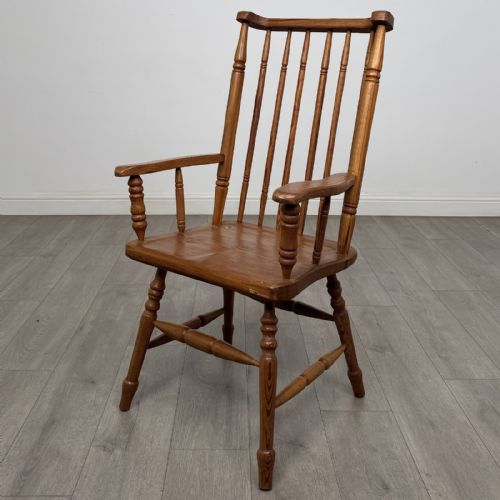
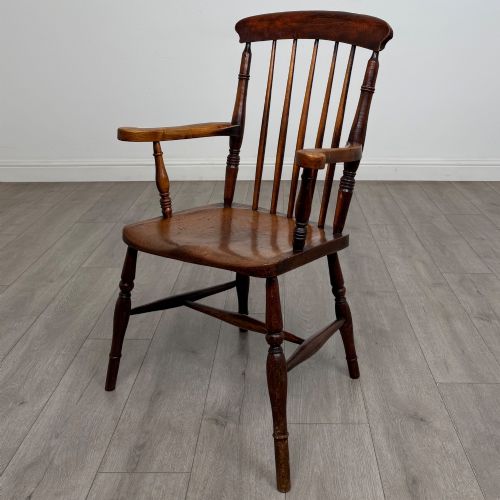
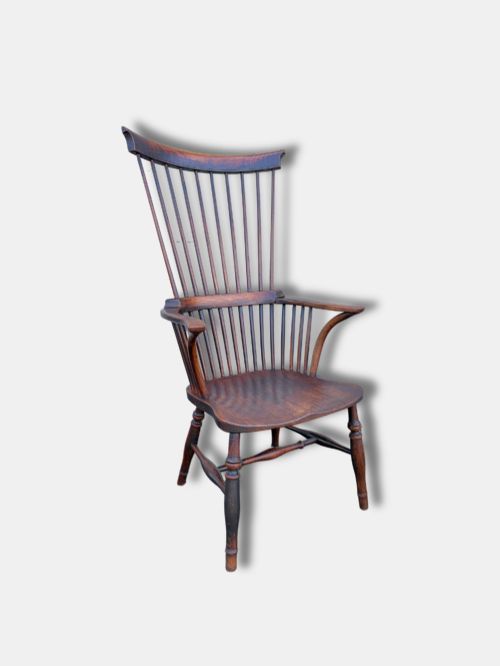
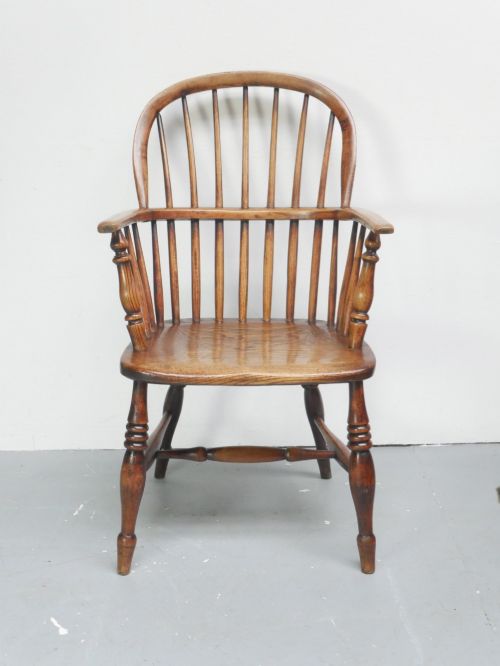
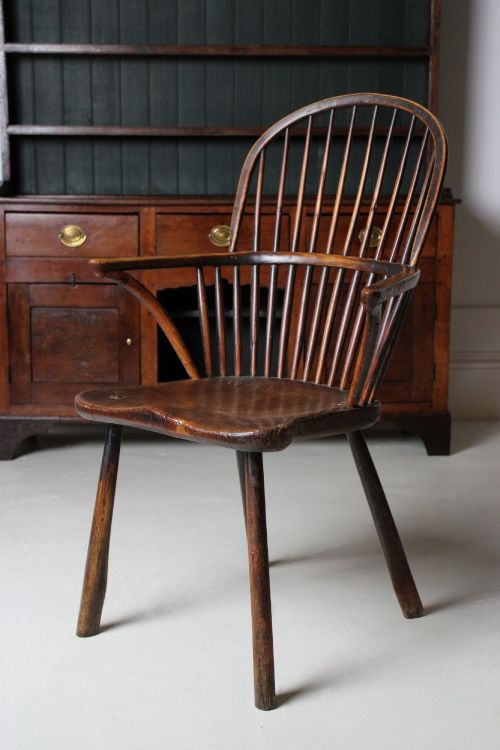
When searching for a vintage stick back armchair, expect to encounter sturdy wooden seating originating primarily from the nineteenth and eighteenth centuries. These pieces span regional British vernacular styles, including high comb backs, hoop backs, and Windsor forms suited to farmhouse or kitchen use.
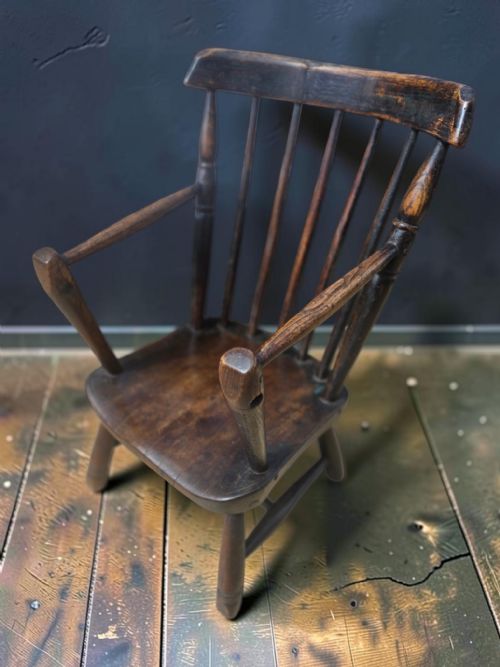
The selection ranges from full-sized adult armchairs down to small children's chairs and pairs, often reflecting specific geographical origins such as Scotland, Wales, or the Thames Valley. Makers utilised local timbers to construct robust frames featuring distinct stick backs and carved seats.
How they were made
Traditional makers built these chairs by combining contrasting timbers, frequently pairing elm seats with ash or yew for the bentwood components and spindles. This method utilised the strength of flexible woods for the stick back and hoop, while relying on denser timber for the solid saddled seat.
Surface finishes vary from plain polished hardwoods to painted schemes or simulated rosewood graining applied during the nineteenth century. Construction relied heavily on traditional joinery techniques, securing turned legs and upright sticks directly into drilled apertures within the main seat slab.
Vintage Stick Back Armchair Retail Price Guide 2026
Typical asking prices for vintage stick back armchair among the pieces listed under this phrase on Sellingantiques today, from the lower quarter to the upper quarter. They describe what is for sale here now, not the wider market.
Listings demonstrate traditional British regional styles including Thames Valley, Scottish, and Welsh variations executed in elm, ash, and yew.
What varies in quality
Quality in these vernacular chairs rests upon the harmony of the proportions and the visual character imparted by age and timber selection. Pieces featuring richly figured yew or well-turned structural elements demonstrate a higher level of regional craftsmanship than plain utility examples.
The sophistication of the comb back or hoop construction and the deep sculpting of the elm seat distinguish superior regional pieces from simpler workshop production. Original painted surfaces or patinated hardwood finishes elevate the visual integrity of an armchair significantly.
The Vintage Stick Back Armchair Glossary
- Windsor chair
- A wooden armchair characterised by a central plank seat into which the legs and backsticks are independently raked. This construction method provides notable structural resilience.
- Vernacular
- Objects designed and constructed by regional craftsmen following local traditions rather than formal academic styles. These pieces prioritise practical utility and available local materials.
- Saddled seat
- A wooden seat base carved into a hollowed, concave shape for comfort. Elm was frequently chosen for this component due to its interlocking grain.
- Spindle
- A slender turned wooden rod forming part of the stick back. Spindles connect the seat to the top rail or arm bow.
Vintage Stick Back Armchair: Frequently Asked Questions
What is a stick back armchair?
A stick back armchair is a traditional wooden seat where turned spindles are tenoned directly into a solid wooden base. These chairs evolved through regional vernacular traditions across Britain.
They serve as practical seating with robust construction, often utilising bentwood parts for the back rails and arm supports.
How do I date an old Windsor chair?
Dating relies on examining the turning style of the legs, the species of timber used, and the method of seat construction. Earlier pieces often display thicker proportions and regional idiosyncrasies.
Changes in tool marks and the wear patterns on the elm seat also help indicate the period of manufacture.
Where were these chairs made?
These chairs were produced in local workshops and regional centres across England, Wales, and Scotland. Different areas developed distinct structural characteristics and local design preferences.
Craftmakers utilised whatever native hardwoods grew abundantly in their specific locality, such as yew in the Thames Valley or ash and elm elsewhere.
Can I use a child's antique chair daily?
Smaller children's armchairs were built with the same sturdy timber construction as adult versions. They function well as decorative display pieces or occasional low seating.
Care should be taken with historical joints, as centuries of drying timber can affect the original stability of smaller frames.