
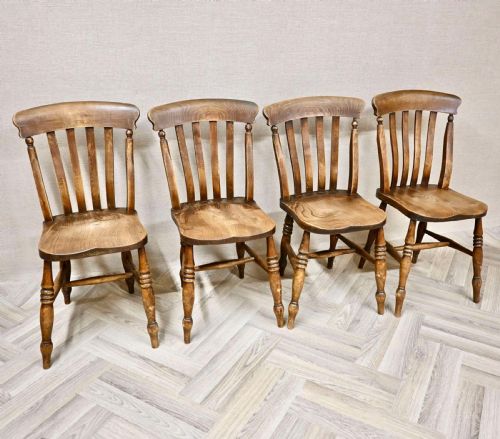
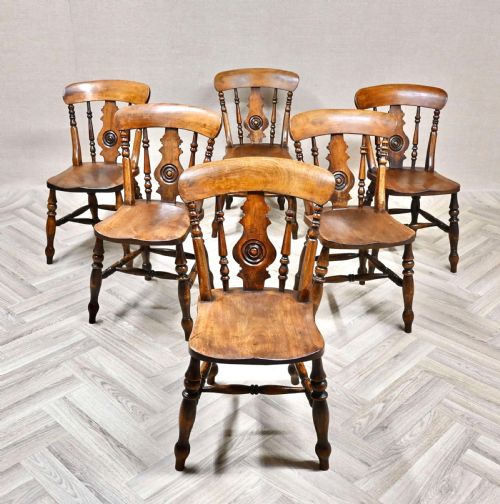
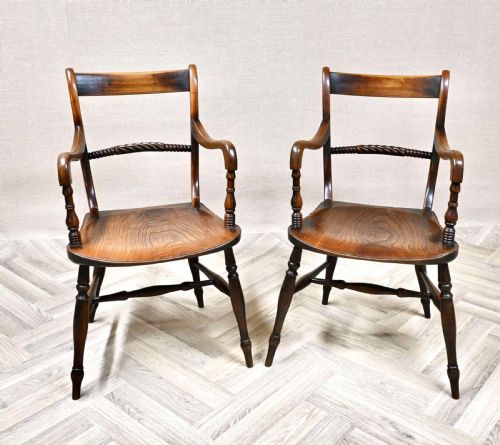
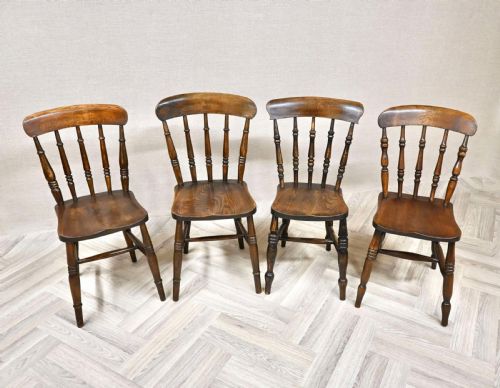

Turned Leg Country Chair
These turned leg country chair examples bring enduring vernacular character to domestic spaces.
Turned Leg Country Chair
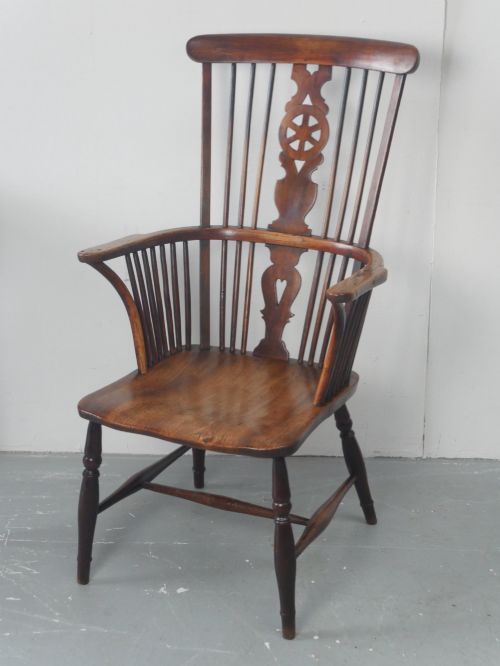
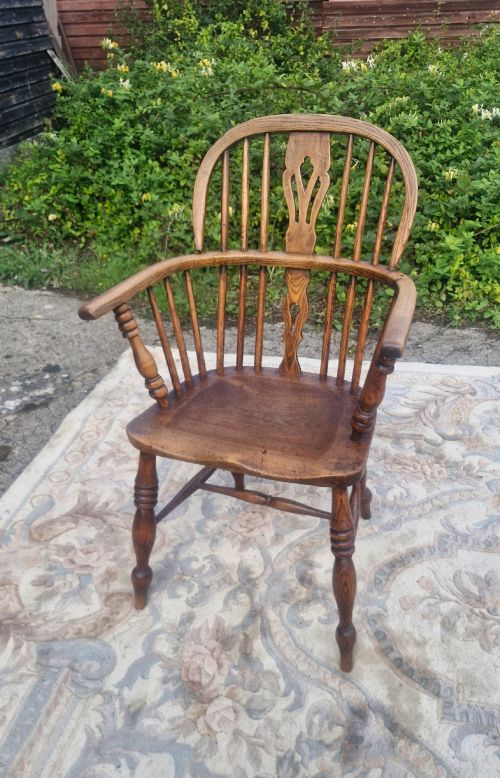
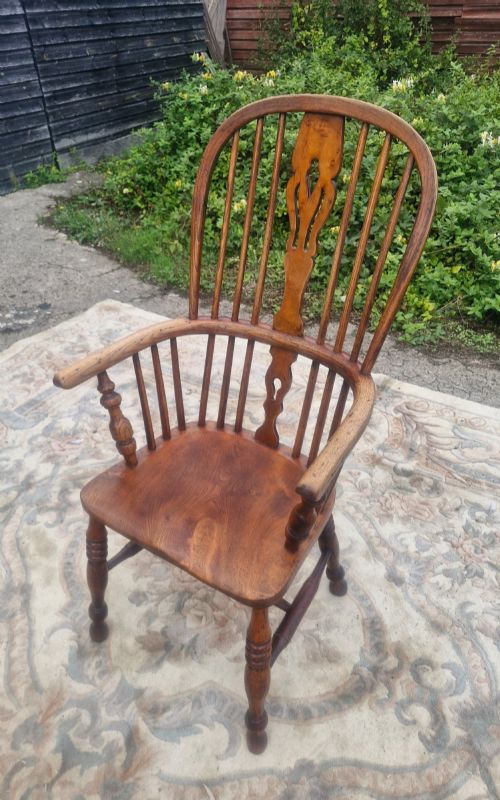
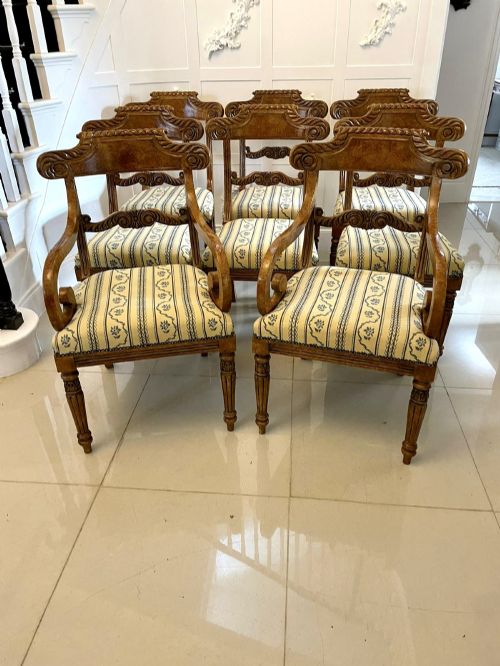
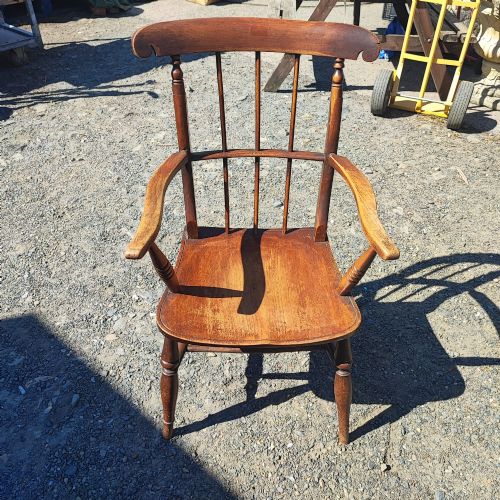
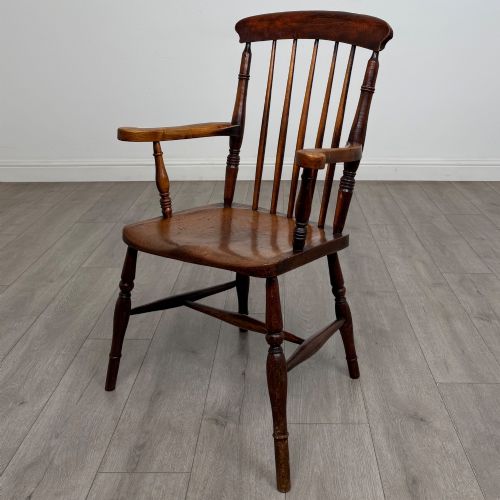
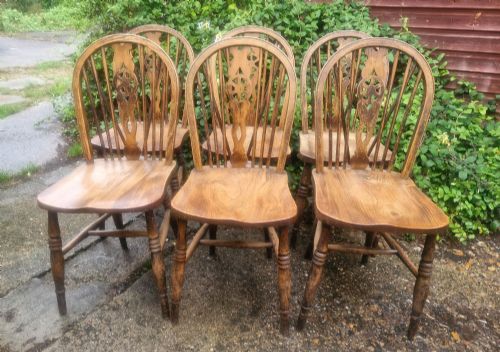
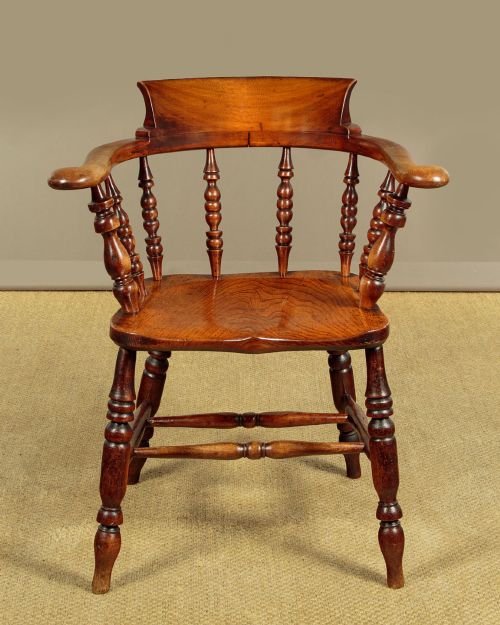
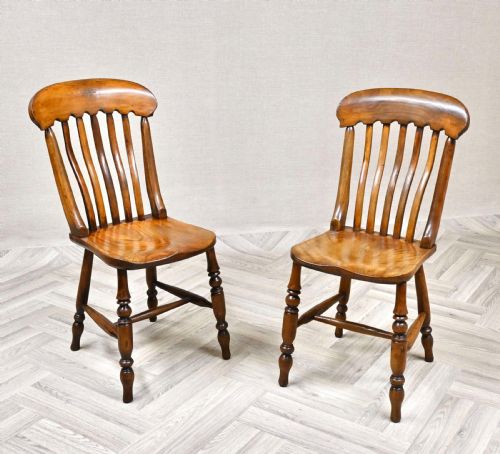
A turned leg country chair is a vernacular seating form rooted in domestic traditions, often appearing as Windsor designs, stick backs, and kitchen chairs. These pieces emerge primarily from the nineteenth century, including Victorian and Regency eras, as well as Edwardian and early twentieth-century periods.
How they were made
Maker-joiners utilised mixed timbers such as elm for solid seats, paired with ash, beech, or oak for spindles, backs, and turned legs. This combination provided structural resilience where it mattered most, balancing rigid supports with comfortable seating contours.
Turned components were shaped on lathes to create uniform spindles and legs, then assembled using traditional pegged and wedged joints. Some examples incorporate rush seating, calico upholstery, or leather applications over wooden frames.
Listings feature items built from elm, ash, beech, oak, mahogany, and brass across the nineteenth and early twentieth centuries.
What varies in quality
Quality rests in the harmony of the timber selection and the integrity of the original turned components. Chairs built with contrasting woods like yew or well-figured elm seat panels alongside matching ash spindles demonstrate superior craftsmanship.
Proportion and stance separate standard utility seating from finer vernacular examples. A balanced rake to the back and crisp definition in the woodturnings indicate higher skill from the workshop.
Howard and Sons·J Spencer·Gillows·SF Cullen
The Turned Leg Country Chair Glossary
- Windsor chair
- A wooden chair built with a heavy solid timber seat into which the legs and back spindles are directly inserted. This structural method defines much of the vernacular seating seen here.
- Stick back
- A chair construction utilising plain turned spindles fitted into a bentwood bow or wooden crest rail. It represents a simpler form of vernacular framing.
- Smoker's bow
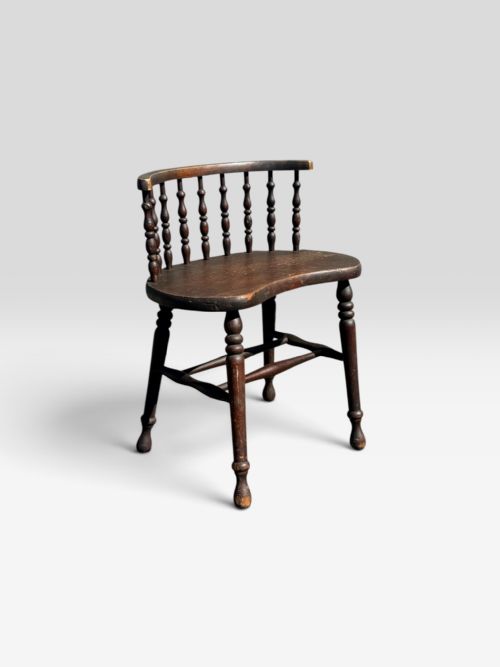
- A low-backed Windsor armchair featuring a continuous curved arm rail supported by short spindles. These comfortable seats were common in domestic parlours and smoking rooms.
- Elm seat
- A solid wooden seat carved from elm, chosen for its interlocking grain that prevents splitting under heavy use. It forms the central anchor for turned underframes.
- Patina
- The surface sheen and colour developed over decades of handling and wax polishing. This quality marks genuine age and domestic usage.
Turned Leg Country Chair: Frequently Asked Questions
What is a turned leg country chair?
A turned leg country chair is a traditional wooden seat featuring legs shaped on a lathe, commonly associated with farmhouse and vernacular furniture.
These pieces span various nineteenth and early twentieth-century styles, including Windsor designs and kitchen armchairs built for everyday domestic utility.
How were these chairs used?
These chairs served primary seating roles around kitchen tables, in country house parlours, and beside hearths. Their sturdy wooden construction handled daily household demands.
Many styles, such as smoker's bows and low-back armchairs, provided comfortable support for relaxation or dining.
How do I live with these chairs?
Living with these pieces involves placing them in dining spaces, hallways, or living rooms where their wooden textures can complement modern or traditional interiors.
Routine maintenance requires little more than occasional wax polishing to nourish the timber and preserve the historic surface.
How do I tell periods apart?
Periods are identified through construction methods, timber choices, and design shifts from Regency elegance to Victorian robustness. Early nineteenth-century examples often display tighter turning and dense elm seats.
Later Victorian and Edwardian pieces frequently adopt broader proportions and standardised factory or workshop production techniques.