

Vintage Sterling Flatware
Vintage sterling flatware brings together knives, forks and serving utensils in silver, spanning Georgian to Art Deco periods.
Vintage Sterling Flatware
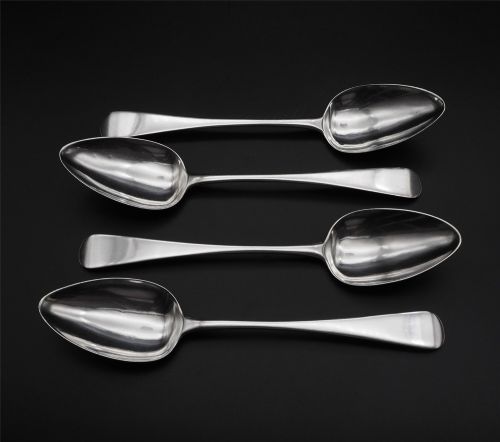
Vintage sterling flatware comprises individual cutlery and serving utensils produced in solid silver across periods including Georgian, Victorian, Edwardian and the 1920s.
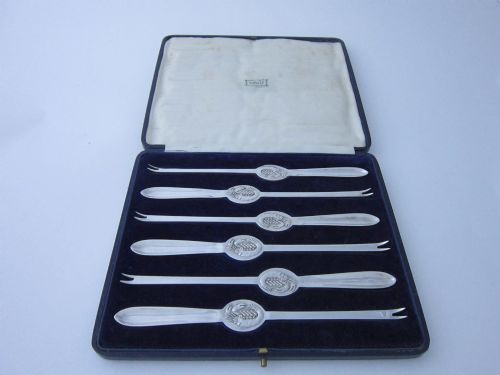
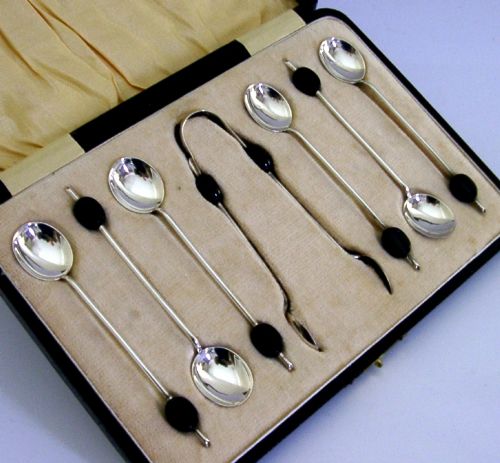
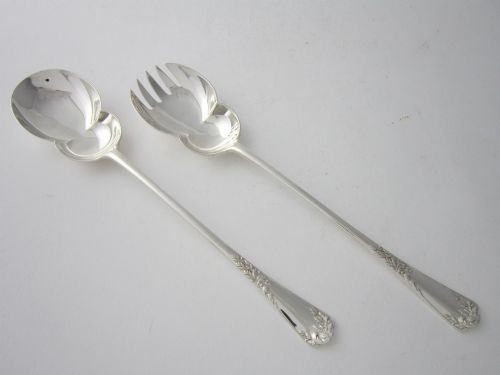
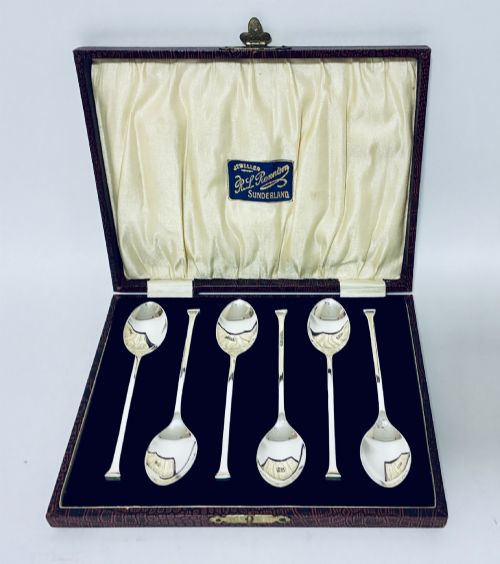
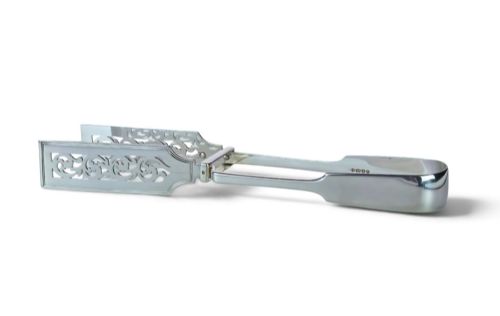
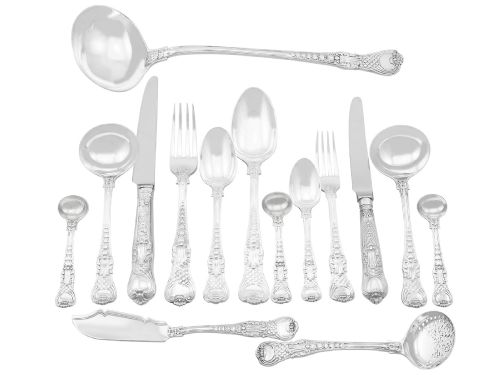
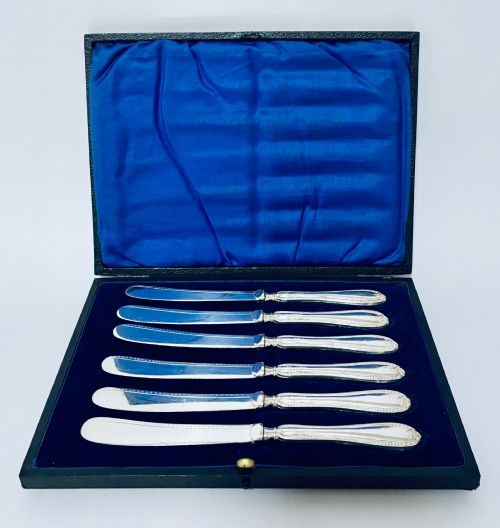
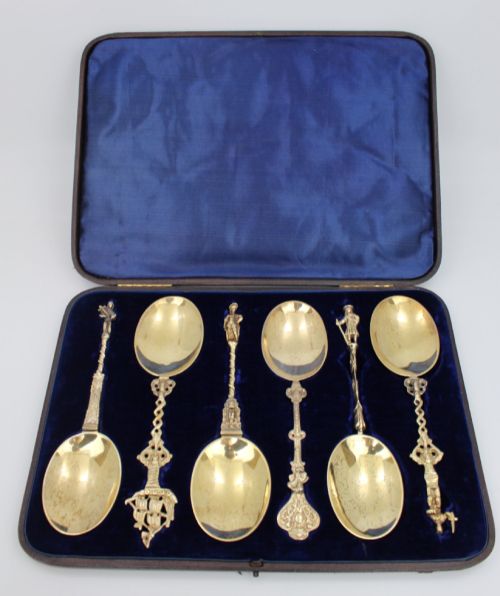
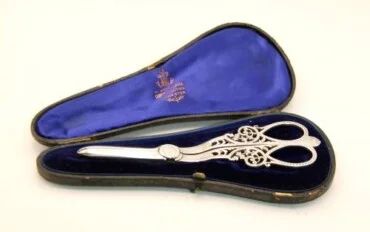
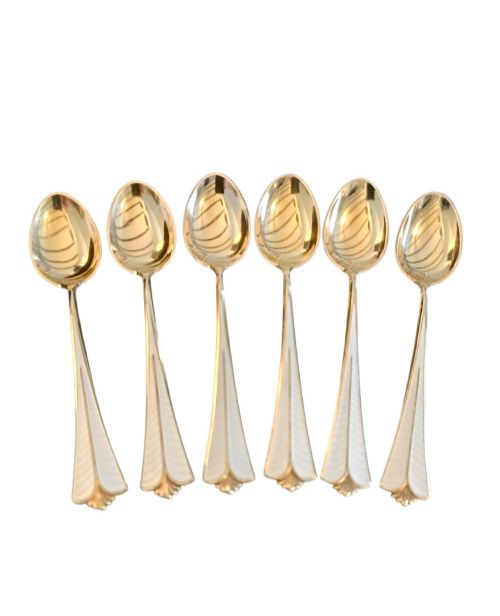
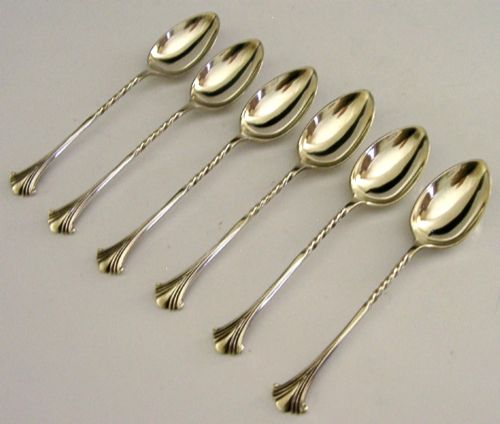
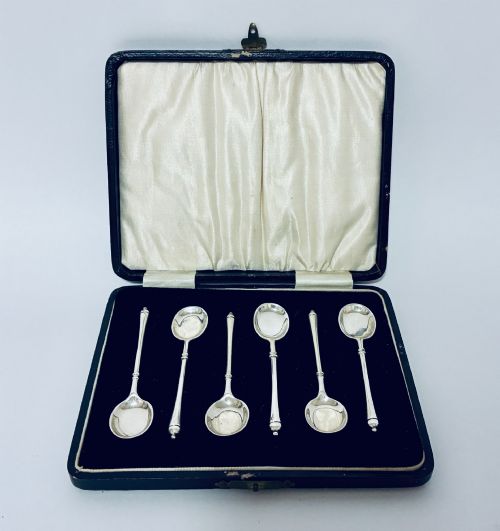
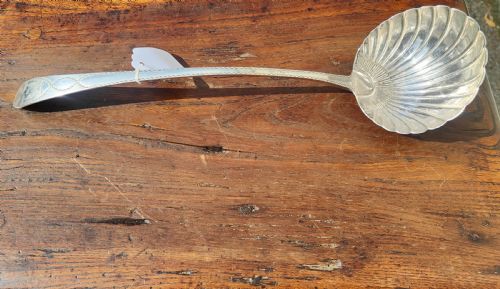
Cased sets of teaspoons, coffee spoons, butter knives and fruit serving knives appear frequently alongside individual ladles, grape scissors and asparagus tongs.
The selection ranges from complete cased canteens for thirty persons down to smaller sets of six, reflecting formal dining traditions of past centuries.
How they were made
Makers shaped sterling silver and silver-gilt through casting, hammering and piercing, sometimes incorporating steel blades, mother of pearl, agate, velvet, silk and leatherette within fitted presentation cases.
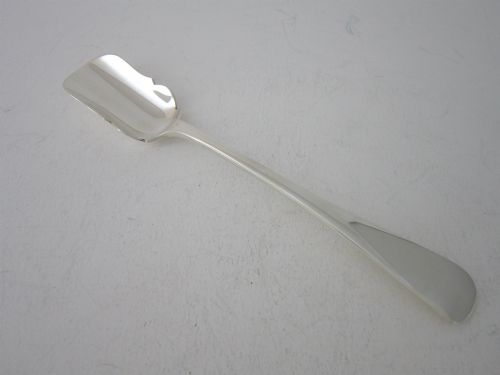
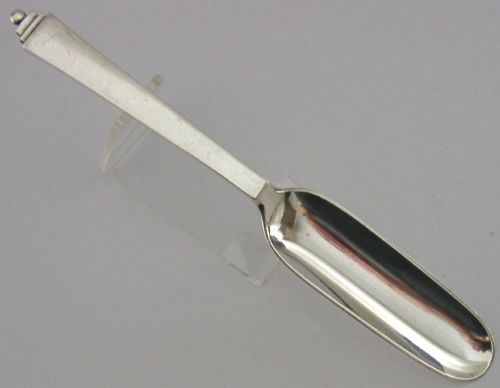
Specialist implements such as lobster picks, marrow scoops and stilton scoops required precise metalwork to handle specific foods during formal meals.
Vintage Sterling Flatware Retail Price Guide 2026
Typical asking prices for vintage sterling flatware among the pieces listed under this phrase on Sellingantiques today, from the lower quarter to the upper quarter. They describe what is for sale here now, not the wider market.
What varies in quality
The distinction between standard utensils and finer work rests on the crispness of cast decoration, the weight of the metal and the integrity of any associated fitted case.
Pieces bearing identifiable hallmarks from notable silversmiths command attention through superior proportion, balance and decorative detail.
Elizabeth Eaton·David Andersen·Georg Jensen·Deakin & Francis·Tiffany and Company·Hamilton and Inches·Jonathan Hayne·Suckling Ltd
The Vintage Sterling Flatware Glossary
- Sterling silver
- A silver alloy containing 92.5 percent pure silver and 7.5 percent other metals, usually copper, chosen for durability in tableware.
- Silver-gilt
- Sterling silver that has been coated with a thin layer of gold, frequently found on the bowls of apostle spoons and pastry servers.
- Marrow scoop
- A narrow, trough-like utensil designed in the Georgian and nineteenth-century periods for extracting bone marrow.
- Canteen
- A fitted box or cabinet designed to store a complete set of cutlery securely.
- Apostle spoon
- A spoon featuring the figure of an apostle cast or engraved upon the handle terminal, popular in commemorative and cased sets.
Vintage Sterling Flatware: Frequently Asked Questions
What is included in a sterling flatware set?
Sets vary widely from small groupings of six teaspoons or butter knives to extensive canteens containing cutlery for thirty persons. They frequently include specialised serving items like ladles, sugar tongs and servers.
Larger services encompass complete dining implements, while smaller boxed sets were often intended for specific courses or given as christening gifts.
How do I identify the period of silver cutlery?
Hallmarks stamped into the metal provide the primary evidence for dating, incorporating city marks, standard marks and date letters. Stylistic indicators like Art Deco geometric patterns or Georgian engraving also point to specific eras.
Examining the construction methods and the style of any accompanying presentation case further helps narrow down the decade of manufacture.
How were specialised pieces like marrow scoops used?
Marrow scoops were utilised during formal Georgian and nineteenth-century dinners to extract edible marrow from bones. Their double-ended design featured a larger trough for long bones and a narrower scoop for smaller sections.
Other specialised items, such as asparagus tongs and lobster picks, served equally specific roles in nineteenth and early twentieth-century dining rituals.
How should I store cased silver flatware?
Keeping pieces within their original fitted cases lined with velvet, silk or leatherette helps protect the silver from excessive tarnishing and physical damage. Storing them in a dry environment prevents deterioration of both the metal and the lining materials.
Regular, gentle use also prevents tarnish accumulation compared to long-term inactive storage.