



Vintage Stepped Mirror
These vintage stepped mirror designs offer geometric clarity and angled planes, bringing striking period reflection to a room.
Vintage Stepped Mirror
A vintage stepped mirror displays the layered, receding geometric tiers characteristic of the Art Deco period, though related pieces span from the late nineteenth century to the twentieth century. These objects function primarily as wall mirrors or dressing table mirrors, creating architectural depth through their tiered glass and framing.
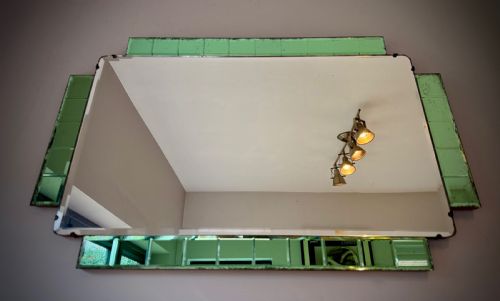
The most common examples on this page date to the 1930s, displaying characteristic modernist lines and layered glass sections. Buyers frequently encounter wall-hung variants alongside vanity mirrors, often utilising contrasting borders or flanking panels to accentuate the tiered silhouette.
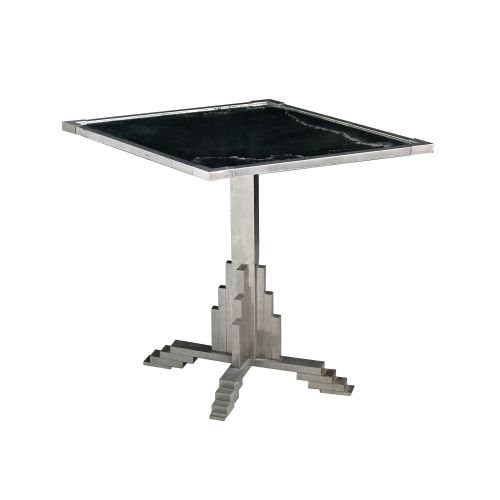
Beyond standard wall mirrors, the broader category encompasses related forms like mirrored clocks, side tables, and dressing tables incorporating stepped glass elements. These diverse objects share a vocabulary of angular geometry and reflective surfaces rooted in early twentieth-century design.
Construction and materials
Makers constructed these pieces using glass and mirrored glass mounted upon wooden backings, frequently utilising walnut or ebonised timber. Metal components, including chrome and chrome-plated metal, appear alongside painted details to define the clean, geometric profiles.
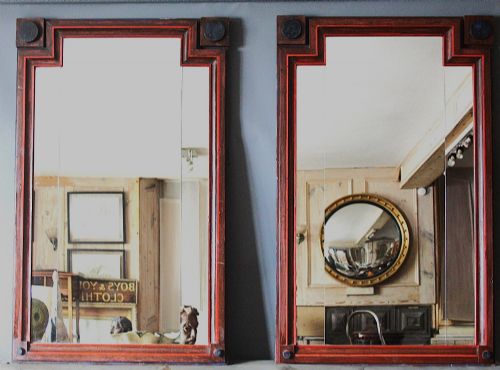
Techniques relied on precise cutting and beveling of glass plates to create multiple planes that catch the light at different angles. Wooden frames were shaped to follow the stepped contours, sometimes incorporating parcel gilding or painted decoration to contrast with the reflective surfaces.
Listings feature items spanning the 1880s to the 1930s, utilising glass, mirrored glass, walnut, and chrome.
Judging quality and execution
Quality rests in the precision of the glass layering and the crispness of the stepped geometry rather than mere ornamentation. Finer examples display harmonious proportions between the central glass plate and the surrounding tiered borders, with seamless joints in the frame.
Material selection marks the division between standard production and superior craftsmanship, with dense hardwoods like walnut providing a more substantial foundation than softer timbers. The integration of specialty elements, such as emerald green glass panels or fine metal plating, elevates the sophistication of the piece.
Whytock & Reid
The Vintage Stepped Mirror Glossary
- Stepped
- Design featuring receding or protruding horizontal and vertical planes that create a tiered, architectural profile. This geometric arrangement defines the visual rhythm of Art Deco furnishings.
- Bevel
- An angled edge cut along the perimeter of a glass plate to refract light and add depth. It signals careful finishing on traditional mirrors.
- Ebonised
- Wood finished to resemble ebony through dark staining or painting. This technique creates a stark, high-contrast border around reflective glass.
- Parcel Gilt
- Partially gilded woodwork where gold leaf highlights specific carved details or mouldings. It adds subtle metallic warmth to wood frames.
- Odeon
- Architectural and decorative style characterised by curved, stepped symmetry reminiscent of grand cinema design from the 1930s. It represents a streamlined approach to modernist luxury.
Vintage Stepped Mirror: Frequently Asked Questions
What is a vintage stepped mirror?
A vintage stepped mirror is a reflective piece featuring layered, geometric glass or framing that recedes in tiers. These designs draw heavily on Art Deco aesthetics to create architectural depth on a wall.
Most examples date from the 1920s and 1930s, utilising materials like mirrored glass, walnut, and chrome. They serve as both functional looking-glasses and striking decorative focal points.
How do I style a stepped mirror?
Hang a stepped mirror above a mantelpiece, sideboard, or console table to anchor the surrounding furniture. The strong horizontal and vertical lines pair well with minimalist or period-inspired interiors alike.
Keep surrounding objects relatively simple so the geometric framing of the mirror remains the primary visual feature. Adequate lighting nearby will help catch the angled glass planes.
How can I tell the period?
Examine the construction materials, backing boards, and glass thickness to gauge the age of the piece. 1930s examples often feature chrome, ebonised wood, or distinct peach and green tinted glass panels.
Earlier nineteenth-century variants tend to use heavier wooden frames with traditional joinery. Look closely at the beveling technique on the glass edges for further clues.
Are these mirrors heavy?
Many of these pieces carry substantial weight due to multiple layers of glass and dense wooden backings. Proper wall anchors and sturdy fixings are essential for secure hanging.
When positioning a heavy wall mirror, ensure the fixings match the specific wall type, such as brick or lath and plaster.