



Vintage Staffordshire Dog Pair
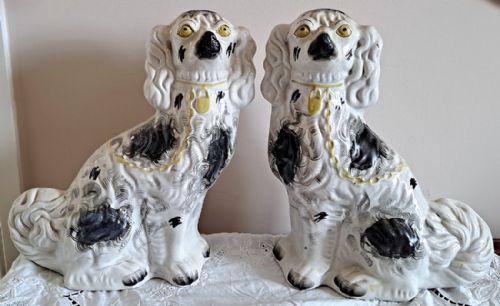
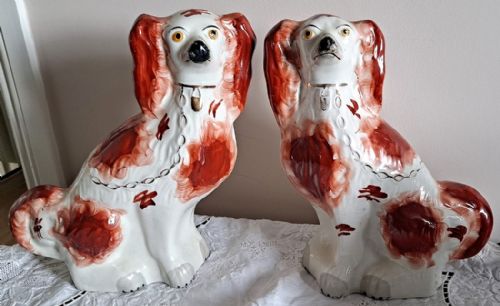
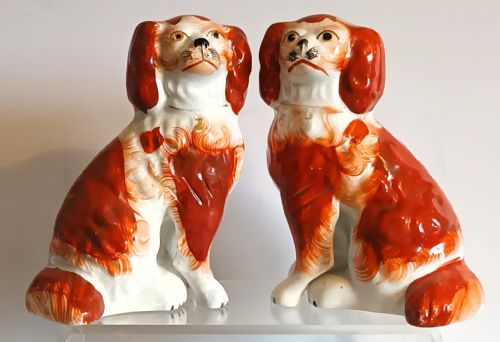
These vintage staffordshire dog pair figures bring traditional English character to a room, offering the charm of spaniels, poodles, and greyhounds modelled in pottery.
Vintage Staffordshire Dog Pair
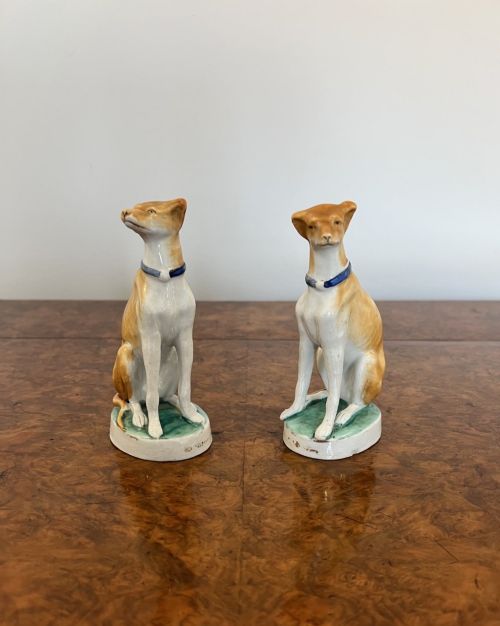
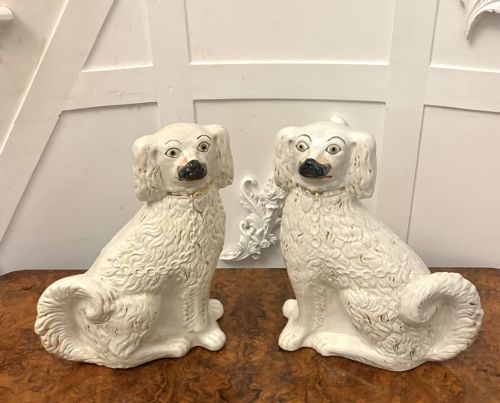
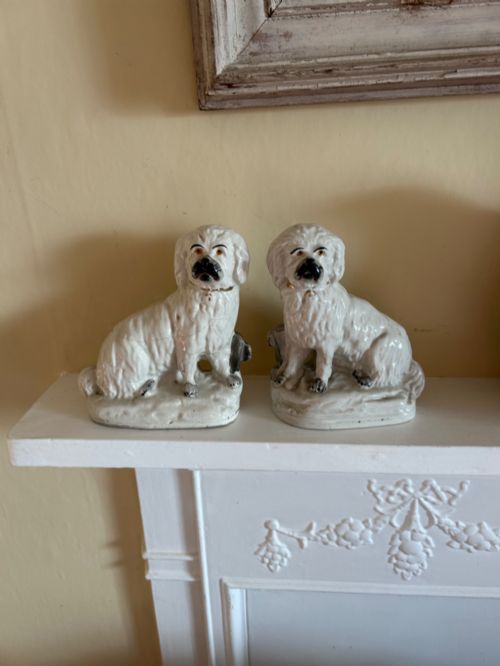
When searching for a vintage staffordshire dog pair, a buyer encounters ceramic and earthenware figures produced primarily during the Victorian period, spanning the nineteenth century. These ornaments often depict spaniels, known as comforter spaniels, alongside poodles, pugs, Maltese terriers, and greyhounds.
The objects take the form of decorative figurines and pottery figures, sometimes modelled as miniature poodles or grand pairs with gilt details. Makers such as Royal Doulton and Beswick also appear among the twentieth-century examples, extending the tradition beyond the Victorian era.
How they were made
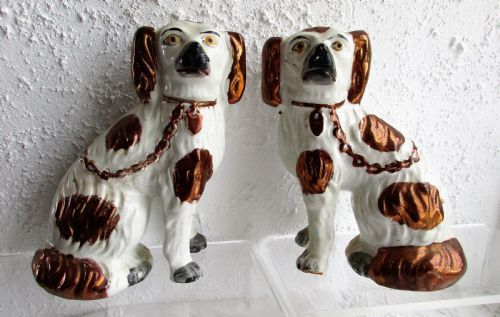
Certain pieces utilise copper lustre finishes to achieve a metallic sheen across the ceramic surface. The firing process fixed the pigments beneath the glaze, resulting in the durable finish seen on nineteenth-century and later figures.
Vintage Staffordshire Dog Pair Retail Price Guide 2026
Typical asking prices for vintage staffordshire dog pair among the pieces listed under this phrase on Sellingantiques today, from the lower quarter to the upper quarter. They describe what is for sale here now, not the wider market.
Some poodles arrive accompanied by tiny, bewildered-looking pups clustered at their feet.
What varies in quality
Scale and proportion also define the range, from grand pairs designed as substantial mantelpiece ornaments to delicate miniature poodles. The crispness of the earthenware and the uniformity of the glaze reflect the skill applied in the pottery.
Royal Doulton·Beswick
The Vintage Staffordshire Dog Pair Glossary
- Earthenware
- A porous pottery body fired at lower temperatures, commonly used for nineteenth-century Staffordshire figures. It requires a vitreous glaze to ensure impermeability.
- Comforter spaniel
- A nineteenth-century ceramic representation of the King Charles Spaniel, traditionally placed on mantelpieces facing inwards. These figures often feature painted chain and padlock details.
- Copper lustre
- A metallic glaze technique that imparts a reflective, coppery sheen to the ceramic surface. It was frequently applied to Staffordshire pottery figures during the mid-Victorian period.
- Enamel
- Vitreous pigments applied over the glaze to add colour to pottery figures. These paints are fixed with a subsequent low-temperature firing.
Vintage Staffordshire Dog Pair: Frequently Asked Questions
What are staffordshire dogs?
Staffordshire dogs are ceramic figures modelled as spaniels and other breeds, produced in the English potteries during the nineteenth and twentieth centuries.
Traditionally displayed on mantelpieces as pairs facing one another, they served as domestic ornaments in Victorian homes.
How do I date a staffordshire dog pair?
Dating relies on stylistic clues, the type of ceramic body, and the application of glazes like copper lustre or gold leaf. Victorian pieces often display hand-painted enamel details on heavier earthenware.
Later twentieth-century examples may carry marks from makers such as Beswick or Royal Doulton, distinguishing them from earlier unmarked nineteenth-century figures.
Were these dogs meant to be toys?
These ceramic figures were strictly decorative ornaments intended for display on mantelpieces, side tables, and desks rather than as playthings for children.
Their sturdy earthenware construction suited domestic interiors, often placed as pairs flanking a clock or other mantel garniture.
What breeds besides spaniels appear?
While spaniels dominate the category, potters also modelled poodles, pugs, Maltese terriers, and greyhounds, sometimes accompanied by puppies or children.
Poodles frequently appear with textured clay representing clipped fur, while greyhounds occasionally function as quill holders.
How should I display them?
These figures look best placed as matched pairs on a mantelpiece, shelf, or side table, echoing their traditional nineteenth-century arrangement.
Positioning them facing each other recreates the classic domestic display seen in historic interiors.