



Antique Ceramic Spaniel Dogs
These antique ceramic spaniel dogs are hearthside figures designed for Victorian mantelpieces, offering a touch of domestic tradition to any room.
Antique Ceramic Spaniel Dogs
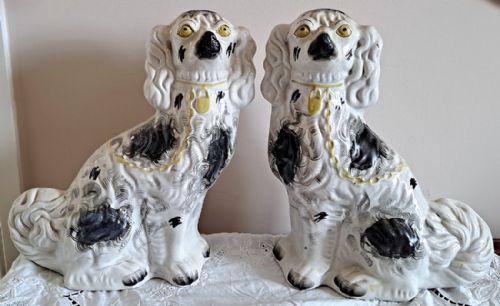
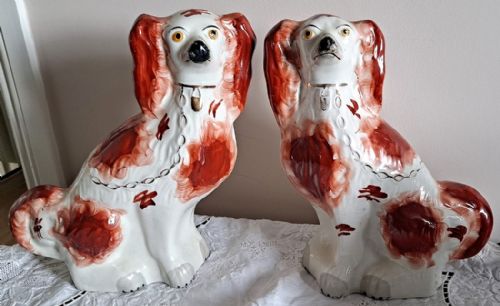
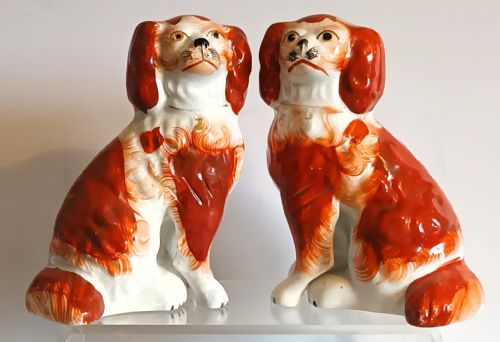
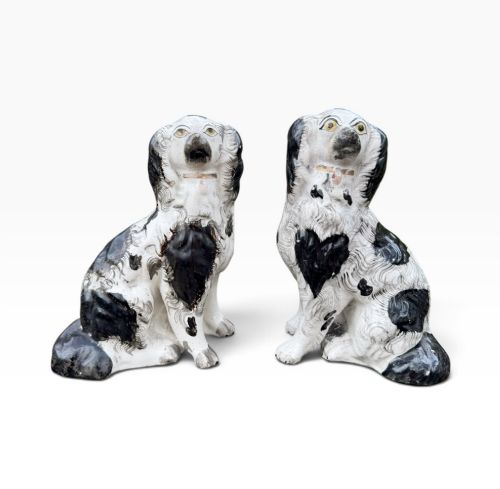
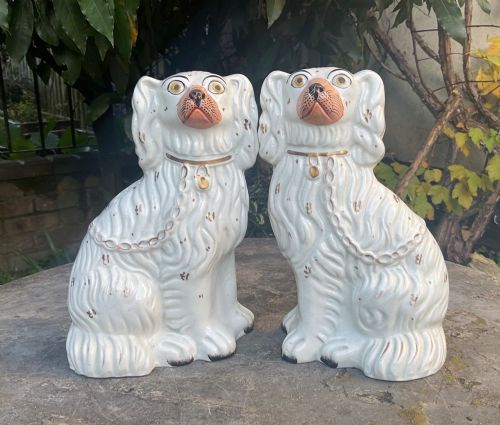
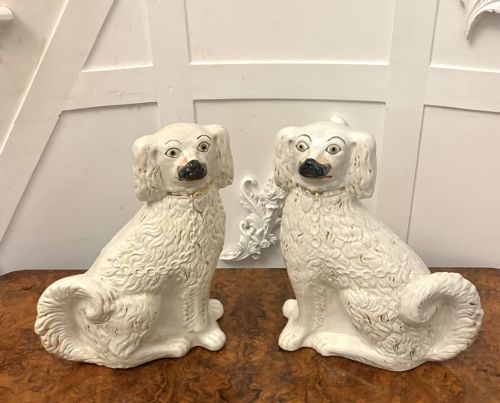
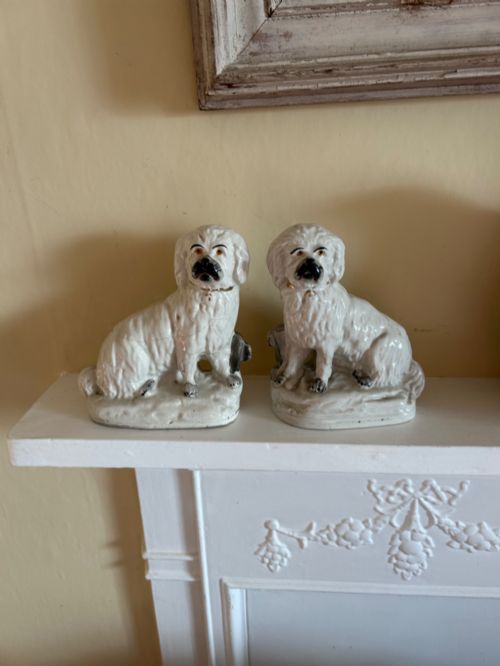
When searching for antique ceramic spaniel dogs, a buyer encounters glazed earthenware figures typically modelled as seated pairs. Most examples originate from nineteenth century Staffordshire potteries and depict the King Charles variety.
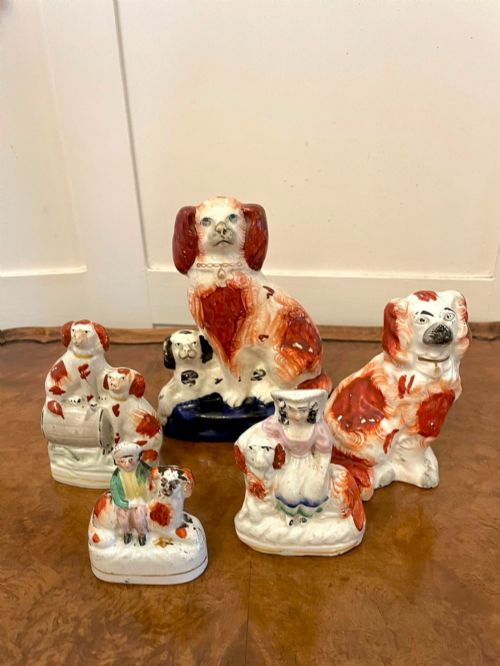
The selection extends beyond standard pairs to include money boxes, clock groups, quill holders and Toby jugs. Alongside Staffordshire earthenware, the listings encompass Chinese export porcelain and later works.
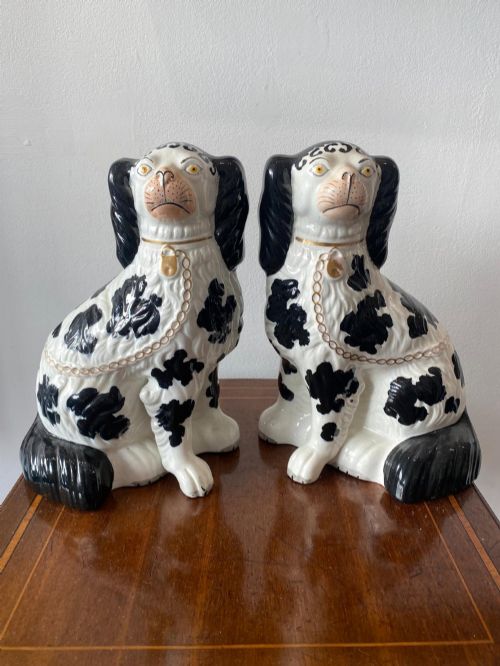
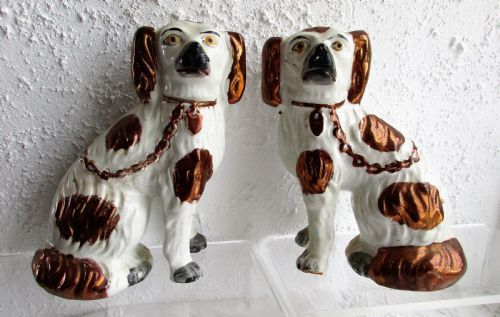
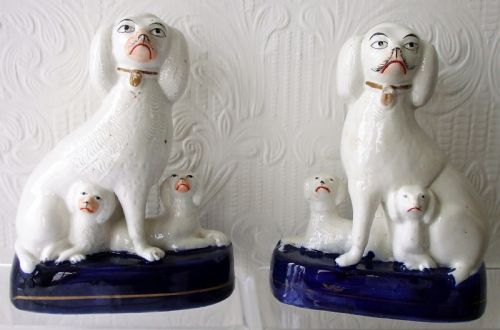
Makers recorded in the inventory include Beswick and Royal Doulton, while specific variants show poodles with pups or Maltese terriers. Figures frequently appear in white with gilt highlights, copper lustre, or painted red and white markings.
Materials and construction
Certain Victorian examples incorporate surface encrusting or sit upon moulded blue cushions. Production methods relied on press moulding or slip casting, followed by kiln firing and enamel decoration.
Antique Ceramic Spaniel Dogs Retail Price Guide 2026
Typical asking prices for ceramic spaniel dogs among the pieces listed under this phrase on Sellingantiques today, from the lower quarter to the upper quarter. They describe what is for sale here now, not the wider market.
One set sits upon blue cushions with encrusted decoration, proving that even Victorian guard dogs appreciated a soft seat.
Assessing quality
The expression of the dog and the balance of the pair dictate the visual appeal on the mantelpiece. Stronger examples show confident modelling in the clay and consistent glaze coverage across both figures.
Royal Doulton·Beswick
The Antique Ceramic Spaniel Dogs Glossary
- Earthenware
- Porous pottery fired at lower temperatures, commonly used for nineteenth century Staffordshire figures. It requires a glaze to become impermeable to liquids.
- Copper lustre
- A metallic glaze technique producing a reflective, coppery sheen on the ceramic surface. Potters applied this finish to accent collars, chains, and spots on the dogs.
- Comforter spaniel
- A term for Staffordshire pottery spaniels placed on hearths as domestic ornaments. They earned this name because owners treated them like household pets.
- Qianlong period
- An era of Chinese porcelain production dating to the eighteenth century. Pieces from this time demonstrate fine oriental ceramic techniques.
- Lead glaze
- A glossy coating containing lead oxide applied to pottery before firing. It creates a smooth, shiny finish over the ceramic body.
Antique Ceramic Spaniel Dogs: Frequently Asked Questions
What are antique ceramic spaniel dogs?
These pieces are decorative pottery figures modelled after King Charles spaniels and related breeds during the nineteenth century and later periods.
Potters created them primarily as mantelpiece ornaments, often intended to sit in facing pairs on either side of a fireplace.
How were these dog figures used?
Victorian households placed them on mantelpieces, sideboards, and hearths as decorative ornaments to display respectability and affection for pets.
Some specialised versions served functional roles, functioning as money boxes, clock case groups, or quill holders on writing desks.
How do I identify Victorian Staffordshire spaniels?
Look for earthenware bodies covered in a shiny glaze, accompanied by hand-painted markings in red, black, or copper lustre. Many feature gilt lockets and chains around the neck.
Pairs often face each other and display characteristic nineteenth-century moulding styles associated with Staffordshire potteries.
Are all the dogs made in Staffordshire?
While the majority originate from Staffordshire potteries during the Victorian era, the selection includes other origins and makers.
Examples range from eighteenth-century Chinese export porcelain to twentieth-century works by Royal Doulton and Beswick.