






Vintage Spyglass Telescope
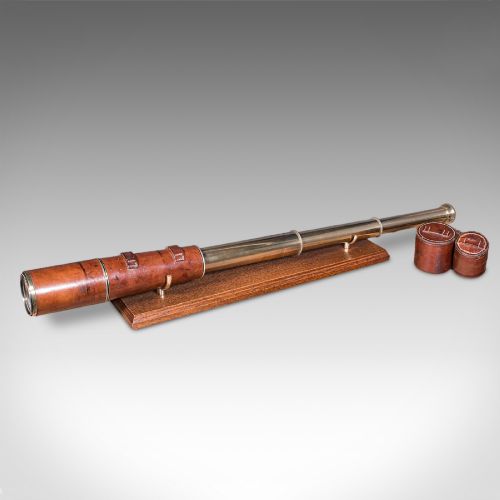
A vintage spyglass telescope brings distant horizons into sharp focus through hand-polished brass and warm timber barrels.
Vintage Spyglass Telescope
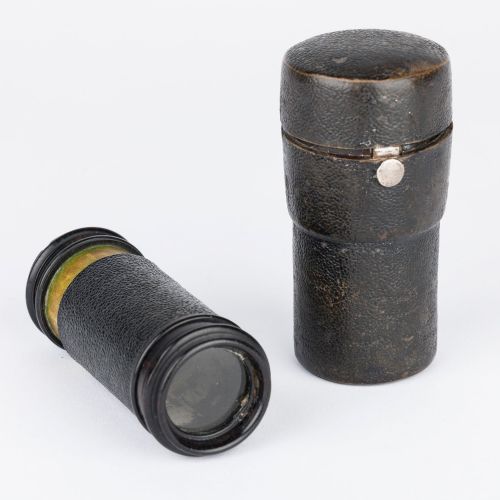
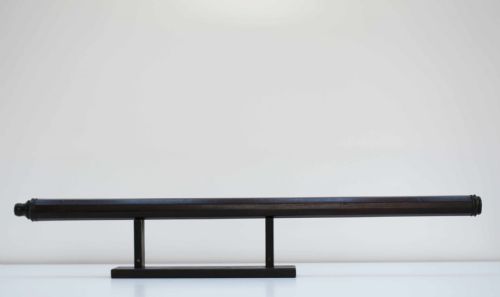
A vintage spyglass telescope is a portable optical instrument designed for terrestrial and maritime observation, emerging in forms ranging from pocket-sized monoculars to substantial library stands. These pieces encompass handheld draw tubes, multi-draw travel scopes, and mounted table instruments used for navigation and observation.
The selections recorded here span from the eighteenth century through the Edwardian period, with Victorian marine and library examples appearing most frequently. Buyers encounter compact pocket spyglasses alongside single-draw and multi-draw extending tubes housed in wood or leather casings.
Makers such as Ross of London, Nairne & Blunt, and W. & T. Gilbert represent the craftsmanship of British optical production across these eras. Alongside standard maritime brass tubes, specific variants integrate optical gear into functional items like walking sticks.
Materials and construction methods
Brass forms the primary structural and optical housing for these instruments, often polished to a bright finish or patinated through age. Glass lenses provide the magnification, while exterior barrels frequently receive hand-stitched leather wraps or protective casings in mahogany, fruitwood, walnut, and oak.
Extending sections are machined to slide smoothly within one another, maintaining precise alignment to keep the focal plane true. Tubing shapes vary from traditional round profiles to hexagonal and multi-sided decagonal forms constructed by skilled instrument makers.
Vintage Spyglass Telescope Retail Price Guide 2026
Typical asking prices for vintage spyglass telescope among the pieces listed under this phrase on Sellingantiques today, from the lower quarter to the upper quarter. They describe what is for sale here now, not the wider market.
A few ingenious nineteenth-century makers concealed entire working spyglasses inside ordinary walking stick canes.
Distinctions in quality and execution
The standard of a vintage spyglass telescope rests upon the optical clarity of its lenses and the precision fit of its sliding brass draws. Instruments produced by established London workshops maintain tighter tolerances in their mechanical tubes and sharper definition across the field of view.
Material selection and exterior finish further divide everyday utility pieces from exhibition-grade library instruments. Fine examples feature tightly fitted leather coverings, intact original wooden cases, and complex multi-draw arrays that lock securely into position.
Nairne & Blunt·Ross of London·W. & T. Gilbert·Clarkson·Steward of London·Richardson·Newton & Co·Broadhurst Clarkson & Co·Cary London·L. Casella·Chadburn Brothers·S & B Solomons·Matthew Berge·G.adams·John Gilbert
The Vintage Spyglass Telescope Glossary
- Draw
- An extending telescopic section of a spyglass. Multiple draws allow a long barrel to collapse into a compact handheld tube.
- Terrestrial
- An optical design configured to show upright images of land objects rather than inverted celestial views. This orientation is essential for maritime and landscape observation.
- Achromatic
- A lens configuration designed to correct chromatic aberration and reduce false colour fringes around bright subjects. Eighteenth and nineteenth-century opticians refined these groupings for sharper clarity.
- Library telescope
- A large-scale optical instrument mounted on a dedicated table stand rather than held in the hand. These pieces served scholars and landed households for indoor and terrace viewing.
- Monocular
- A compact single-barrel viewing scope designed for one eye. These smaller instruments often double as theatre or pocket glasses.
Vintage Spyglass Telescope: Frequently Asked Questions
How do I use an extending telescope?
Grip the widest barrel section firmly while pulling the smaller draw tubes outward until the instrument is fully extended. Adjust the final eyepiece section slowly until the distant target comes into clear focus.
Keep the brass clean and avoid touching the glass surfaces directly with your fingers to maintain optical clarity during use.
What is the difference between a marine telescope and a library telescope?
Marine telescopes are built compact and portable for handheld outdoor use on rolling decks or fields. They frequently feature protective leather or wood casing to withstand exposure.
Library telescopes are larger stationary instruments supported by folding brass tripods or table stands, intended for sedentary viewing in domestic rooms.
How do I date an antique brass telescope?
Examine the maker signature engraved on the draw tube alongside the construction style and materials used. Eighteenth-century models often display distinct signatures and simpler multi-draw formations, while Victorian examples frequently include specific draw counts and material combinations like mahogany and brass.
Compare the engraving format and workshop address with known active dates for makers such as Ross or Dollond to narrow the decade of manufacture.
Can I use these antiques for everyday viewing?
Many surviving nineteenth-century and Edwardian instruments remain optically functional for daytime landscape and horizon observation. Care should be taken when extending older brass draws to avoid straining historical joints.
Store the instrument in a dry environment and keep protective caps or original cases closed when the telescope is not in use.