






Vintage Sports Memorabilia
These vintage sports memorabilia pieces capture bygone matches, races and games through objects crafted in wood, metal and leather.
Vintage Sports Memorabilia
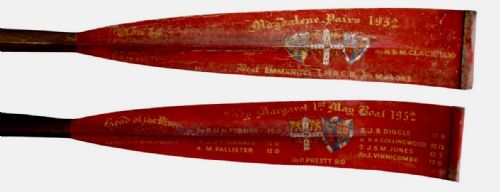
When you search for vintage sports memorabilia, you encounter items ranging from Victorian lawn bowling plaques and curling stones to Edwardian hickory shafted golf clubs and football banners. These objects represent past sporting pursuits, public schools competitions, rowing clubs and international tournaments.
The selection on this page centres upon equipment, trophies, medals, photographs and folk art pieces originating between the nineteenth century and the nineteen-thirties. You meet practical gear alongside decorative items created to commemorate teams, players and victories.
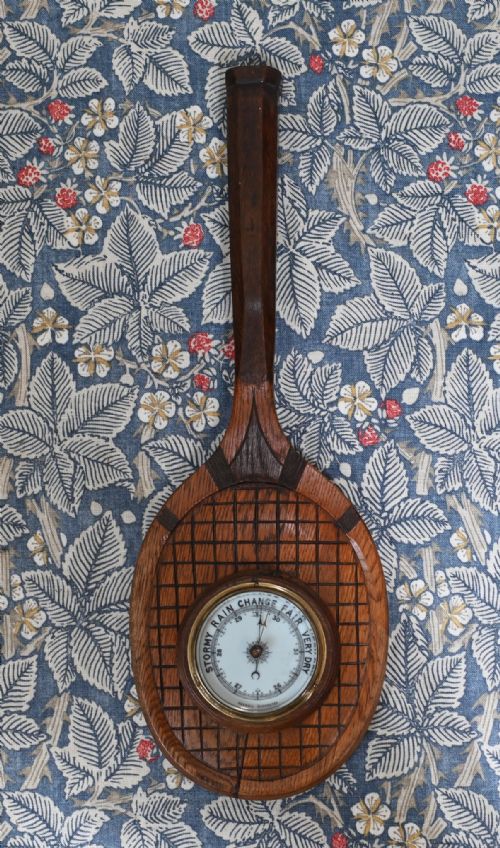
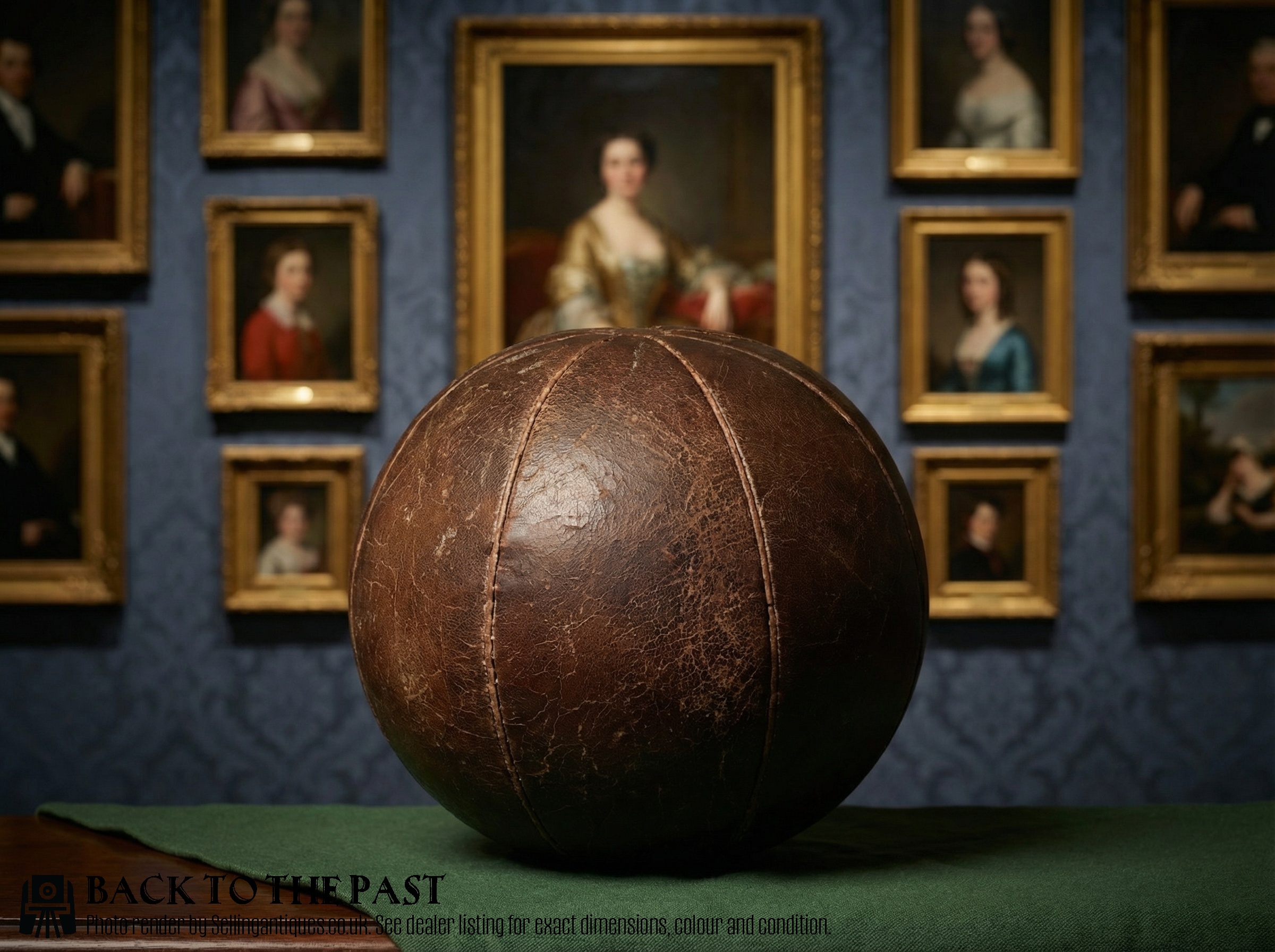
Rugby, cricket, golf, football, tennis and cycling dominate the forms, reflecting the organised sports of the Victorian and Edwardian eras. Pieces vary from functional leather exercise clubs and medicine balls to cast bronze figures and painted oils.
How they were made
Makers utilised traditional materials such as weighted beech, oak, sterling silver, brass, glass and enamel to fabricate sporting equipment and awards. Artisans turned wood for cricket bookends and exercise clubs, shaped leather for whips and medicine balls, and cast bronze or gilt metals into player statues and medals.
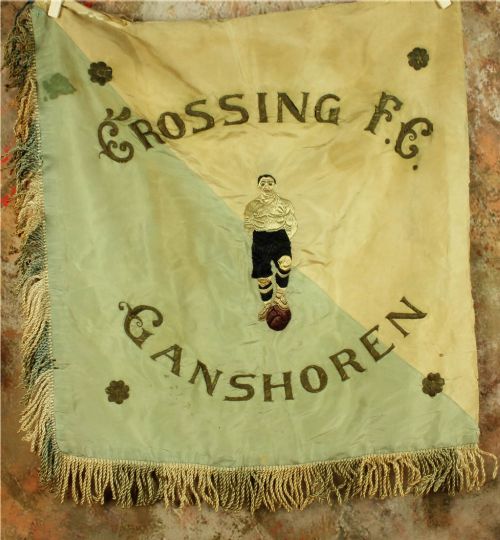
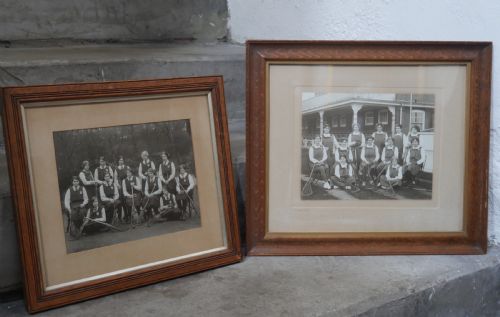
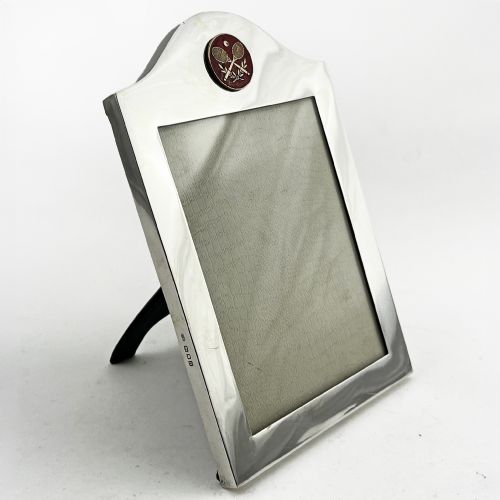
Decoration often involved hand-painting, silver-plating, pressed brass work and detailed carving, as seen in the hardwood lidded boxes modelled as soccer balls and stoneware rugby ball inkwells. Textiles appear in silk football banners and flags, whilst photography captures team groups on paper.
A pressed brass cycling brooch comes equipped with tiny working wheels.
What varies in quality
The distinction between standard items and superior pieces rests upon the crispness of the casting, the quality of the materials and the directness of the sporting association. Bronze sculptures by recorded artists and sterling silver frames exhibit finer sculptural detail and hallmarks than mass-produced tinplate figures.
Condition and originality dictate desirability, particularly in wooden items like hickory shafted golf clubs or carved cricket figures retaining their original surface finish. Presentation pieces bearing specific dates, team names and engraved presentations carry greater historical weight than unmarked equivalents.
Hen and Holley Bros·Thornton Smith Co·Macintyre Pottery·Rudolf Küchler
The Vintage Sports Memorabilia Glossary
- Vesta
- A small pocket container designed for holding matches, often ceramic or metal and occasionally modelled in sporting themes. These items were widely carried during the Victorian and Edwardian periods.
- Medallion
- A large metal pendant or medal awarded for athletic victories, typically struck in silver or bronze. They frequently feature enamel work and engraved presentation details on the reverse.
- Jigger
- A specific type of golf club with a lofted iron head, mounted on a hickory shaft during the early twentieth century. Players utilised them for approach shots.
- Curling stone
- A heavy polished granite block fitted with a handle, used on ice rinks for the traditional Scottish team sport. Pairs are balanced for competitive play.
- Cricketiana
- Antiques and collectibles relating specifically to the game of cricket, encompassing everything from framed photographs and ceramics to novelty inkwells and bats.
Vintage Sports Memorabilia: Frequently Asked Questions
What sports are represented here?
The selection covers a broad spectrum of nineteenth and early twentieth-century pastimes, including golf, cricket, football, rugby, tennis, lacrosse, cycling, curling and racing pigeons.
Items range from actual playing equipment like golf clubs and lawn bowls to commemorative banners, medals, photographs and decorative sculptures.
How do I date these items?
Dating relies upon hallmarks on silver pieces, inscribed dates on medals and presentation plaques, and stylistic traits associated with periods such as Victorian, Edwardian or Art Deco.
Materials and manufacturing techniques also provide clues, such as the transition from turned wood and hand-stitching to early industrial casting methods.
How were leather sports items maintained?
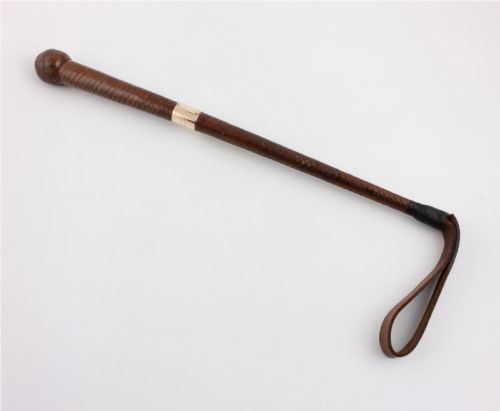
Leather items such as medicine balls, riding crops and boxing equipment were conditioned with oils or waxes to keep the hide supple during active use.
Today, preservation requires stable indoor humidity and minimal handling to protect fragile stitching and aged surfaces.
Are these items suitable for daily use?
Most vintage sports pieces now function primarily as display items, cabinet pieces or interior design focal points rather than active sporting equipment.
While robustly constructed from materials like weighted beech and cast iron, their age and historical value mean they are best appreciated in domestic settings.