



Vintage Leather Ball
A vintage leather ball brings tactile history and character into a room, combining aged hides with solid construction from earlier centuries.
Vintage Leather Ball
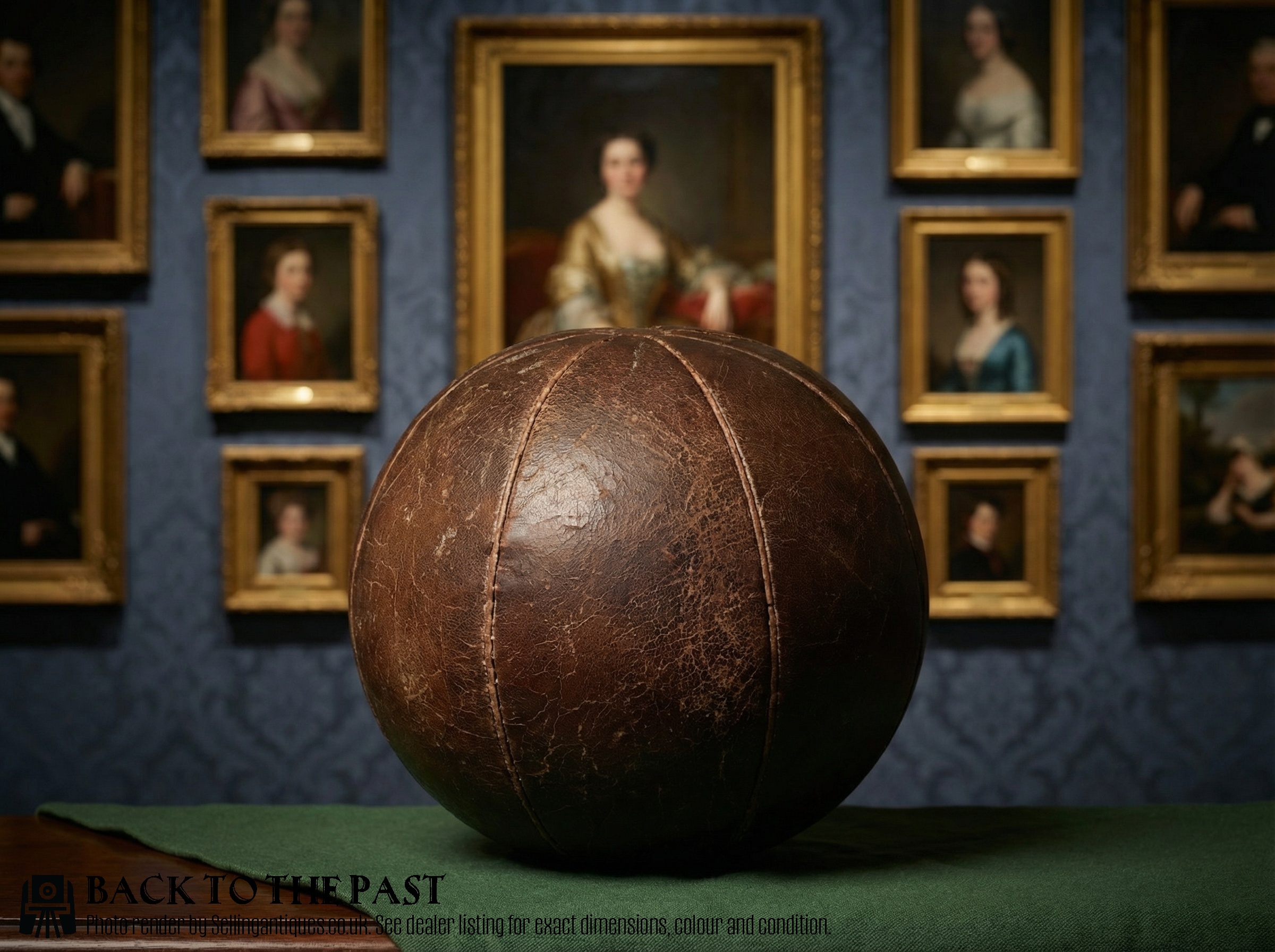
When you search for a vintage leather ball, you encounter handcrafted sporting equipment and decorative items dating from the nineteenth and early twentieth centuries. These objects primarily include footballs and medicine balls produced in materials like sturdy leather.
The pieces on this page span the Victorian, Edwardian, and subsequent decades up through the 1930s. They reflect the utilitarian sports manufacture of their respective periods rather than mass-produced modern equivalents.
Materials and construction methods
These items are constructed from thick, durable leather panels stitched together by hand or heavy machine to withstand rigorous physical use. Makers often utilised robust animal hides selected for strength and longevity.
Internal structures typically involved bladder systems or stuffed linings to maintain shape. Exterior finishes display natural ageing processes across the leather surface over decades of handling.
Judging build and preservation
Quality rests upon the integrity of the original stitching and the suppleness of the surviving leather panels. Strong, intact seams indicate careful historical manufacture and subsequent preservation.
Gillows·Howard & Son's
The Vintage Leather Ball Glossary
- Patina
- The surface sheen and colour variation developed by leather over decades of use and exposure to air. This ageing process adds visual depth to antique sports equipment.
- Medicine ball
- A heavy, leather-covered weighted ball utilised for physical training and conditioning exercises. These objects frequently date from the Edwardian era and the early twentieth century.
- Stitching
- The method of binding leather panels together using heavy-duty thread or cord. Original hand-sewn seams are characteristic of older sporting goods.
- Hide
- The natural animal skin used as the primary material for covering sports balls and furniture upholstery. The thickness of the hide determines the durability of the piece.
Vintage Leather Ball: Frequently Asked Questions
How were these sports balls used?
These items served as active sporting equipment in matches or physical training routines during the Victorian and Edwardian periods. Their robust construction handled outdoor play and indoor conditioning.
Over time, many transitioned from active sports fields into decorative display items within studies, libraries, and country houses.
How do I care for antique leather?
Keep leather items away from direct sunlight and heat sources to prevent the natural hide from drying out and cracking. Gentle dusting helps maintain the surface.
Applying specialist leather dressings sparingly can preserve suppleness without altering the historic patina accumulated over the decades.
How do I date a leather ball?
Dating relies on examining the panel configuration, stitching thickness, and the specific type of leather used in construction. Edwardian and Victorian examples often show distinct manufacturing traits.
Associated markings or stamps from makers, where present, provide further chronological context alongside overall wear patterns.
Can these items be displayed safely?
Stable display requires placing the ball on a suitable ring support or shallow base to prevent rolling and uneven pressure on the seams. This protects the structure from unnecessary stress.
Ensuring a stable room environment with moderate humidity protects the aged leather and stitching from rapid deterioration.