




Vintage Sporting Art Drawing
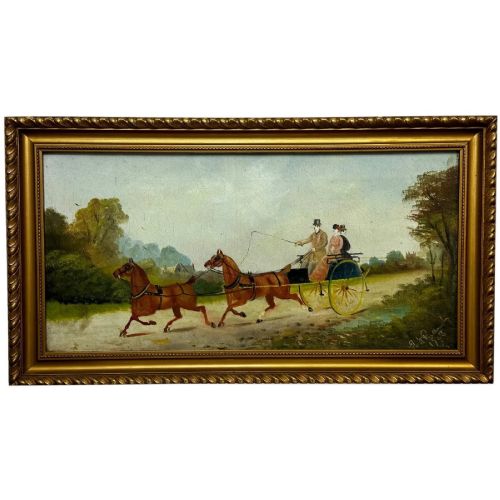
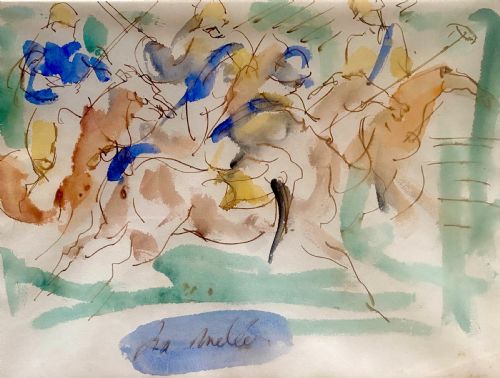
These vintage sporting art drawing pieces capture the movement of horses, hounds, and athletes through ink, wash, and chalk.
Vintage Sporting Art Drawing
Vintage sporting art drawing selections bring together original works depicting equestrian pursuits, field sports, and athletic competition across various twentieth-century and earlier periods. Buyers will encounter framed pieces ranging from Edwardian and Victorian depictions to mid-century interpretations.
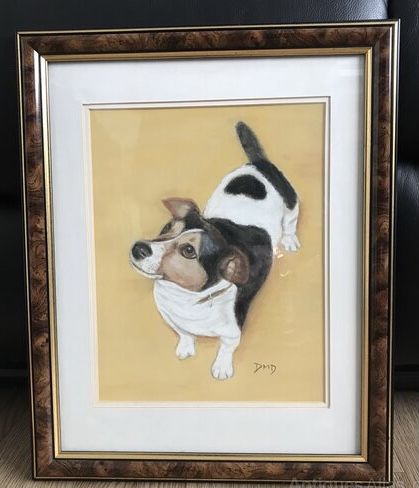
The most common formats on this page include watercolour paintings, chalk drawings, and pastels on paper, often preserved under glass within wooden frames. These works span English Country House aesthetics, Mid-Century Sporting Art, and Modern British styles.
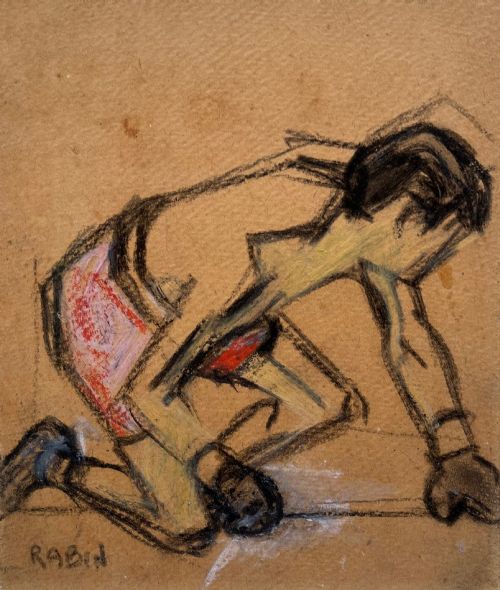
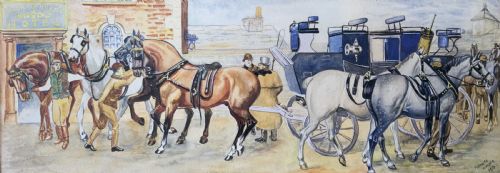
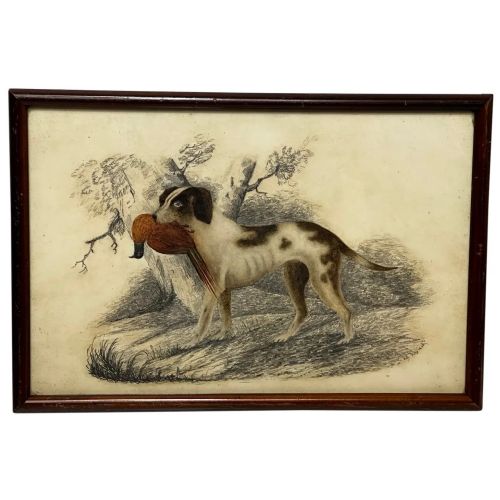
Subjects frequently centre on coaching scenes, hunting dogs, horse racing, and Olympic events, reflecting diverse artistic approaches from precise illustration to expressionist ink work.
Materials and technique
Artists relied primarily on paper supports, applying watercolours, inks, chalk, and pastels to capture dynamic movement and anatomical detail. Many of these works employ mixed media, combining ink outlines with fluid washes of watercolour.
Framing materials reflect the domestic settings of their origin, utilising oak, walnut, and simpler wooden mouldings to protect the delicate paper surfaces underneath glass. Brass fixings and mounts occasionally accompany these framed drawings.
Techniques range from rapid, expressive pencil and chalk sketches to highly finished oil paintings and gouache illustrations intended for publication.
Materials represented across the selection include watercolour, pastel, chalk, ink, oil, wood, and brass.
Distinctions in quality
Quality rests heavily on the artist's ability to render animate forms with anatomical conviction and energetic line work, particularly in subjects involving horses and hounds in motion. Superior examples demonstrate a confident economy of stroke that conveys speed and weight.
The integrity of the paper support and the preservation of the medium under glass dictate the visual strength of the piece, as fading or foxing alters the intended balance of tone. Original framing and signed provenance further distinguish notable works from standard decorative examples.
James Stroudley·Samuel Rabin·Gen Paul·John Rattenbury Skeaping·Cecil Charles Windsor Aldin·Michael Lyne·Samuel Henry Alken·Willem E Roelofs Jr·Snaffles·Arthur E Gonne
The Vintage Sporting Art Drawing Glossary
- Watercolour
- A paint consisting of a pigment suspended in a water-based solution, yielding transparent washes on paper. It allows artists to build delicate layers of tone.
- Pastel
- A powdered pigment mixed with a binder and moulded into a stick, applied dry to tinted or textured paper. It produces velvety surfaces with rich colour saturation.
- Chalk
- A soft mineral-based drawing medium used to create bold linear marks or soft shading. It is frequently combined with pencil or wash.
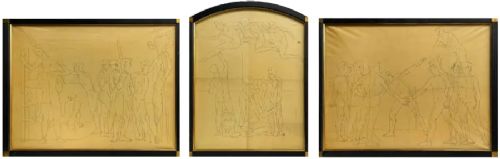
- Triptych
- A work of art divided into three sections or panels, hinged or displayed together as a single composition. This format often relates sequential action.
- Expressionism
- A modernist style where the artist distorts visual reality to evoke emotional responses rather than objective accuracy. Works in this manner emphasise spirited brushwork and vibrant ink marks.
Vintage Sporting Art Drawing: Frequently Asked Questions
What subjects appear in these drawings?
The works predominantly feature horses, hunting hounds, coaching scenes, and athletic competitions. These subjects reflect a long tradition of documenting field sports and human movement.
Artists captured everything from rapid sketches of racing thoroughbreds to detailed illustrations for magazines and historical coaching routes.
How are these artworks framed?
Most works on paper are preserved under glass within wooden frames, utilising materials such as oak and walnut. This protective setup shields fragile chalk and watercolour surfaces from atmospheric damage.
Original framing often includes wooden mouldings that complement the period of the artwork.
How do I date a sporting drawing?
Dating relies on stylistic clues, artists' active periods, and framing materials that correspond to eras like the Edwardian period or mid-century decades. Signatures and inscriptions often provide explicit dates.
The choice of paper and drawing medium also aligns with the prevailing artistic conventions of specific decades.
How should I display these pieces?
These framed works suit studies, libraries, and hallways, traditionally hung alongside other equestrian or rural artwork. Direct sunlight should be avoided to prevent fading on watercolour and pastel surfaces.
Proper wall placement preserves the integrity of both the paper and the original wooden framing.