


Monochrome Watercolour Drawing
A monochrome watercolour drawing offers a stripped-back study in tone, line and wash.
Monochrome Watercolour Drawing
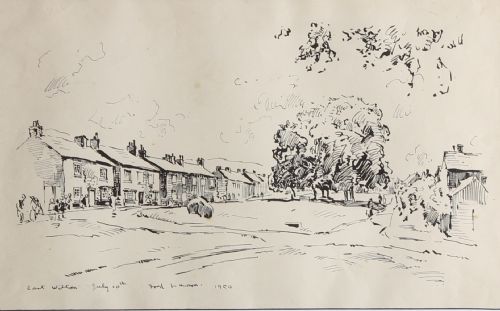
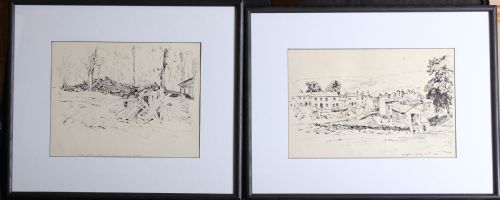
A monochrome watercolour drawing relies on single-colour washes, sepia inks and pencil lines rather than a full palette of pigments. When searching for a monochrome watercolour drawing, a buyer encounters works spanning the Georgian and Victorian eras through to the mid-twentieth century. Landscapes, townscapes and architectural studies dominate the selection.
The material record on this page points toward British works on paper, ranging from rural pastoral scenes to early twentieth-century townscapes and magazine illustrations. These pieces frequently combine graphite underdrawing with ink and watercolour washes, often presented behind glass in wooden frames. The most common format is the framed landscape sheet by regional British artists.
Materials and construction
Makers laid down compositions using pencil and pen for initial outlines before applying watercolours and sepia ink washes onto paper. Artists built depth through tonal layering, allowing the white of the paper to provide highlights and contrast.
Finished works were protected behind glass within wooden frames, safeguarding the delicate paper and water-soluble pigments from atmospheric moisture.
A thirsty farmer once stepped into a nineteenth-century sheet.
Assessing quality
Quality rests upon the sureness of the draughtsmanship and the control of the wash. Stronger pieces display confident pen or pencil lines beneath transparent layers of monochrome pigment that create genuine atmospheric depth.
The handling of light and shadow distinguishes superior sheets from routine topographical records. A skilled hand achieves subtle gradations in sepia or grey ink that define form without relying on heavy outlines.
Fred Lawson·William Manners·Stanley Orchart·Edward Dayes·Amos Green·Charles Prosper Sainton·Owen Bowen·Arthur E Gonne·Thomas Lound
The Monochrome Watercolour Drawing Glossary
- Monochrome
- Executed in a single colour or shades of a single colour. In these works, this typically involves sepia, grey ink or muted washes.
- Wash
- A thin, fluid layer of watercolour paint spread evenly across paper to create smooth backgrounds or tonal shadows. This technique provides the atmospheric depth in monochrome landscapes.
- Sepia ink
- A brown pigment derived from the cuttlefish, widely utilised for drawing and tonal washes in the eighteenth and nineteenth centuries. It yields a warm, enduring monochrome tone.
- Draughtsmanship
- The artist's skill in drawing lines and defining form. Strong draughtsmanship underpins the structure of these watercolours.
Monochrome Watercolour Drawing: Frequently Asked Questions
How do I hang a monochrome watercolour drawing?
Keep these works out of direct sunlight to prevent the paper from yellowing and the monochrome washes from fading. Display them away from damp environments like kitchens or bathrooms.
Ensure the frame isolates the paper from the glass to protect the surface from condensation and sticking.
What periods do these drawings come from?
The pieces span from the Georgian and Victorian periods into the twentieth century, including Edwardian and mid-century British works.
Dates are determined through stylistic evidence, signatures, artist lifespans and period framing materials.
Are these works original?
Every piece listed is an original hand-drawn or painted work on paper rather than a modern reproduction. Artists created each sheet individually using ink, watercolour and pencil.
Signatures, initialling, contemporary inscriptions and watermark evidence help confirm authenticity.
How do ink and watercolour combine?
Artists first mapped the composition using pencil or ink lines to establish precise architectural and landscape details. Watercolour and sepia washes were then applied over or beside the lines to build tonal shadow.
This mixed-media approach allowed creators to achieve both graphic precision and atmospheric softness.