


Vintage Spirits Jug
A vintage spirits jug holds the table's liquor in glass, silver, copper, or pewter, ready for a pour after dinner.
Vintage Spirits Jug
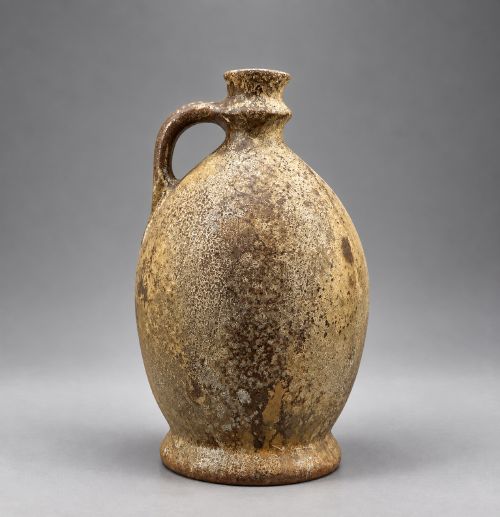
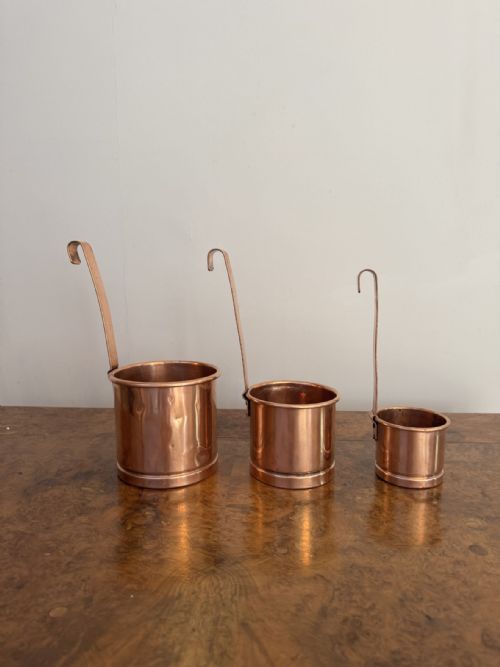
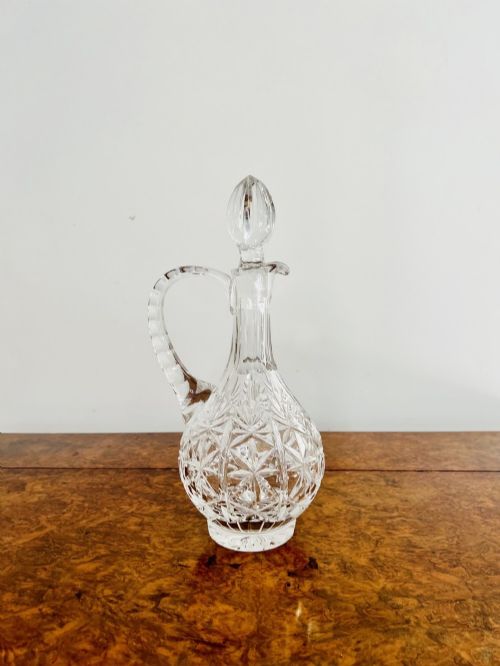
A vintage spirits jug covers everything from small whisky noggins and claret ewers to large copper measures and stoneware flasks. When sorting through a vintage spirits jug, buyers meet decanters, pitchers, and tavern vessels spanning the Victorian, Edwardian, and Georgian eras.
The materials shift between cut glass mounted in sterling silver or silver plate, heavy brown-glazed stoneware, and warm metals like copper and pewter. Many examples date from the nineteenth and early twentieth centuries, bearing the marks of British and Irish taverns, domestic sideboards, and distilleries.
Materials and construction
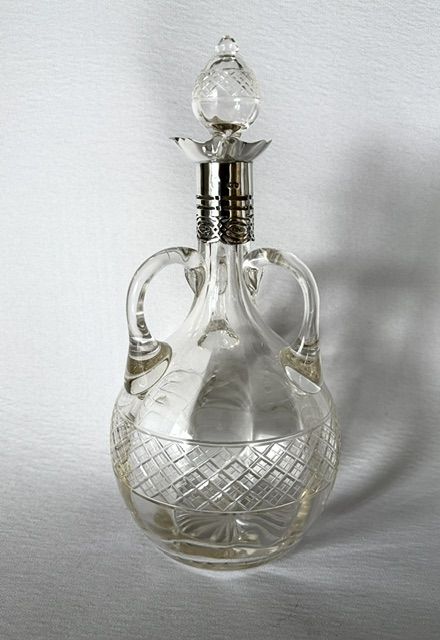
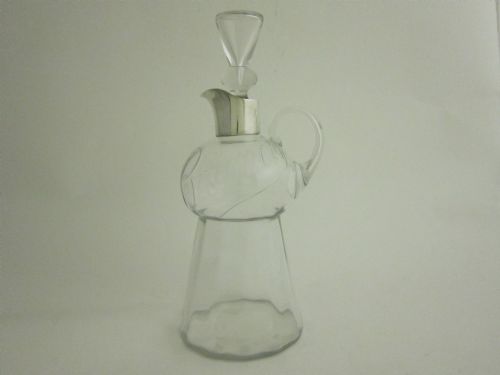
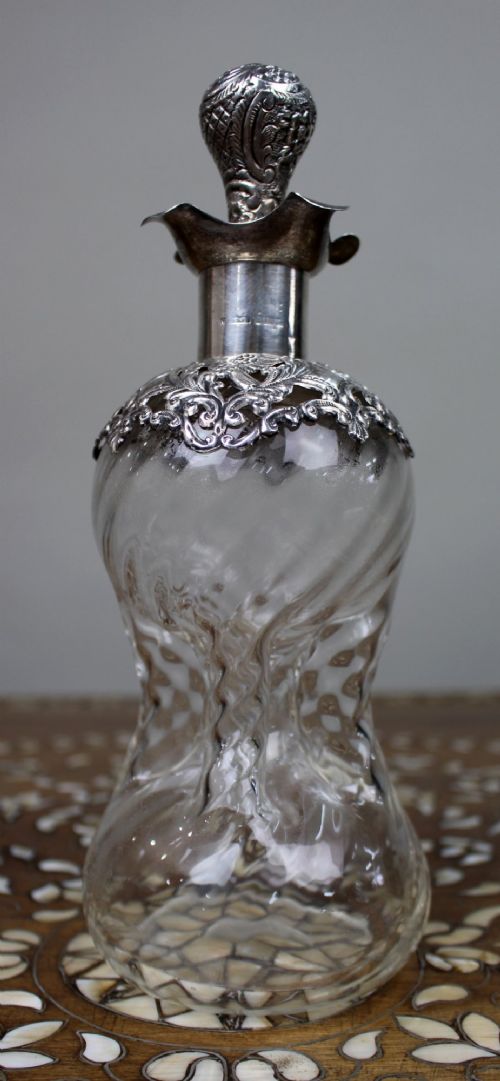
Glass vessels rely on heavy cutting, moulding, or blowing, yielding clear, cranberry, or amber bodies that catch the light on a sideboard. Silver and silver-plate mounts are secured around necks and lips, often paired with matching labels for whisky or claret.
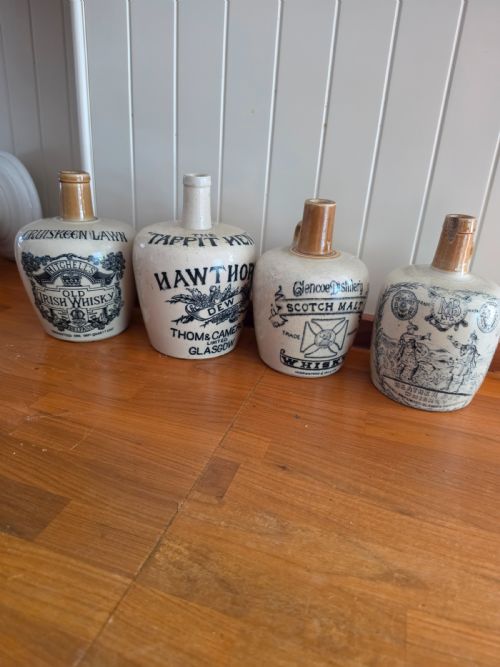
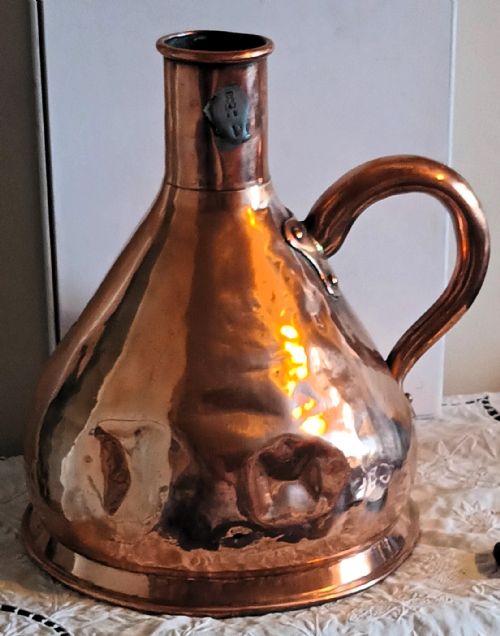
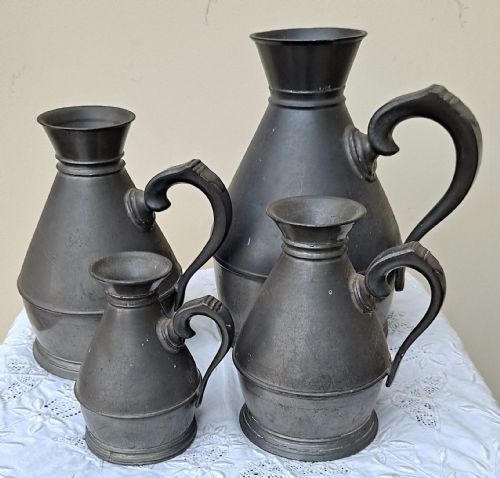
Metal measures and jugs are formed from sheet copper or cast pewter, joined with soldered seams or hand-hammered panels. Stoneware flasks are wheel-thrown or moulded, then finished with salt glazes or rich brown slips before firing.
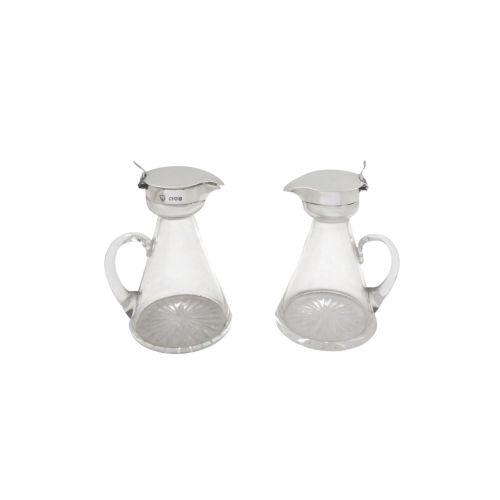
Listings feature liquid measures in copper and pewter alongside cut glass decanters mounted in sterling silver and silver plate.
Assessing quality and finish
Quality rests on the crispness of the glass cutting, the weight of the metal mounts, and the purity of the casting in pewter or copper. Finer whisky noggins feature intact sterling silver collars with clear hallmarks matching their associated labels.
Proportion and balance set the better pieces apart from utilitarian tavern gear, especially when handles, spouts, and hinged lids are shaped with decorative flair rather than strict utility.
Royal Doulton·Hukin & Heath·Port Dundass·J. Bower
The Vintage Spirits Jug Glossary
- Noggin
- A small drinking vessel or measure, typically holding a quarter of a pint of spirits. These small jugs often feature a hinged silver lid or an open pourer.
- Haystack measure
- A distinctively shaped Irish or English pewter measure with a curved body resembling a hay bale. They appear in graduated sets for liquid capacity.
- Tappt hen
- A traditional Scottish pewter measure with a tapped spigot and a lid topped by a knob resembling a nesting hen. These antique vessels denote substantial capacity.
- Claret jug
- A decorative pitcher designed specifically for serving red wine or claret. They commonly combine glass bodies with elaborate silver-plated or sterling mounts.
- Stoneware flask
- A dense, vitrified ceramic container used for storing and transporting spirits. Examples often bear factory stamps or advertising legends.
Vintage Spirits Jug: Frequently Asked Questions
What is a whisky noggin?
A whisky noggin is a small personal decanter or jug designed to hold a single measure of spirits. They typically come paired with a small silver label.
Most examples date from the late Victorian and Edwardian periods, often fitted with sterling silver collars and handles for easy pouring at the table.
How do I date a pewter measure?
Pewter measures are dated by their capacity marks, tavern stamps, and the changing style of their handles and lids. Reign marks such as VR help narrow down the decade of production.
Earlier eighteenth-century pieces like Tappt hens display heavier cast construction and distinct touchmarks stamped directly into the metal by the maker.
Are copper measures safe for drinks?
Antique copper measures were generally utilised for dry or liquid tavern measurement rather than long-term storage. Many retain interior tinned linings intended for safe contact with beverages.
Buyers planning to use antique metal vessels for serving should verify the condition of any protective interior lining before pouring active spirits.