




Silver Top Whisky Jug
A silver top whisky jug brings a brilliant flash of polished metal and heavy cut crystal to any sideboard.
Silver Top Whisky Jug
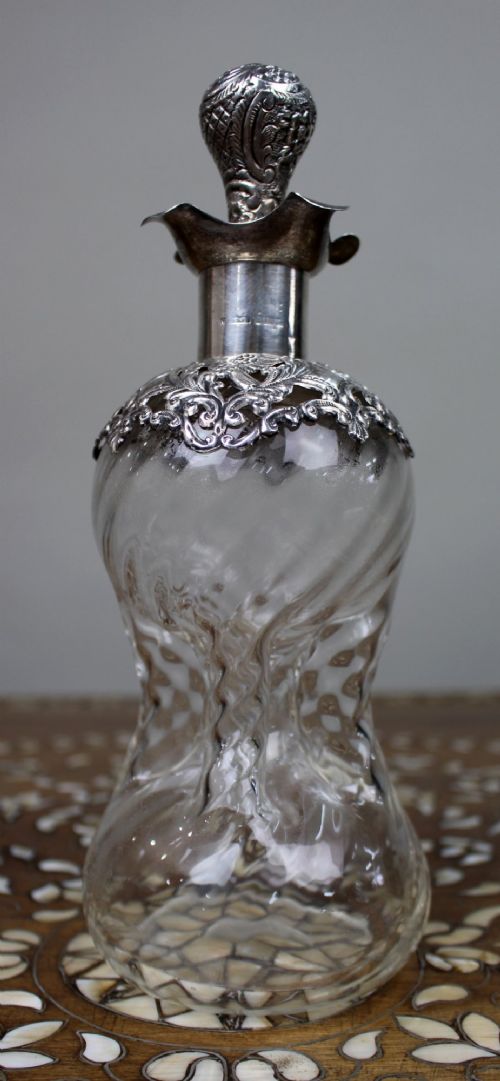
When you search for a silver top whisky jug, you encounter practical drinking vessels designed to pour a generous measure of spirits. These pieces primarily span the Edwardian era through the nineteen-thirties, taking the form of compact noggins, miniature decanters, and larger claret jugs.
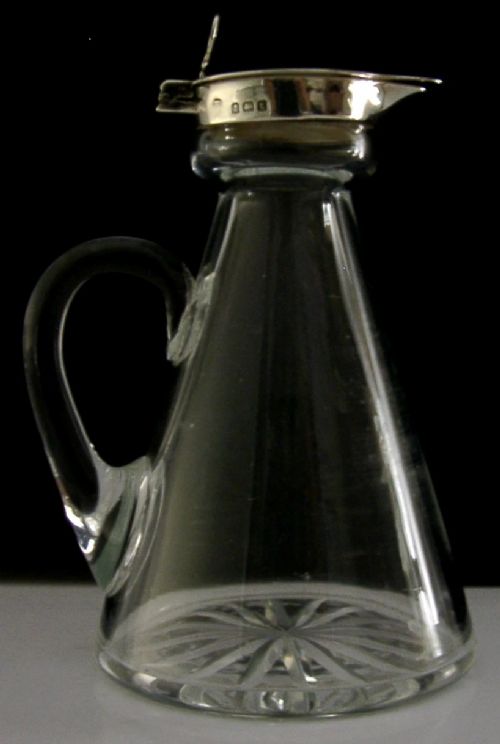
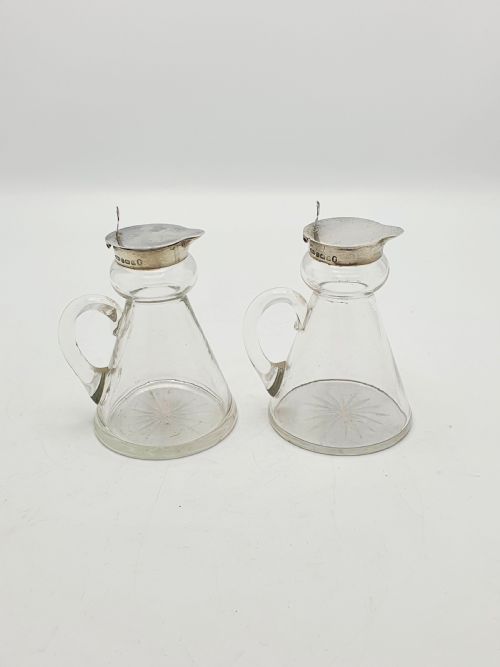
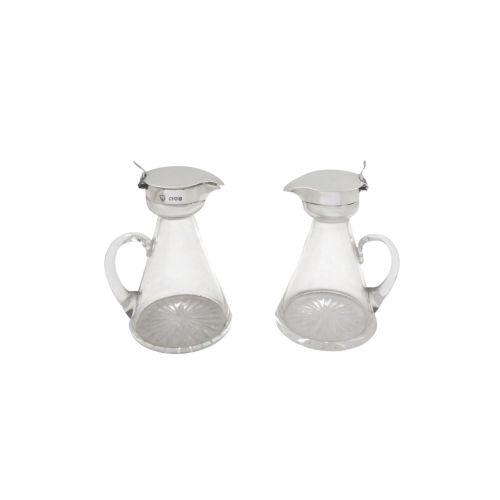
The most common version met on this page is the single-serve whisky noggin, complete with a handle, a hinged sterling silver mount, and a star-cut base. Alongside these sit pairs of noggins and larger silver-mounted crystal decanters intended for colonial service or formal dining tables.
Makers utilised clear glass, cut crystal, and sterling silver to construct these vessels, frequently pairing them with small silver labels. The styles range from restrained Victorian and Edwardian designs to clean-lined Art Deco expressions associated with George V.
How they were made
The body of a silver top whisky jug relies on heavy clear glass or cut crystal, blown and wheel-cut to refract light through the amber spirit within. Artisans fashioned these bodies with thick bases and sturdy integral handles designed for daily handling.
Mounts and lids were formed from sterling silver, often hinged to the collar and secured with a thumbpiece for single-handed pouring. Silversmiths worked the metal by hand, adding hallmarked collars that gripped the glass neck securely.
Listings feature sterling silver, cut crystal, and clear glass across Edwardian, George V, and Art Deco styles.
What varies in quality
The distinction between ordinary and exceptional pieces rests on the depth and crispness of the glass cutting and the weight of the silver mount. Heavy, thick-walled crystal and crisp hallmarks indicate superior production.
Proportion and balance also define the finer examples, where the handle feels substantial in the hand and the silver lid closes with a clean snap. Simpler glass bodies with thinner silver collars occupy the other end of the range.
Hukin & Heath
The Silver Top Whisky Jug Glossary
- Noggin
- A small drinking vessel or mug, typically holding a single measure of spirits. In this context, it refers to the characteristic handled decanter shape.
- Sterling silver
- An alloy of silver containing 92.5% pure silver and 7.5% other metals, usually copper. This standard is denoted by hallmarks on the jug mounts.
- Cut crystal
- Glass that has been decoratively carved and faceted using a wheel. It adds weight and sparkle to the body of the jug.
- Claret jug
- A larger pouring vessel for wine or spirits, sometimes serving as a giant whisky noggin. These share the silver mounts and glass bodies of smaller pieces.
- Hallmark
- An official stamp applied to silver objects indicating purity, the maker, and the year of assay. They provide precise dating for the metal mounts.
Silver Top Whisky Jug: Frequently Asked Questions
What is a whisky noggin?
A whisky noggin is a small, handled decanter designed to hold a single personal measure of spirit. They were popular in homes and clubs for individual serving.
The glass bodies are often cut with geometric patterns and fitted with a hinged silver lid that opens with a thumbpiece.
How do I date these jugs?
Dating relies primarily on the silver hallmarks stamped onto the mounts or lids. These marks reveal the assay office and the exact year of manufacture.
Stylistic clues such as Edwardian proportions or George V commemorative marks also help narrow down the period.
Can I use them for drinks today?
These jugs remain entirely functional for serving whisky, water, or other spirits at the table. Their sturdy construction suits regular use.
Care should be taken when washing the vintage glass and silver mounts by hand rather than placing them in a dishwasher.
What is a chota peg?
A chota peg is a colonial term for a small alcoholic drink, particularly whisky and soda. Large jugs were sometimes termed chota peg noggin tots.
These pieces reflect the social habits of the British Empire during the Edwardian period.