
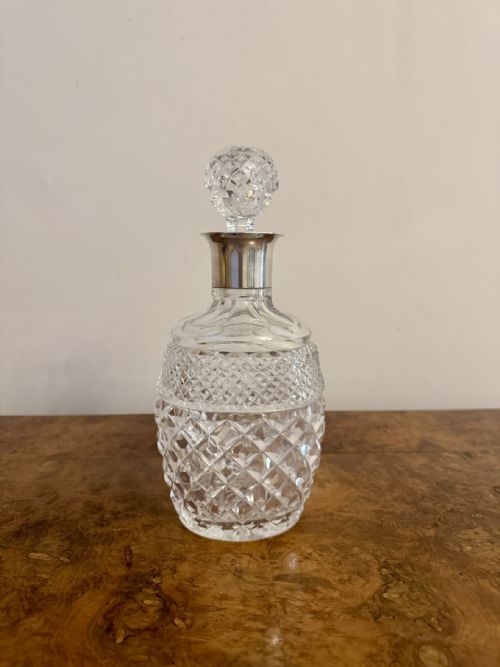
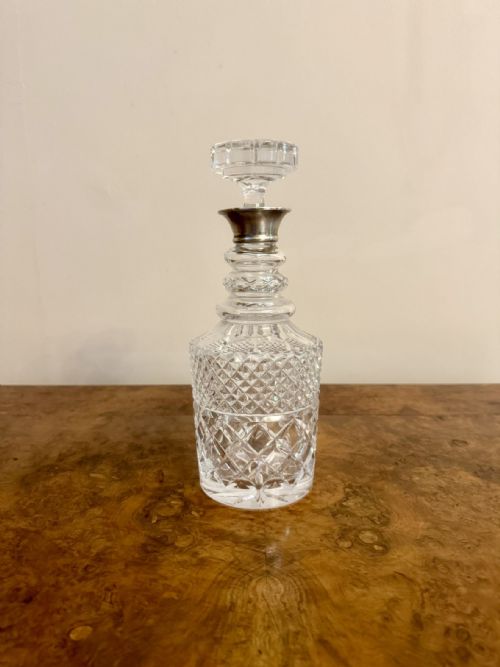

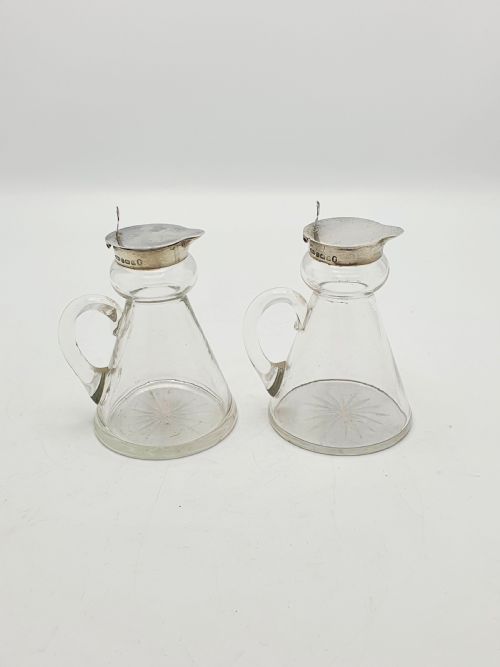


Silver Glass Whisky Decanter
When you choose a silver glass whisky decanter, you hold a piece of late nineteenth or early twentieth-century barware designed to serve spirits with weight and polish.
Silver Glass Whisky Decanter
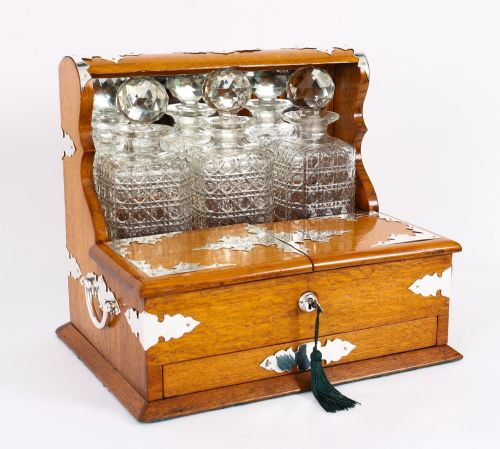
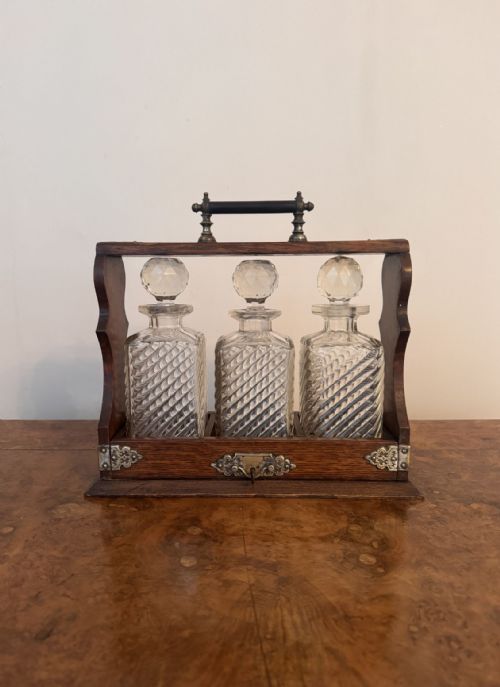
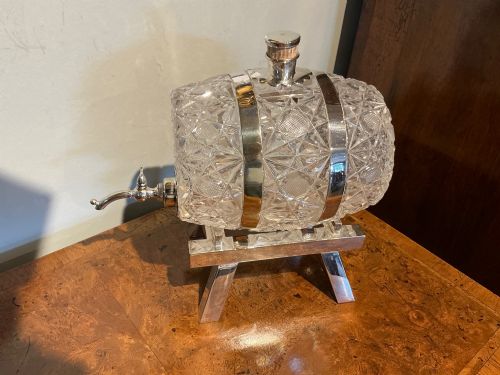
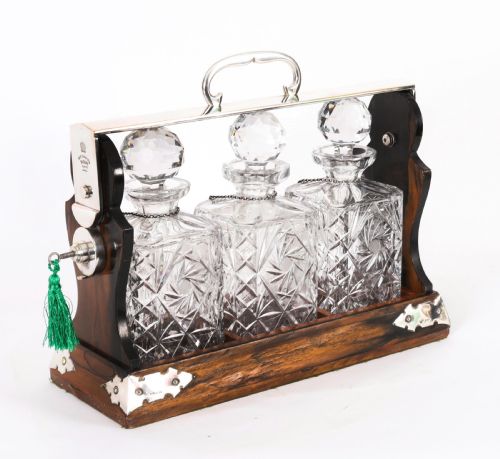
A silver glass whisky decanter encompasses several distinct serving vessels from the Victorian, Edwardian, and Art Deco periods, ranging from single-bottle noggins to multi-bottle tantalus sets housed in oak or coromandel wood.
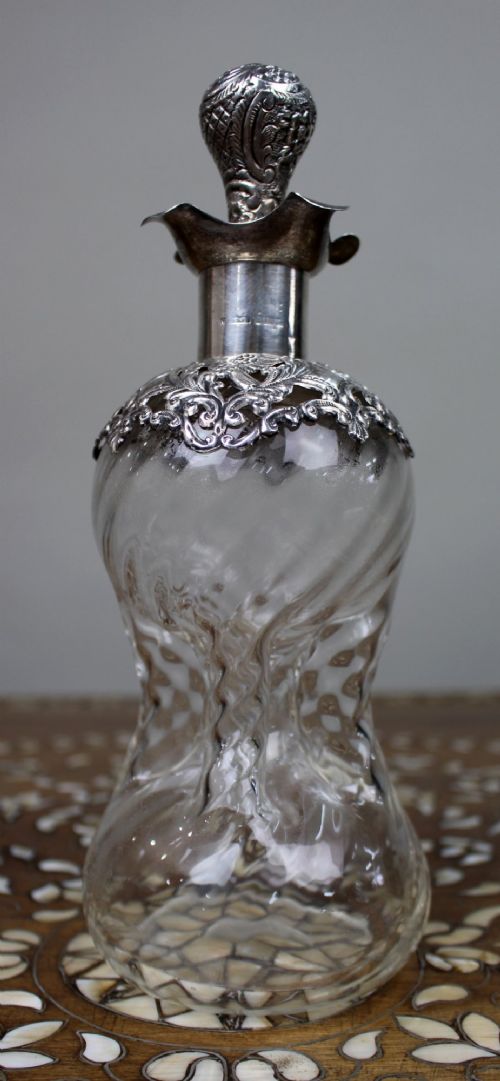
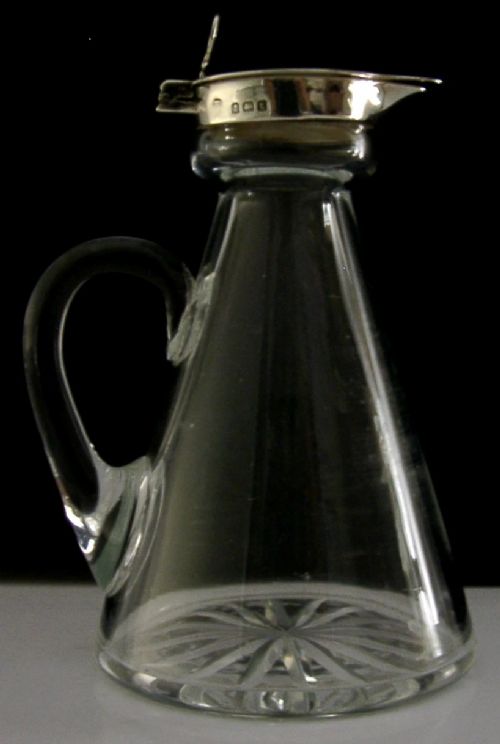
The most frequent form encountered on this page is the individual whisky noggin or collar-mounted decanter, often paired with a matching silver label and mounted in sterling silver or silver plate.
Originating largely in Britain during the nineteenth and twentieth centuries, these items combine cut crystal or glass bodies with hallmarked metal mounts designed for practical hospitality and after-dinner display.
Materials and construction
Makers combined heavy lead glass, cut crystal, or dimple glass with sterling silver and silver plate, frequently securing collars and spouts directly to the glass necks.
Wooden frames utilise oak, blonde oak, and coromandel, often incorporating locking mechanisms and brass hardware to construct secure tantalus sets and games compendiums.
Silver components received hallmarks indicating assay offices such as Birmingham and London, alongside the specific marks of specialised silversmiths.
Listings span the Victorian, Edwardian, and Art Deco eras, utilising sterling silver, silver plate, cut crystal, oak, and coromandel.
Distinctions in craftsmanship
Quality rests in the crispness of the glass cutting, the thickness and clarity of the crystal, and the substance of the silver mounts rather than thin plating.
The integration of the silver collar to the glass body demonstrates the precision of the silversmith, alongside the complexity of any associated wooden frames or locking mechanisms.
Pieces bearing clear, legible hallmarks from known workshops and matching silver labels maintain a higher degree of historical integrity.
Betjemann·Hukin & Heath·Elkington·Freeman & Son Ltd
The Silver Glass Whisky Decanter Glossary
- Noggin
- A small drinking vessel or single-portion decanter, typically holding enough spirits for one or two glasses.
- Tantalus
- A locking wooden stand that holds decanters securely visible while preventing unauthorized access to the contents.
- Silver Plate
- A base metal coated with a layer of sterling silver, widely utilised in barware and decanter frames.
- Hallmark
- An official stamp applied by an assay office to indicate the purity of precious metal and the year of manufacture.
- Cut Crystal
- Glass containing lead oxide that has been faceted by grinding and polishing to increase brilliance and weight.
Silver Glass Whisky Decanter: Frequently Asked Questions
What is a whisky noggin?
A whisky noggin is a small individual decanter or jug designed to hold a single measure of spirit, usually fitted with a sterling silver collar and handle.
These vessels were commonly used in private homes and clubs during the Edwardian period for personal service rather than communal sharing.
How do I date a silver mounted decanter?
Dating relies primarily on the metal hallmarks stamped into the silver mounts, which indicate the specific assay office and year of manufacture.
Stylistic cues such as the cut of the glass and the shape of the wooden tantalus frame also help place the piece within the Victorian or Art Deco eras.
What is an antique tantalus?
An antique tantalus is a locking wooden frame that holds two or three glass decanters securely in place, preventing guests or servants from pouring drinks without a key.
Originating in the Victorian period, these stands were built from oak or exotic woods like coromandel and placed in smoking rooms or sideboards.
Can I use these decanters for daily service?
These decanters are functional objects that can hold spirits, provided the glass and cork stoppers are handled with care during cleaning.
Hand washing in warm water protects both the antique glass and the historic silver mounts from modern detergent damage.