
Vintage Smokers Bow Chair
A vintage smokers bow chair offers robust low-backed comfort, combining vernacular woodwork with dependable everyday seating for a study or kitchen.
Vintage Smokers Bow Chair
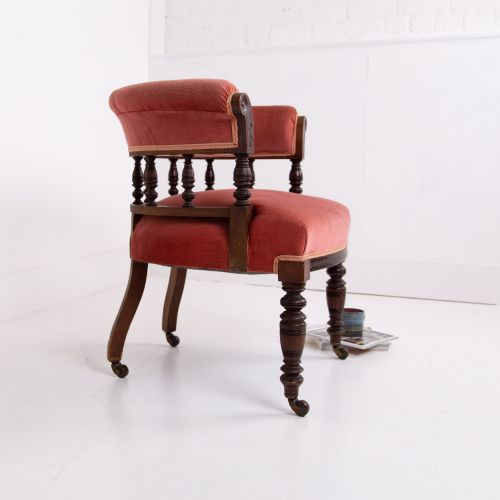
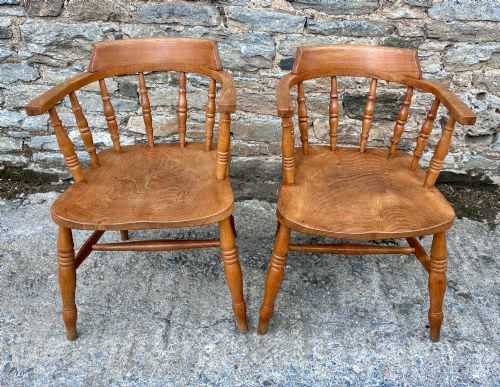
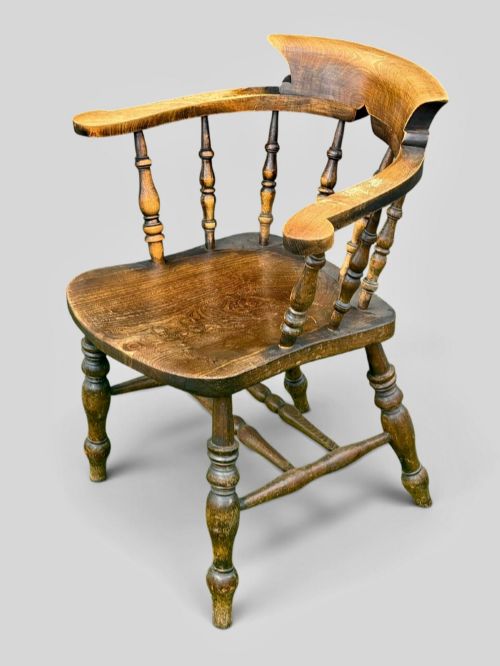
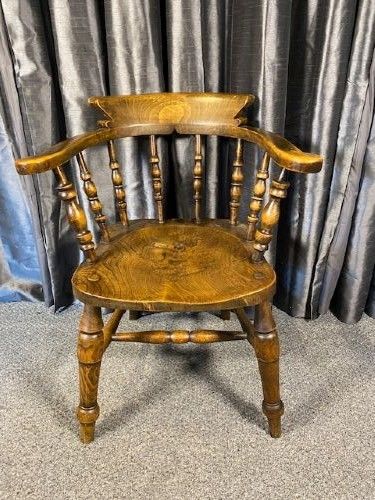
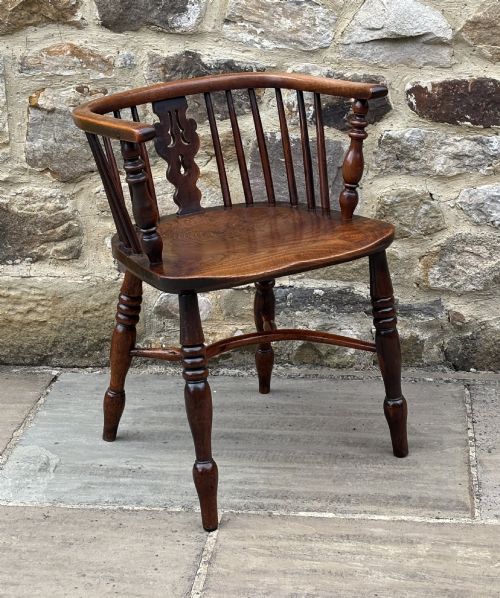
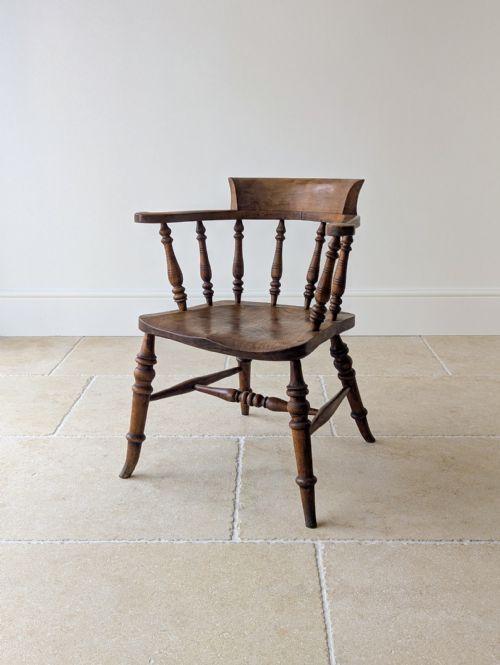
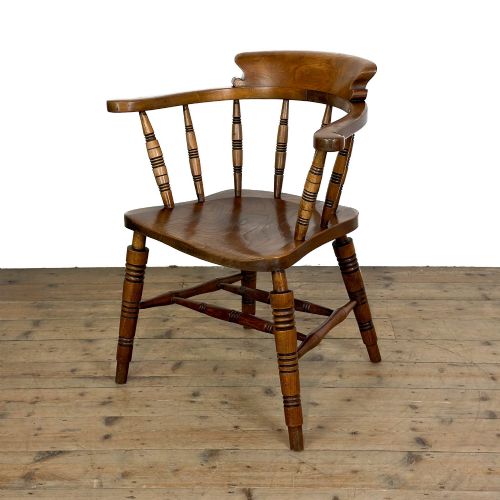
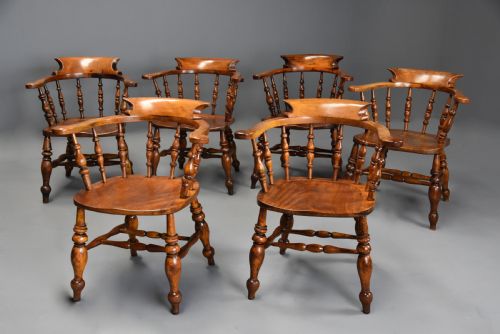
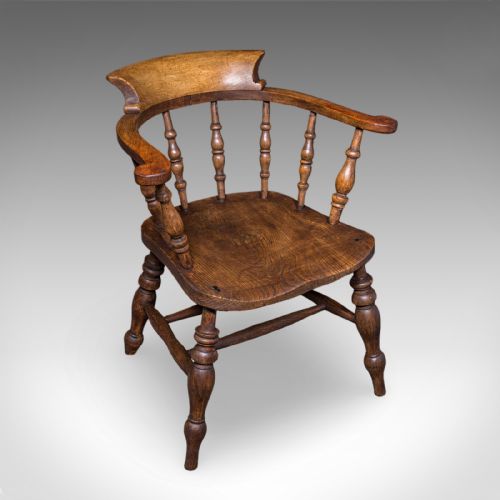
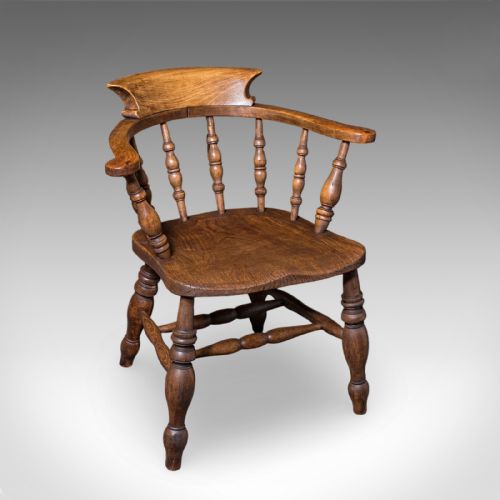
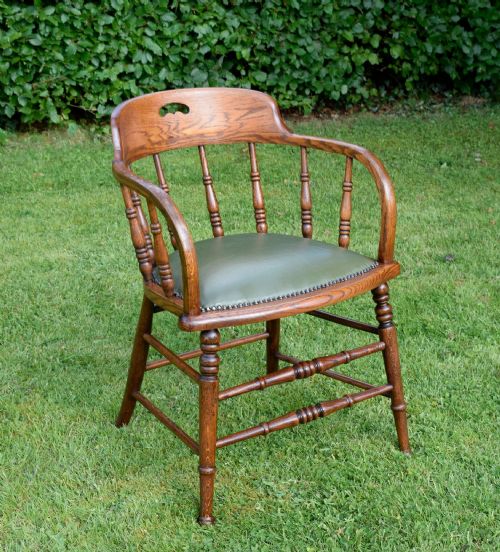
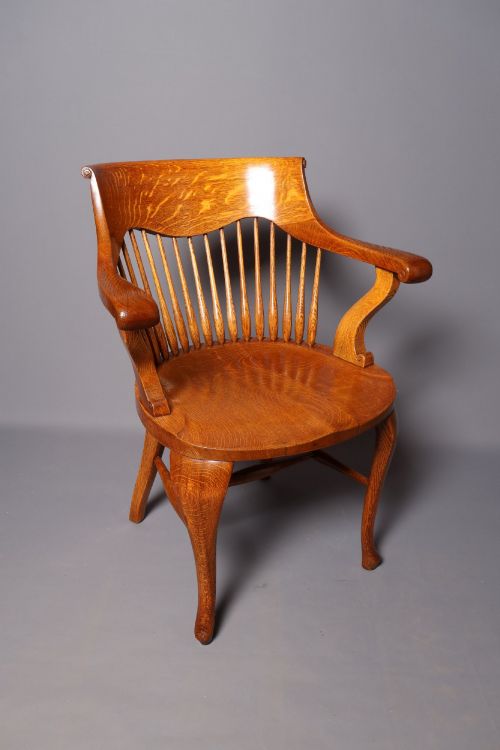
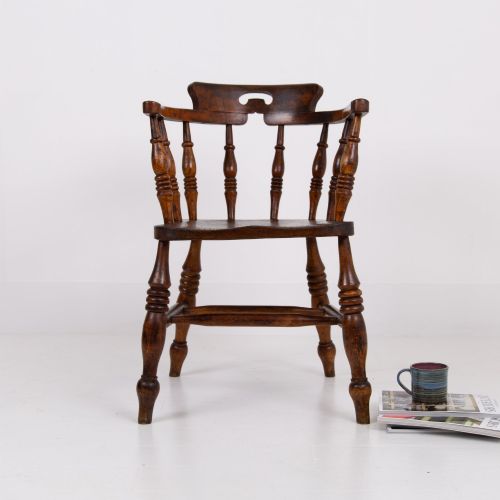
A vintage smokers bow chair is a low-backed Windsor variant featuring a continuous bentwood rail that forms the arms and backrest, often encountered as an armchair or desk chair originating from the nineteenth and early twentieth centuries. These seats span periods from the Victorian era through the Edwardian years and into the 1920s, reflecting English country and provincial traditions. They appear frequently in configurations suited for a desk, office, or dining table, utilising sturdy elbow rests.
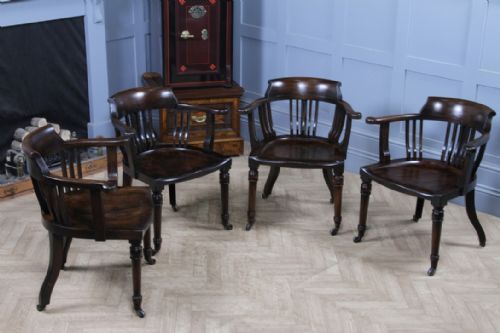
The form bridges the gap between utilitarian farmhouse seating and refined library or office furniture, appearing under descriptions such as captain's chairs or Windsor chairs. Buyers will encounter single pieces, matched pairs, or larger sets spanning mid-nineteenth century origins up to early twentieth-century examples.
Materials and construction
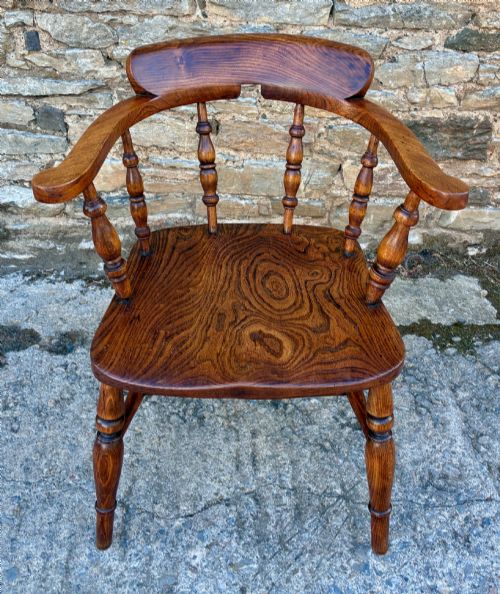
Makers built these chairs using contrasting native timbers, typically pairing solid elm for the shaped saddle seats with bent beech, ash, or oak for the spindles, bows, and legs. This combination utilised the strength of ash and beech for turned components alongside the resilient grain of elm, which resisted splitting under daily use.
Joinery relied on traditional stick-built construction where turned legs and back spindles locked directly into bored holes within the solid wooden seat slab. Selected examples incorporated brass hardware, metal elements, or leather upholstery, particularly within later desk and office variants.
Some sturdy specimens show the honest scars of nineteenth-century pipe smoke and vigorous writing.
Distinctions in quality
Quality rests upon the depth and comfort of the sculpted elm seat and the graceful sweep of the steam-bent arm bow rather than decorative excess. Superior examples display balanced turning on the spindle backs and well-proportioned legs that retain their original timber patination.
The integrity of the stick construction dictates overall longevity, distinguishing robust provincial seating from lesser or heavily restored alternatives.
The Vintage Smokers Bow Chair Glossary
- Smokers bow
- A low-backed Windsor armchair featuring a thick, steam-bent wooden rail forming the arms and backrest. It gained popularity in nineteenth-century country houses and rural pubs.
- Windsor chair
- A chair built with a solid wooden seat slab into which the legs and back spindles are driven directly. Traditional versions employ turned components and steam-bent elements.
- Captain's chair
- A sturdy low-backed armchair designed for functional seating at a desk or table. The term frequently overlaps with the smokers bow in nineteenth-century listings.
- Saddle seat
- A wooden seat base scooped and carved into a concave profile for sitting comfort. Elm was the preferred timber for this shaping due to its interlocking grain.
- Spindle back
- A chair back constructed from vertical turned wooden rods supporting the upper rail. These elements distribute weight and provide structural rigidity to the frame.
Vintage Smokers Bow Chair: Frequently Asked Questions
How do I use one at a desk?
Many vintage smokers bow chairs function effectively as desk armchairs due to their supportive low backs and comfortable elbow rests. Their dimensions fit standard writing tables from the Victorian and Edwardian periods.
Ensure the seat height and arm clearance match your desk requirements before placing the chair into a study or office workspace.
How do I date a smokers bow chair?
Dating relies on examining timber choices, turning styles, and construction details recorded across the Victorian and Edwardian eras. Earlier nineteenth-century examples often display simpler ash and elm framing, while later versions incorporate oak or mahogany.
Desk variants from the Edwardian period frequently show commercial office adaptations like swiveling mechanisms or brass fittings.
What woods were used for these chairs?
Cabinet makers and country joiners predominantly used elm for the carved seats because its tough grain resisted splitting. Beech, ash, and oak provided the structural strength needed for the turned legs and steam-bent arm bows.
Selected examples also incorporate walnut or mahogany, particularly when styled as formal office or library seating during the late nineteenth century.