





Vintage Slant Top Bureau
A vintage slant top bureau combines a practical writing slope with concealed pigeonholes, offering both workspace and storage in a compact footprint.
Vintage Slant Top Bureau
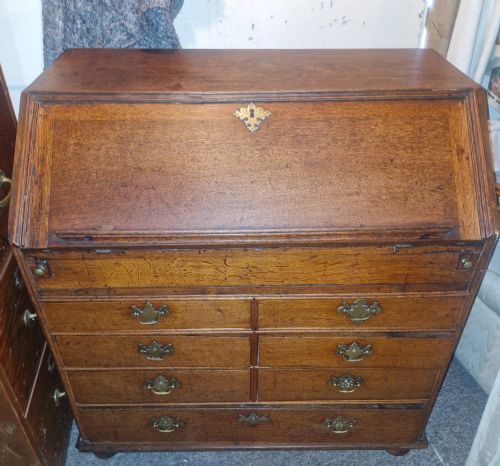
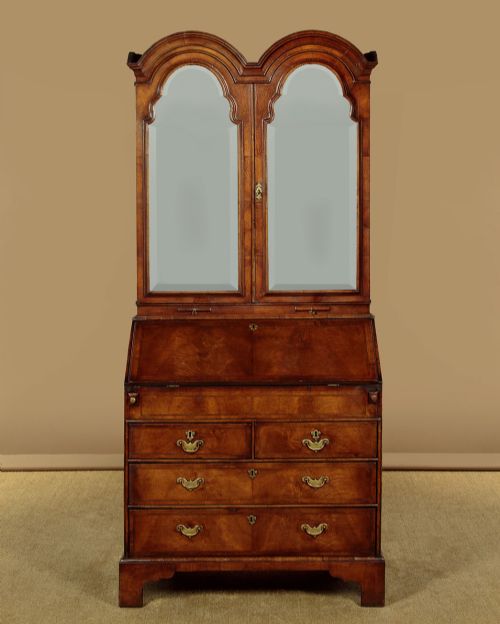
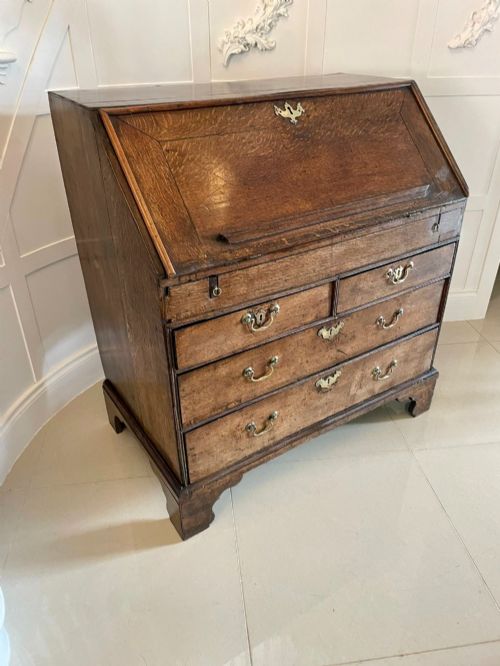
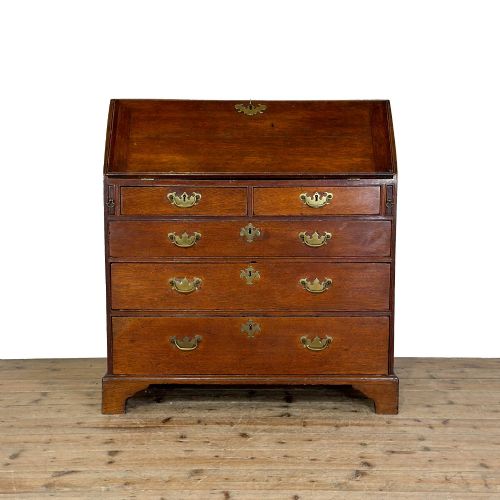
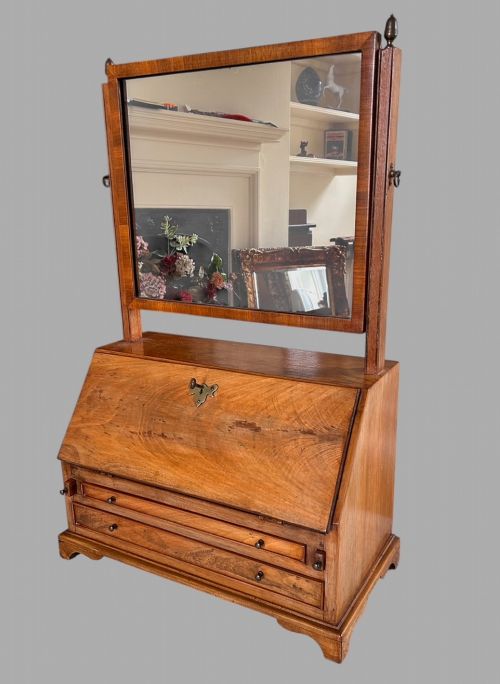
Buyers seeking a vintage slant top bureau encounter a range of forms, from compact Edwardian oak examples to substantial Georgian mahogany bureau bookcases and tall cabinets. These pieces combine a hinged writing flap that opens flat with an interior arrangement of small drawers and pigeonholes.
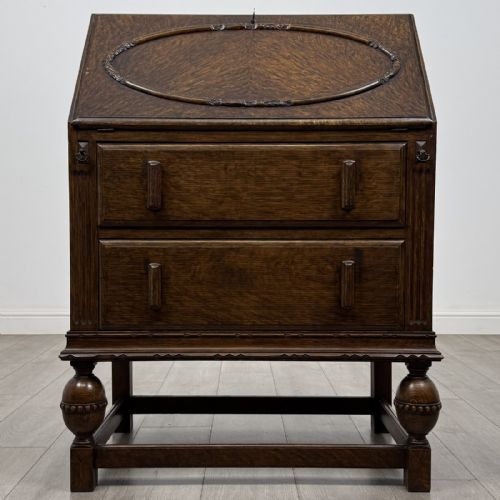
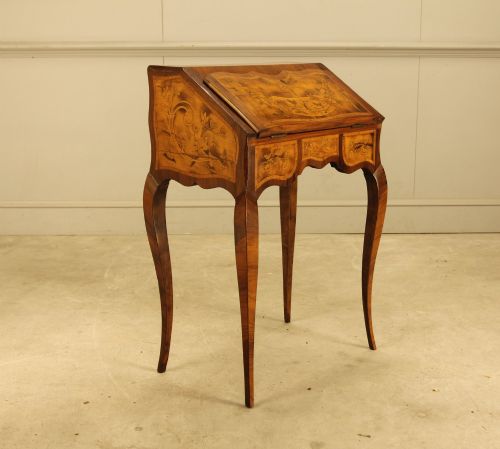
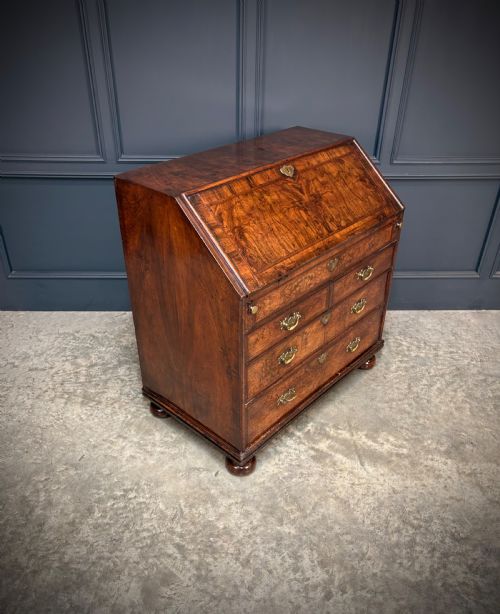
The selection spans several centuries and styles, including Queen Anne walnut, Jacobean Revival oak, and Italian marquetry. Forms vary from simple table-top versions to elaborate pieces featuring glazed bookcases or tambour doors above the writing surface.
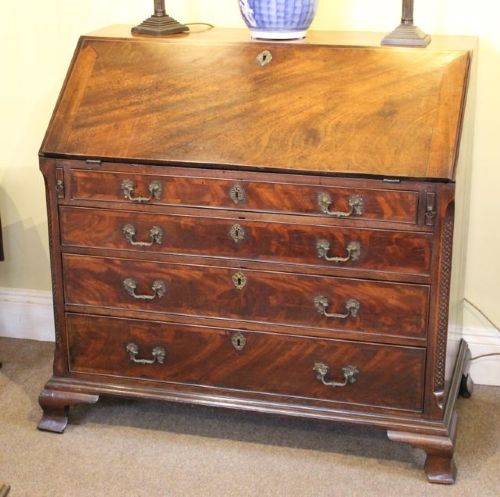
Solid timber construction predominates, with oak and mahogany appearing frequently alongside burr walnut, satinwood, and elm. Many pieces incorporate fitted interiors designed for correspondence and paperwork, maintaining utility alongside period character.
Materials and construction
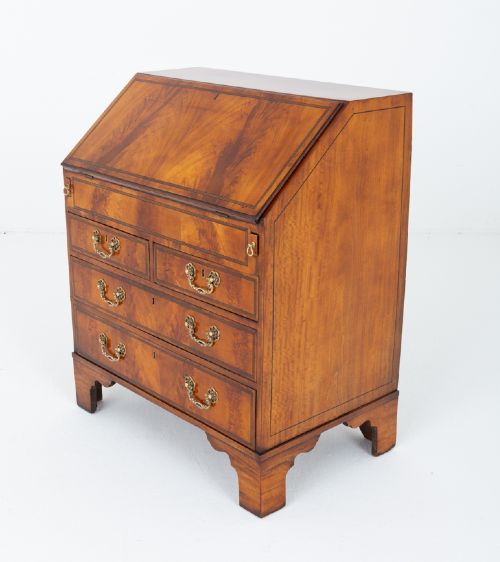
Cabinet makers utilised dense hardwoods such as oak, mahogany, and walnut, often applying decorative veneers like burr walnut and satinwood to the exterior surfaces. Brass hardware, including drop handles and escutcheons, secures the drawers and fall fronts.
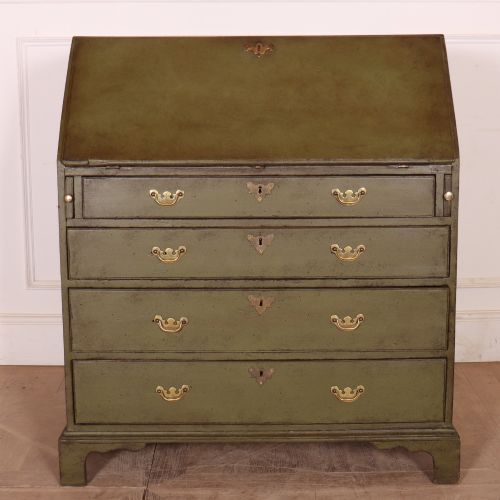
Interiors typically contain numerous small drawers and pigeonholes constructed with traditional joinery methods. Some pieces incorporate painted finishes, marquetry inlay, or glazed upper bookcase sections mounted above the main writing compartment.
Vintage Slant Top Bureau Retail Price Guide 2026
Typical asking prices for vintage slant top bureau among the pieces listed under this phrase on Sellingantiques today, from the lower quarter to the upper quarter. They describe what is for sale here now, not the wider market.
The listings on this page span several centuries, featuring oak, mahogany, walnut, and satinwood across styles from seventeenth-century Jacobean Revival to Edwardian.
Quality variations in the range
The standard of execution separates everyday utility items from finer decorative pieces, visible in the selection of timber veneers and the intricacy of the fitted interior. Finer examples display carefully matched grain patterns and superior internal drawer construction.
Gillows
The Vintage Slant Top Bureau Glossary
- Bureau
- A desk featuring a sloping hinged lid that drops down to form a writing surface, typically concealing small drawers and compartments inside. This term encompasses various desk forms across multiple centuries.
- Bureau Bookcase
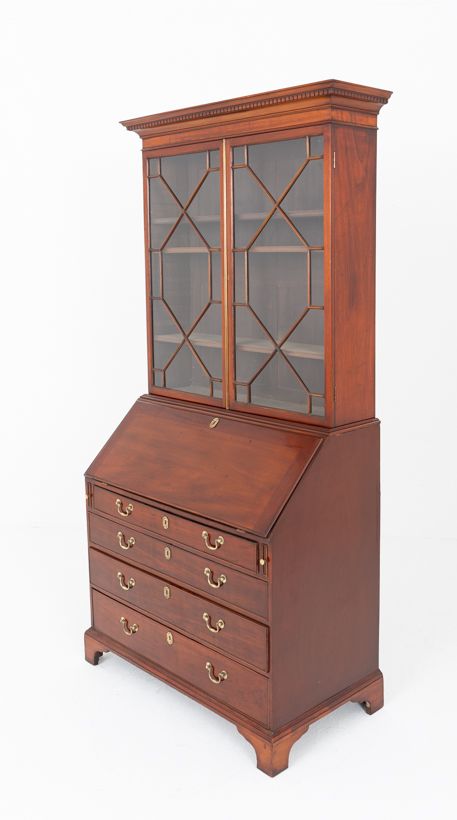
- A combination piece comprising a slant top desk base with an enclosed shelving or bookcase section mounted on top. These tall items provide both writing space and display storage.
- Marquetry
- Decorative veneer work formed by fitting together thin pieces of wood, bone, or shell to create pictorial or geometric patterns on the surface. It appears on revival and continental pieces.
- Pigeonhole
- A small open compartment within the fitted interior of a desk designed for sorting letters and papers. These compartments are often concealed beneath the main writing flap.
Vintage Slant Top Bureau: Frequently Asked Questions
What is a slant top bureau?
A slant top bureau is a writing desk featuring a hinged sloping lid that opens forward to create a flat writing surface. Beneath this flap lies an arrangement of small compartments and drawers for stationery.
Such pieces date from the seventeenth century onwards and serve as both compact writing stations and storage cabinets for papers.
How do I use a bureau bookcase?
A bureau bookcase combines a lower writing desk with an upper shelving unit enclosed by glass doors. The upper section displays books or decorative objects while the lower flap opens for writing.
This dual function makes the piece suitable for studies or living rooms where floor space is limited.
What woods were used for bureaus?
Cabinet makers constructed bureaus using solid hardwoods such as oak, mahogany, and walnut. Decorative veneers including burr walnut and satinwood frequently decorate the exterior surfaces.
Internal compartments often utilise secondary timbers alongside small solid drawers with brass pulls.
How do I identify a Georgian bureau?
Georgian bureaus typically display formal proportions in mahogany or oak, featuring simple bracket feet and brass drop handles. The interior reveals stepped pigeonholes and small drawers surrounding a central cupboard.
Later revival pieces from the Edwardian period emulate these earlier eighteenth-century characteristics with varying internal complexity.