


Vintage Silver Tongs
Vintage silver tongs encompass small domestic implements for sugar, ice and serving, spanning Georgian, Victorian and twentieth-century designs.
Vintage Silver Tongs
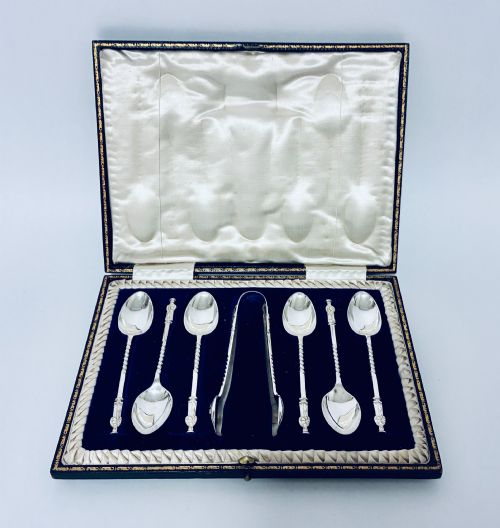
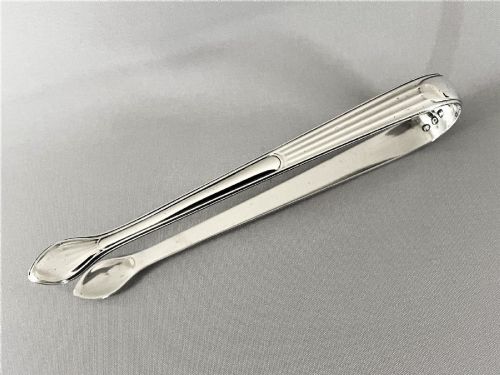
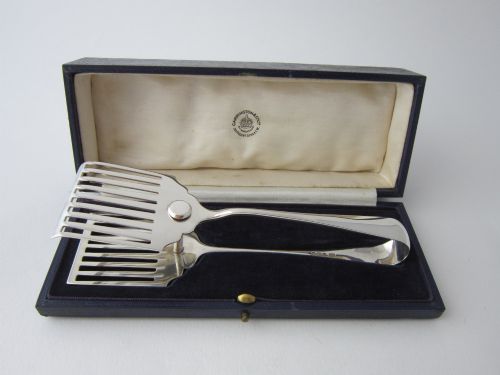
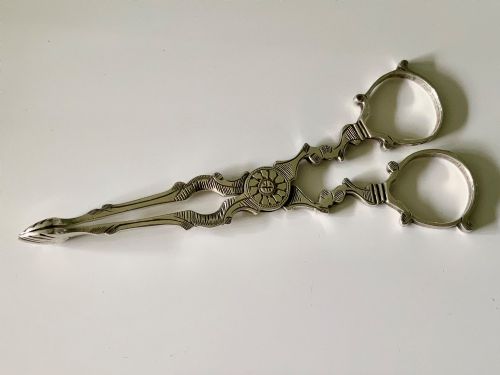
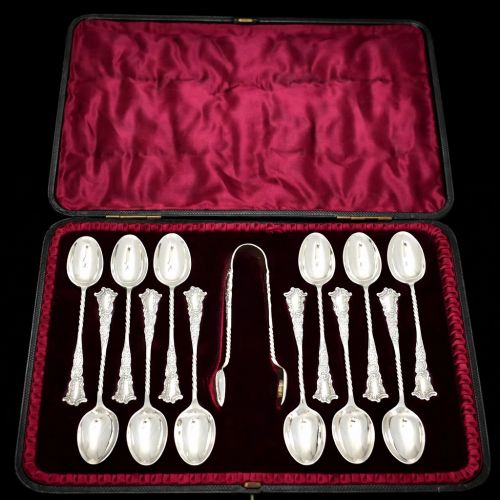
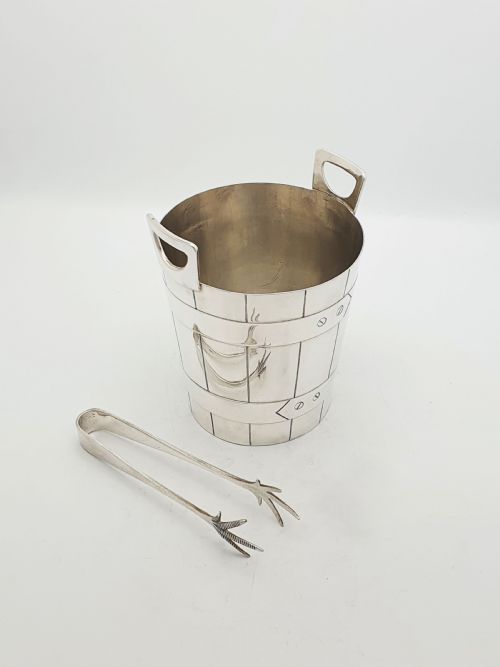
Sugar tongs and nips represent the most frequent finds in this category, often discovered alongside matching teaspoons in fitted presentation cases. Serving tongs, ice buckets with claw tongs, and asparagus tongs also appear regularly, reflecting formal dining and barware traditions from various decades.
Pieces originate from British regional assay offices as well as international workshops, displaying stylistic influences from Gothic Revival to Danish Modern. Buyers will find both solid sterling silver and silver-plated metal, with many items retaining their original boxes or associated serving pieces.
How they were made
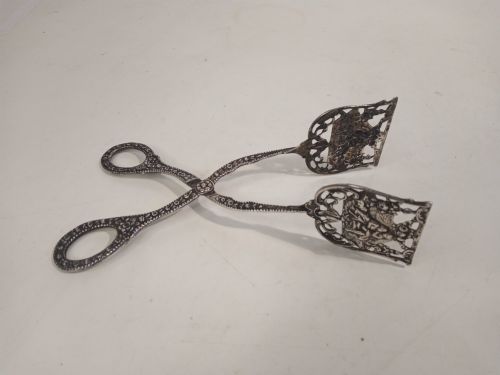
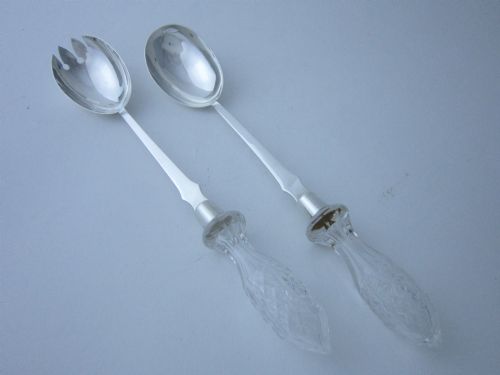
Makers utilised sterling silver and silver plate as the primary metallic mediums, shaping handles through casting, stamping, and piercing techniques. Polished steel also appears in utilitarian contexts, while associated serving sets integrate cut glass, velvet, and leatherette liners.
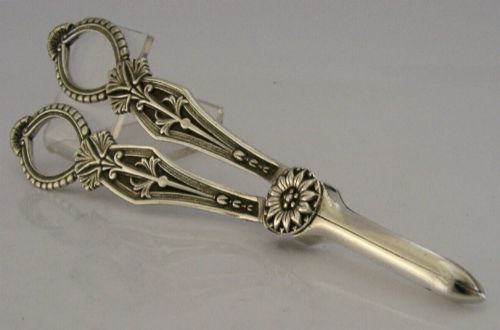
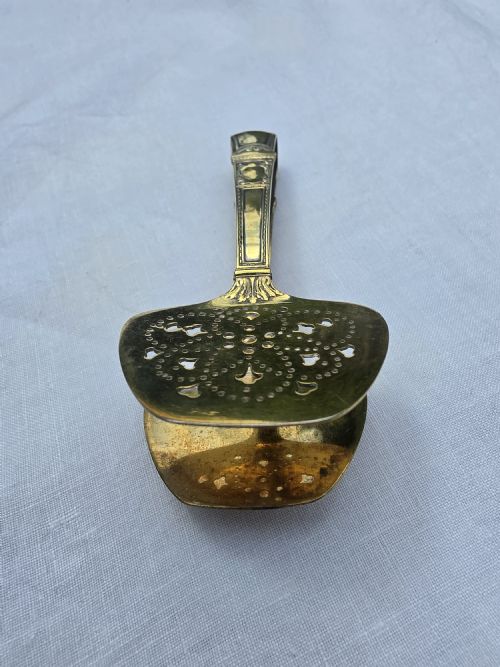
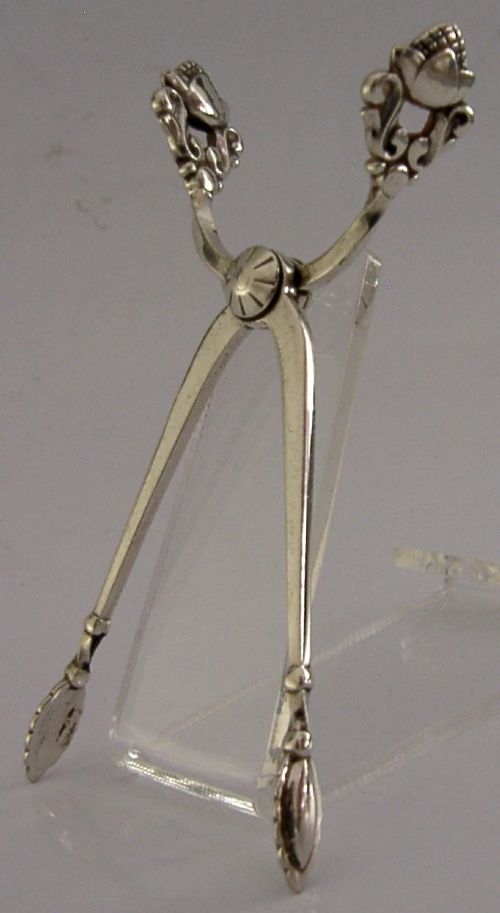
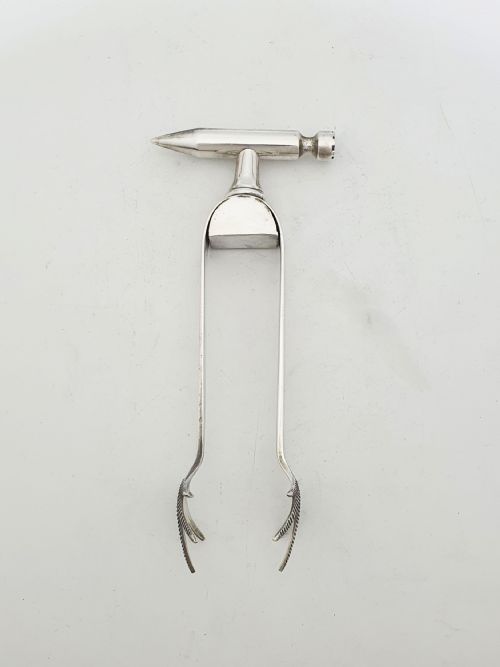
Artisans applied surface decoration ranging from engraved rat-tail motifs and chased floral patterns to cast claws and talons. Individual components were soldered or hinge-jointed, with silver-gilt finishes occasionally applied to accent bowls and gripping ends.
Several ice buckets come equipped with grasping bird claws and talons ready to clutch your evening cubes.
What varies in quality
The distinction between standard domestic items and finer pieces rests on the weight of the metal and the crispness of the cast or chased decoration. Heavier gauge sterling silver maintains structural rigidity in the spring arm, whereas lighter plated items rely on the underlying alloy's resilience.
Artistic execution dictates the upper tier of the range, visible in hand-cast figural grips such as bird claws or detailed floral piercing. Maker attribution and the presence of complete fitted presentation cases further differentiate ordinary utilitarian tools from collector examples.
Bateman Family·Tiffany and Company·Georg Jensen·Josiah Williams and Co·Dawson·Garrard and Co·Walker and Hall·Mappin and Webb·Robert Stebbings
The Vintage Silver Tongs Glossary
- Sugar Nips
- Small spring-action tongs designed for holding sugar lumps during tea service. They often feature ornate pierced bowls or cast handles.
- Sterling Silver
- An alloy consisting of pure silver and other metals, usually copper, meeting a specific fineness standard. British pieces commonly bear hallmarks indicating this standard.
- Silver Plate
- A base metal layer coated with a thin layer of silver through electroplating or old Sheffield plating methods. It offers the appearance of solid silver at a different cost level.
- Assay Office
- An official body that tested and marked precious metal items for purity. Marks from these offices indicate the city of testing and the year of production.
- Silver-Gilt
- Silver that has been coated with a thin layer of gold on its surface. This technique provides a two-tone decorative effect on functional areas.
Vintage Silver Tongs: Frequently Asked Questions
What were silver sugar tongs used for?
Sugar tongs served to transfer sugar lumps from a bowl into a teacup during formal tea rituals. They allowed guests to handle sugar cleanly without using fingers.
Over time, smaller spring-action nips evolved into various decorative patterns that matched accompanying teaspoon sets.
How can I tell sterling silver from silver plate?
Sterling silver items generally display hallmarks indicating the silver standard, city, and date of manufacture. Silver-plated pieces typically show marks denoting the plating method or manufacturer rather than official purity stamps.
Examining worn edges can also reveal the base metal underneath a plated surface.
Are these tongs safe to use with food?
Most solid silver and silver-plated utensils remain fully functional for serving food and bar use today. Regular washing with mild soap preserves the metal surface.
Items with delicate silver-gilt finishes or vintage velvet-lined cases require more careful handling and hand washing.
How do I date an antique pair of tongs?
British pieces can often be dated precisely using the stamped assay office hallmarks and date letters. Stylistic indicators like Art Deco geometric lines or Georgian engraving styles provide additional chronological clues.
Unmarked silver-plated items rely on design context, patent numbers, and associated pieces like ice buckets for dating.