





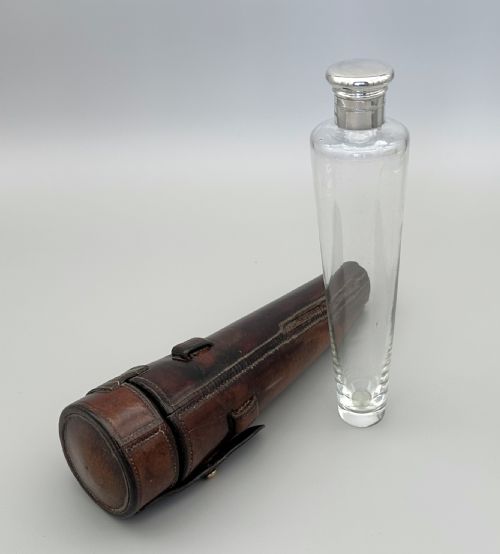
Vintage Silver Spirit Flask
A vintage silver spirit flask is a pocket companion or field accessory for carrying liquor, combining solid metal, glass, and leather.
Vintage Silver Spirit Flask
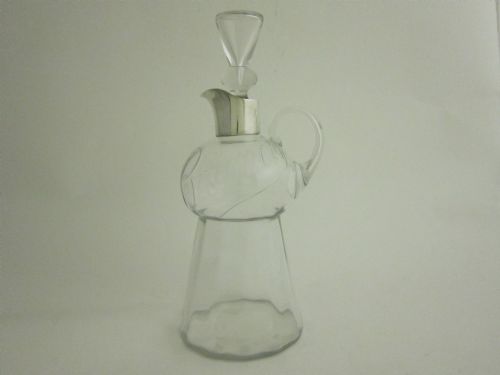
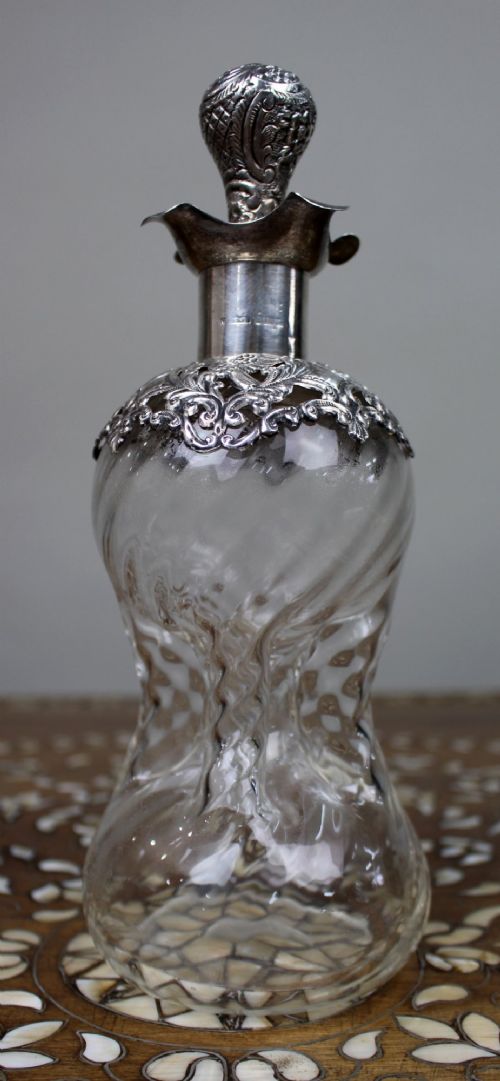
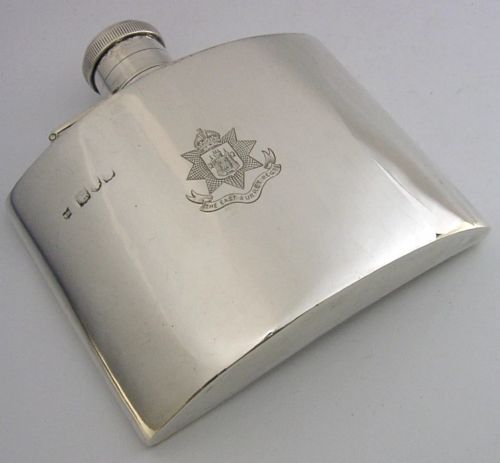
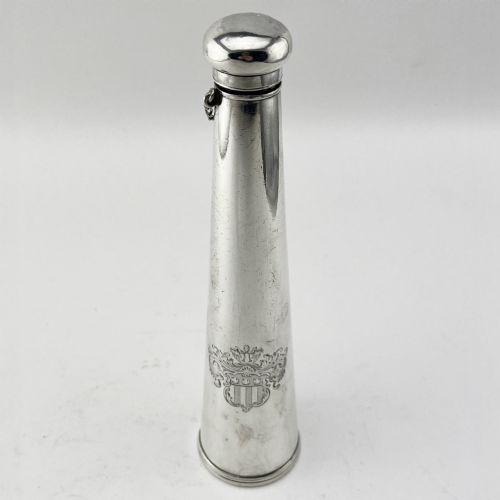
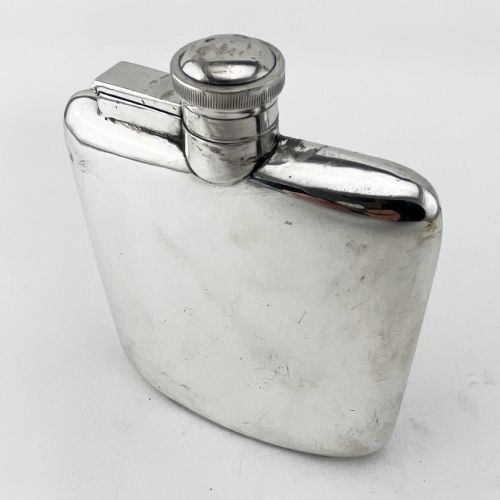
A vintage silver spirit flask serves as a portable container for liquor, taking forms from pocket-sized hip flasks to larger field campaign sets and decanters. Buyers encounter pieces spanning the Victorian, Edwardian, and Art Deco periods, alongside 1940s British examples.
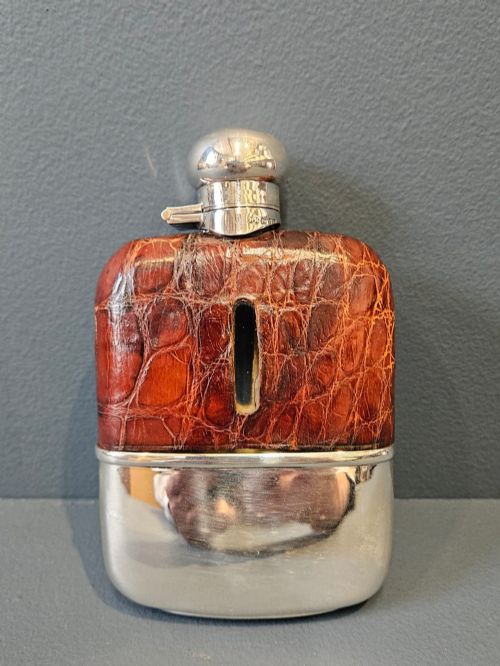
The selection ranges from plain sterling silver and silver plate to combinations featuring cut glass, cut crystal, crocodile leather, and standard leather cases. Makers utilised durable materials designed for outdoor pursuits, military use, and indoor entertaining.
How they were made
Silversmiths constructed the metal bodies from sterling silver or silver plate, sometimes applying a hammered finish or floral patterns to the exterior. Glass and crystal sections were cut to fit snugly within metal mounts, often paired with removable cups.
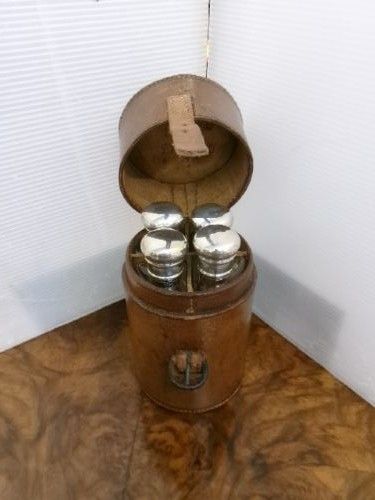
Leather elements, including standard and crocodile hides, were wrapped around glass or metal bodies, frequently accompanied by fitted leather carrying cases. Hinged flip tops and screw caps were engineered to secure the contents during travel.
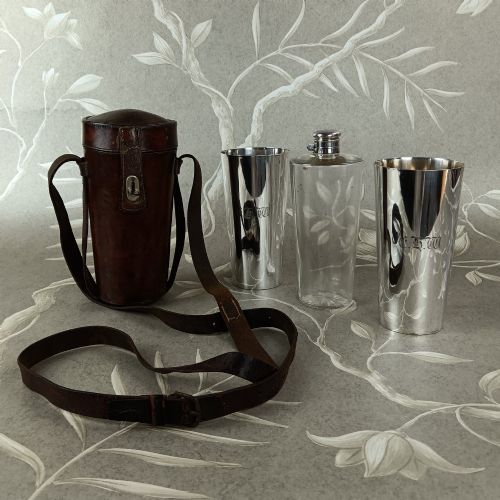
Object forms include standard pocket hip flasks alongside larger barware decanters and multi-beaker military campaign sets.
What varies in quality
The distinction between tiers rests upon the weight of the metal, the precision of the hallmarking, and the integration of secondary materials like leather and glass. Finer pieces demonstrate robust hinges, secure closures, and uncompromised cut crystal or glass.
Artistry in maker execution, such as specialised hammered finishes or comprehensive fitted field sets with beakers, elevates a piece. The presence of specialised military or regimental association also shapes the character of individual examples.
James Dixon & Sons·Hukin & Heath·Asprey London·William Neale·JB Chatterley & Sons·W A Ellwick Ltd·Mappin & Webb
The Vintage Silver Spirit Flask Glossary
- Sterling silver
- A silver alloy containing 92.5 percent pure silver and 7.5 percent other metals, usually copper, ensuring structural durability for daily carry. This standard metal appears across numerous Victorian and twentieth-century flasks.
- Silver plate
- A base metal core coated with a thin layer of silver, offering the visual appeal of solid silver at a different scale. This material is frequently found on larger barware and giant spirit flasks.
- Cut glass
- Glass shaped and patterned through abrasive cutting wheels to create geometric or floral designs on the body of the flask. It allows the liquid level to remain visible while diffusing light through the vessel.
- Campaign set
- A portable assemblage of spirit flasks and matching beakers housed within a fitted leather case. These sets were designed for travel and military field use during the nineteenth and early twentieth centuries.
- Flip top
- A hinged cap mechanism operated by a thumbpiece to provide rapid access to the flask interior. This closure style complements screw caps on various pocket and hunting models.
Vintage Silver Spirit Flask: Frequently Asked Questions
What is a vintage silver spirit flask used for?
These vessels were originally designed to carry personal rations of liquor during hunting expeditions, military campaigns, and outdoor travel.
Today, they serve as functional barware accessories, display pieces, or historical collecting objects.
How do I clean a silver hip flask?
Use warm water and mild dish soap with a soft cloth to clean the exterior, avoiding abrasive polishes that damage hallmarks.
Rinse the interior thoroughly with warm water and leave the cap open until completely dry.
Are these flasks safe for drinking?
Many sterling silver and silver-plated examples remain structurally sound for holding spirits once the interior is properly cleaned.
Buyers should inspect the seals, caps, and internal linings for wear before putting liquids inside older vessels.
How do I date a silver spirit flask?
British pieces typically feature hallmarks stamped into the metal, which indicate the assay office, metal standard, and date letter.
Stylistic indicators such as Art Deco geometric lines or Victorian chased decoration also help narrow down the period of manufacture.