


Vintage Silver Sifter
A vintage silver sifter dispenses fine sugar over desserts and fruit, combining practical table service with decorative craftsmanship.
Vintage Silver Sifter
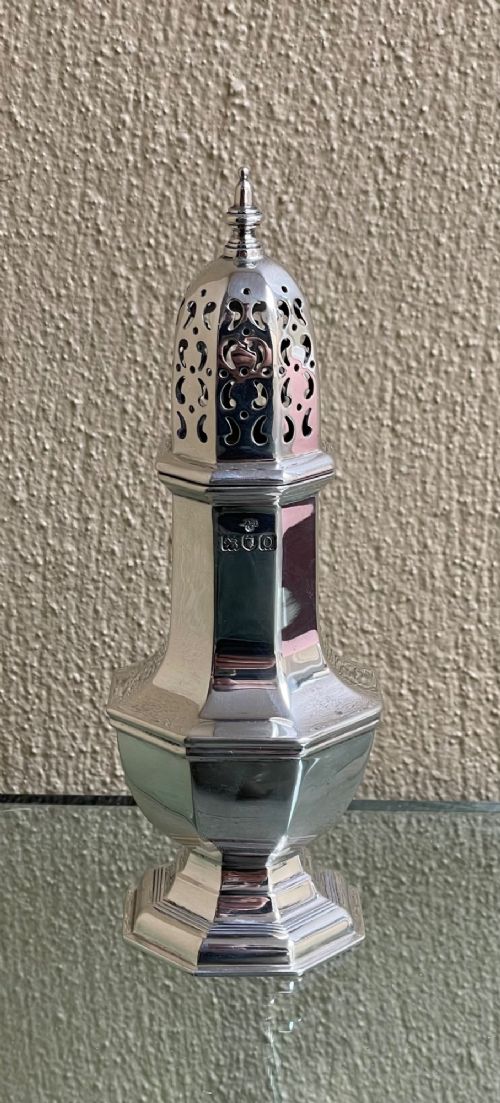
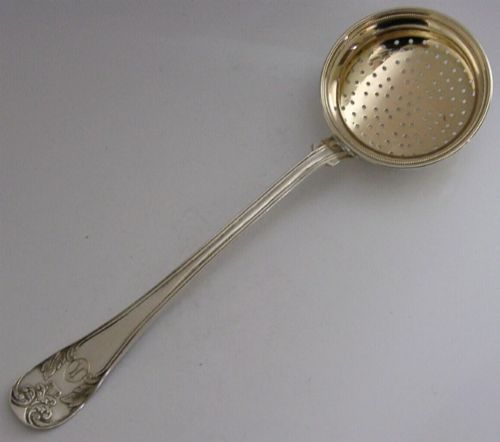
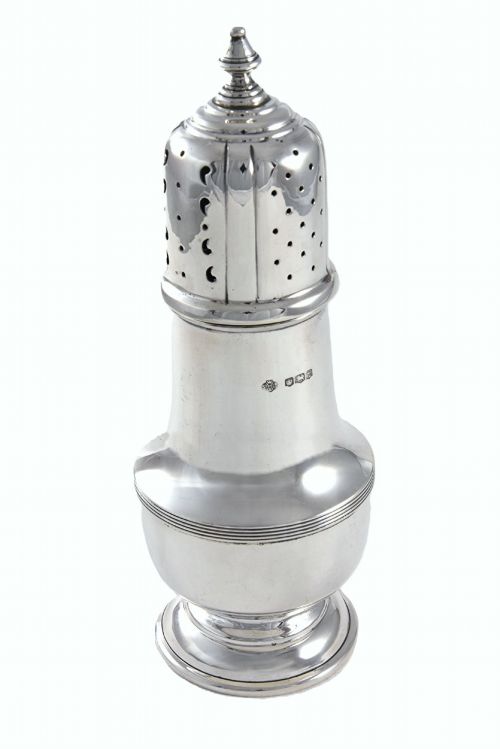
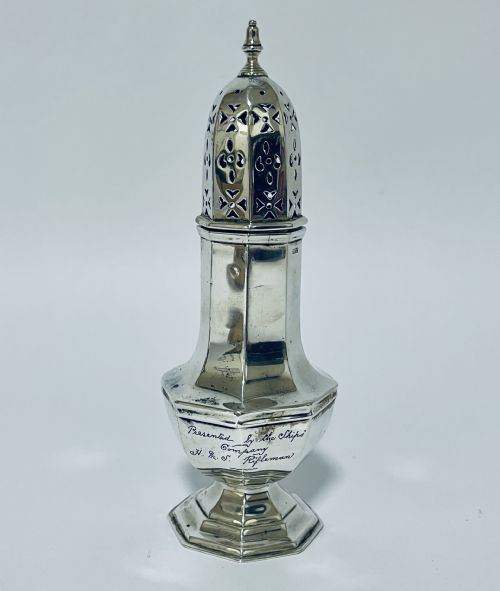
A vintage silver sifter serves as a refined dining accessory designed for dusting powdered sugar onto dishes. These table implements appear in various forms, including tall pierced casters, shaker vessels, and specialised spoons.
Pieces from this selection span several eras, originating predominantly from the Georgian, Victorian, and Edwardian periods, alongside later twentieth-century examples. Solid silver constructions sit alongside silver-plated items and combinations featuring glass liners.
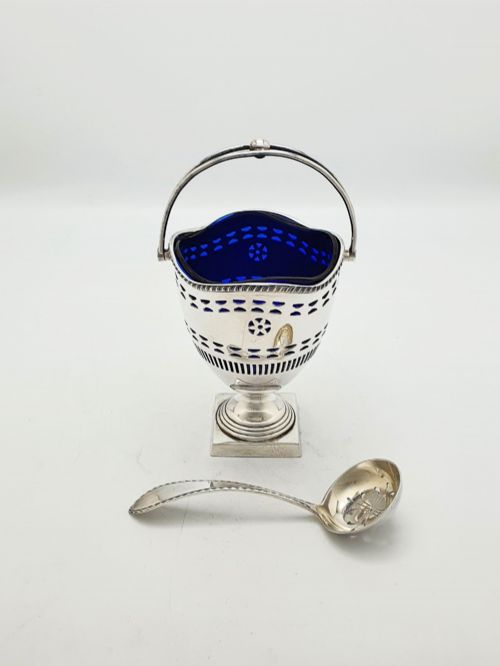
The most common formats on this page are standalone sterling silver casters and shakers. Buyers also encounter companion pieces such as pierced sugar bowls paired with cobalt glass or cranberry glass inserts.
How they were made
Metals used across these items include sterling silver, silver plate, and silver gilt, frequently paired with clear cut glass, cobalt glass, or cranberry glass bodies. Silversmiths shaped the metal through casting, piercing, and hammering techniques.
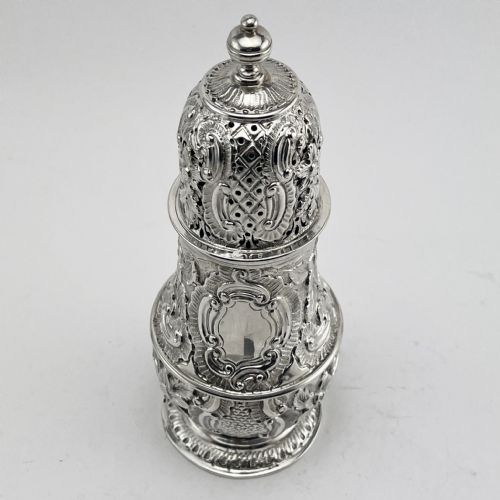
Piercing forms the characteristic dotted patterns on the lids and bowls, allowing sugar to filter through evenly. Internal glass liners protect the metal from moisture when paired with coloured or cut glass vessels.
Victorian silversmiths occasionally shaped sugar casters like cornucopias, bringing mythological abundance straight to the tea table.
What varies in quality
Quality differences rest upon the thickness of the metal, the crispness of the pierced decoration on the lid, and the integrity of any glass inserts. Heavier solid silver gauges provide a more substantial weight in the hand compared to thin silver-plated alternatives.
The precision of the maker's hallmarks and the complexity of decorative styles, ranging from plain geometric Art Deco polygons to ornate Victorian cornucopia motifs, distinguish standard production pieces from finer workshops.
The Barker Brothers·James Dixon And Sons Ltd·Evald Nielsen·Horace Woodward And Co Ltd·Roberts And Belk·Berthold Muller Hanau
The Vintage Silver Sifter Glossary
- Sterling silver
- A silver alloy containing 92.5 percent pure silver by mass, with the remainder consisting of other metals like copper for durability. This standard forms the basis of most high-grade antique tableware.
- Silver plate
- A base metal, such as copper or nickel brass, coated with a thin layer of pure silver through electroplating or older mechanical methods.
- Sugar caster
- A tall container with a perforated dome-top lid used for sprinkling granulated or powdered sugar onto food. They are also referred to as sugar shakers.
- Silver gilt
- Silver objects that have been coated with a thin layer of gold on the surface, often applied to the interior of bowls or decorative elements for visual contrast.
- Hallmark
- An official stamp or marks struck on items made of precious metals, indicating the purity, the assay office, and the year of manufacture.
Vintage Silver Sifter: Frequently Asked Questions
How do I clean a silver sifter?
Use a soft microfibre cloth with a specialist silver polish to remove tarnish gently. Avoid abrasive pads that can scratch the metal or damage pierced details.
Take care around glass inserts and gilded surfaces. Rinse thoroughly in warm water and dry immediately to prevent water spots.
Are these sifters safe for modern use?
Most solid silver and silver-plated sifters remain functional for table service today. Ensure the interior is clean and free of old residue before adding sugar.
Check that glass liners are free from chips if your sifter relies on a separate bowl. Hand washing preserves the finish much better than machine dishwashing.
How do I identify the date of a sifter?
Examine the stamped hallmarks on the metal surface for specific symbols, letters, and numbers. These marks typically reveal the assay office, the purity standard, and a date letter.
Stylistic cues such as Art Deco geometric lines or Victorian floral engraving also help narrow down the period of manufacture.
What is the difference between a sifter and a shaker?
A sifter often includes a spoon or a wide pierced bowl designed to lift and scatter larger grains. A shaker utilises a perforated lid that allows contents to pour out when inverted.
Both serve the primary function of dispensing powdered or caster sugar onto desserts at the table.