
Vintage Silver Pocket Watch Chain
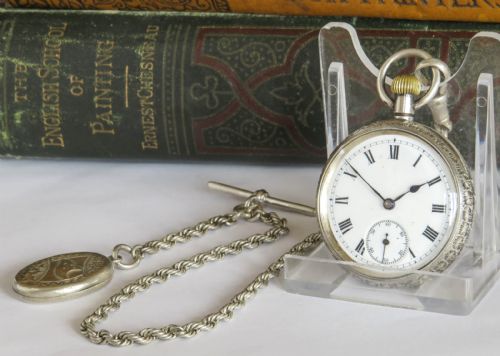
A vintage silver pocket watch chain is a substantial link of history, worn historically to secure a timepiece and valued today as a wearable chain or necklace.
Vintage Silver Pocket Watch Chain
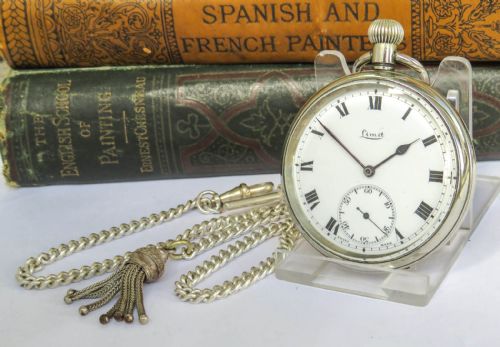
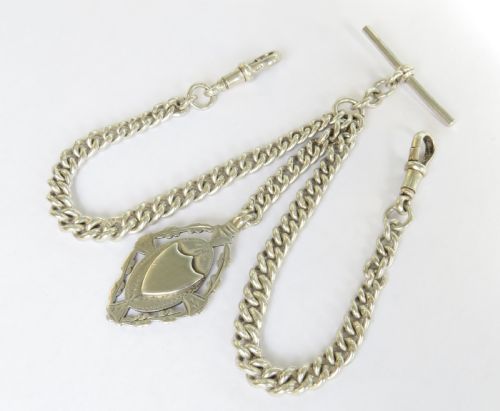
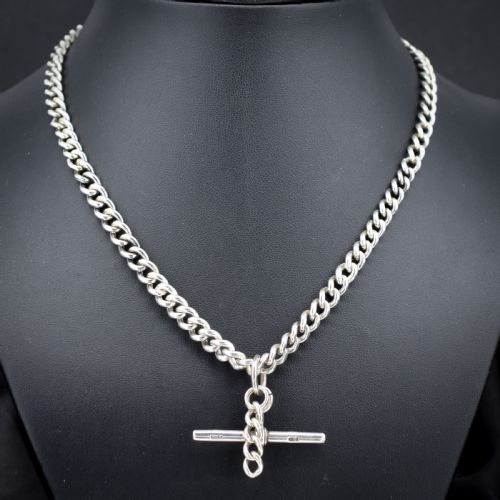
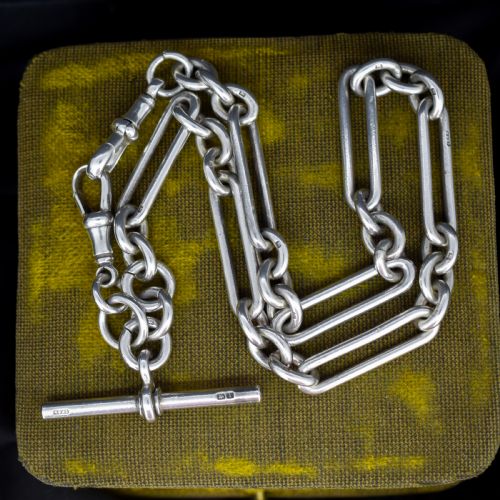
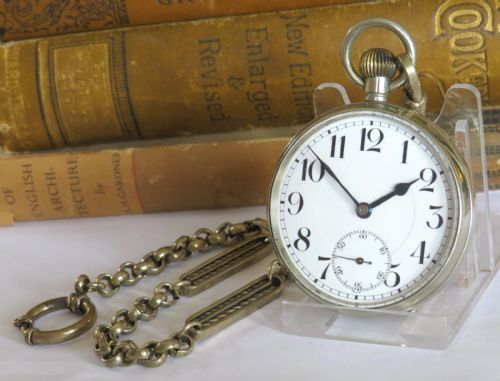
A vintage silver pocket watch chain encompasses the various albert chains, double watch chains, and fancy link necklaces appearing across the Victorian, Edwardian, and Art Deco periods. These pieces originate predominantly from English workshops, featuring specific configurations designed to tether timepieces or function independently as necklaces and bracelets.
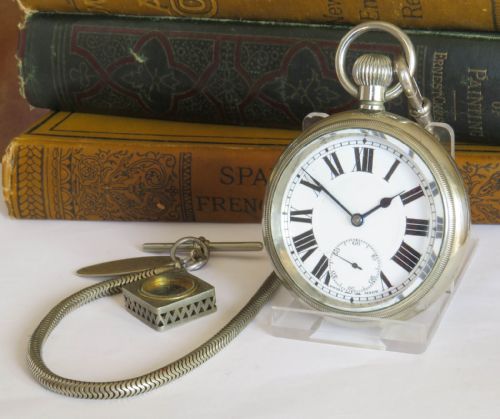
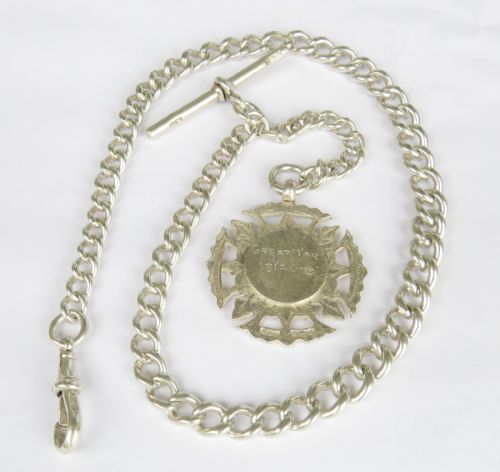
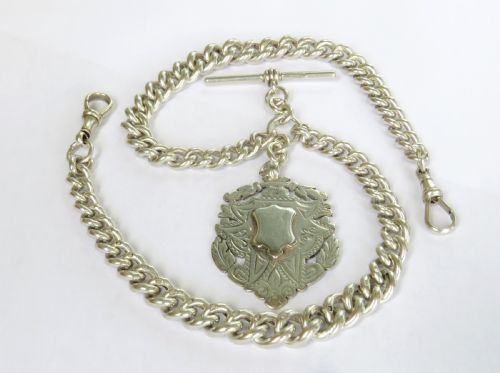
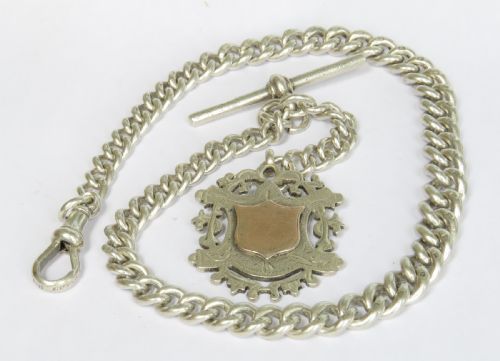
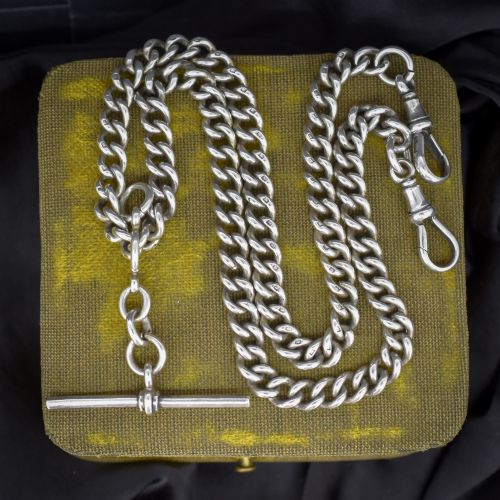
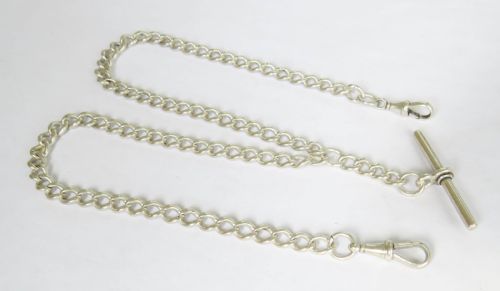
The standard form encountered on this page is the sterling silver curb link or trombone link chain, frequently equipped with a swinging T-bar and dog clips. Many examples retain contemporary or slightly later fob medals, compasses, or stamp cases, connecting the metalwork directly to its functional origins in the nineteenth and early twentieth centuries.
Makers and regional assay offices left distinct hallmarks on these items, providing tangible proof of their age and silver purity. Buyers find variations ranging from heavy, solid double albert configurations weighing close to one hundred grams down to lighter, decorative lengths suited for modern neckwear.
How They Were Made
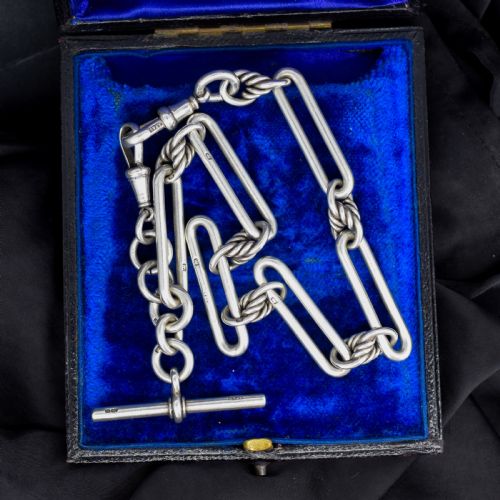
The primary material found throughout these listings is sterling silver, worked into solid links such as uniform curbs, figuros, and alternating love knots. Silversmiths utilised hand-assembled techniques to construct individual links, ensuring each section of the chain could withstand the daily friction of pocket wear.
Complementary metals and finishes appear alongside the silver, including nickel, steel, brass, and occasional niello inlay combined with gold highlights. Enamel work and glass elements occasionally decorate the attached fobs and seals, providing contrasting colour against the polished silver links.
Some Victorian gentlemen secured heavy pocket watches with chains stout enough to tow a small dog.
What Varies in Quality
Substance and weight separate heavier wearable examples from lighter decorative lengths, with grammage dictating the tactile presence of the chain. Substantial curb links carrying full sets of legible hallmarks on every individual component represent a higher standard of manufacture than unmarked or heavily worn counterparts.
The integrity of the mechanical fastenings dictates overall utility, particularly the spring tension within dog clips and the secure closure of swivel hooks. Chains retaining their original T-bars and matching components display a higher degree of preservation compared to assembled or mismatched pieces.
Crisford & Norris
The Vintage Silver Pocket Watch Chain Glossary
- Dog clip
- A spring-loaded swivel clasp attached to the end of a watch chain. It fastens securely to the loop of a pocket watch or charm.
- T-bar
- A short transverse bar of metal attached to the centre or end of a watch chain. It slides horizontally through a waistcoat buttonhole to anchor the chain securely.
- Hallmark
- An official stamp or series of stamps applied to precious metals indicating standard of purity, place of assay, and date of manufacture. British silver items frequently display the lion passant and assay office symbols.
- Fob
- A small medallion, seal, or ornament attached to a watch chain. Fobs often commemorate sports clubs, military service, or personal achievements.
- Goliath
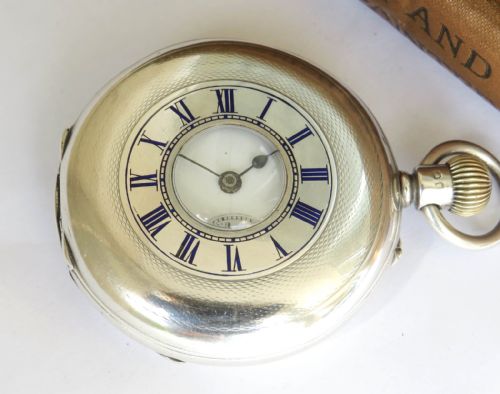
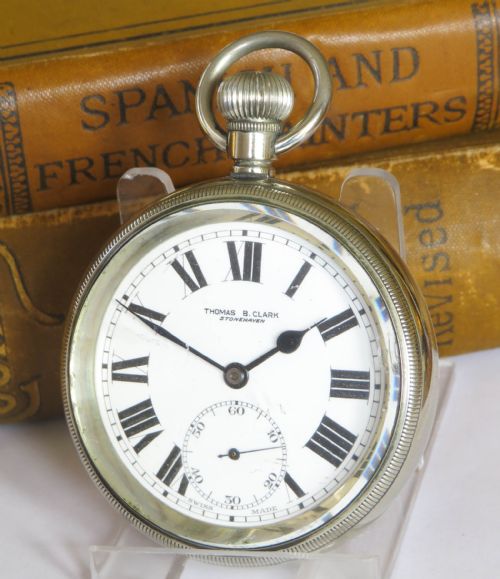
- An oversized pocket watch requiring a larger case and stronger chain. These substantial timepieces were popular in the late nineteenth and early twentieth centuries.
Vintage Silver Pocket Watch Chain: Frequently Asked Questions
How do I wear a vintage silver pocket watch chain?
These chains function effectively as standalone necklaces or bracelets depending on their overall length and link style. Many buyers remove the T-bar or tuck it discreetly when styling the piece around the neck.
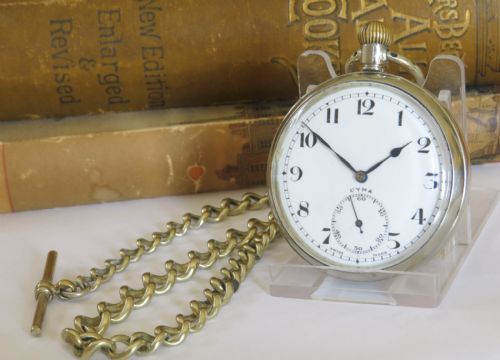
Alternatively, original albert chains can be worn across a jacket or waistcoat by passing the T-bar through a central buttonhole and securing the watch in a pocket.
Can I attach a modern pendant to these chains?
The dog clips and jump rings on these chains accommodate most standard pendants, lockets, or charms provided the bail fits over the clasp. The substantial gauge of many Victorian and Edwardian links means they easily support heavier pendants.
Care should be taken to match the silver tone and patina of the pendant to the historic finish of the chain.
How do I date a silver watch chain?
Dating relies heavily on the legible hallmarks stamped onto the individual links, the T-bar, and the dog clips. These tiny impressions indicate the specific assay office and year letter assigned during manufacture.
Stylistic indicators, such as the intricate wirework of Victorian pieces or the geometric patterns of Art Deco examples, offer further chronological context when hallmarks are rubbed.