


Vintage Silver Plated Teapot
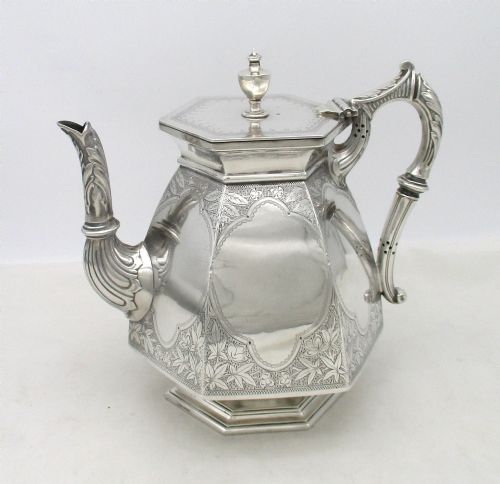
A vintage silver plated teapot brings traditional British tea service to the table, offering polished metal elegance without solid silver upkeep.
Vintage Silver Plated Teapot
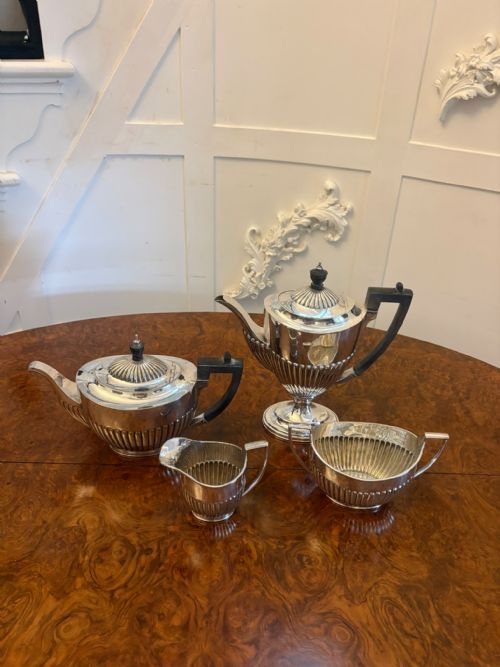
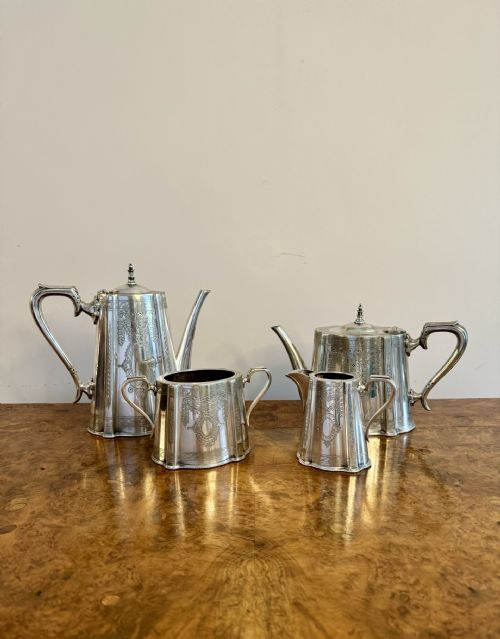
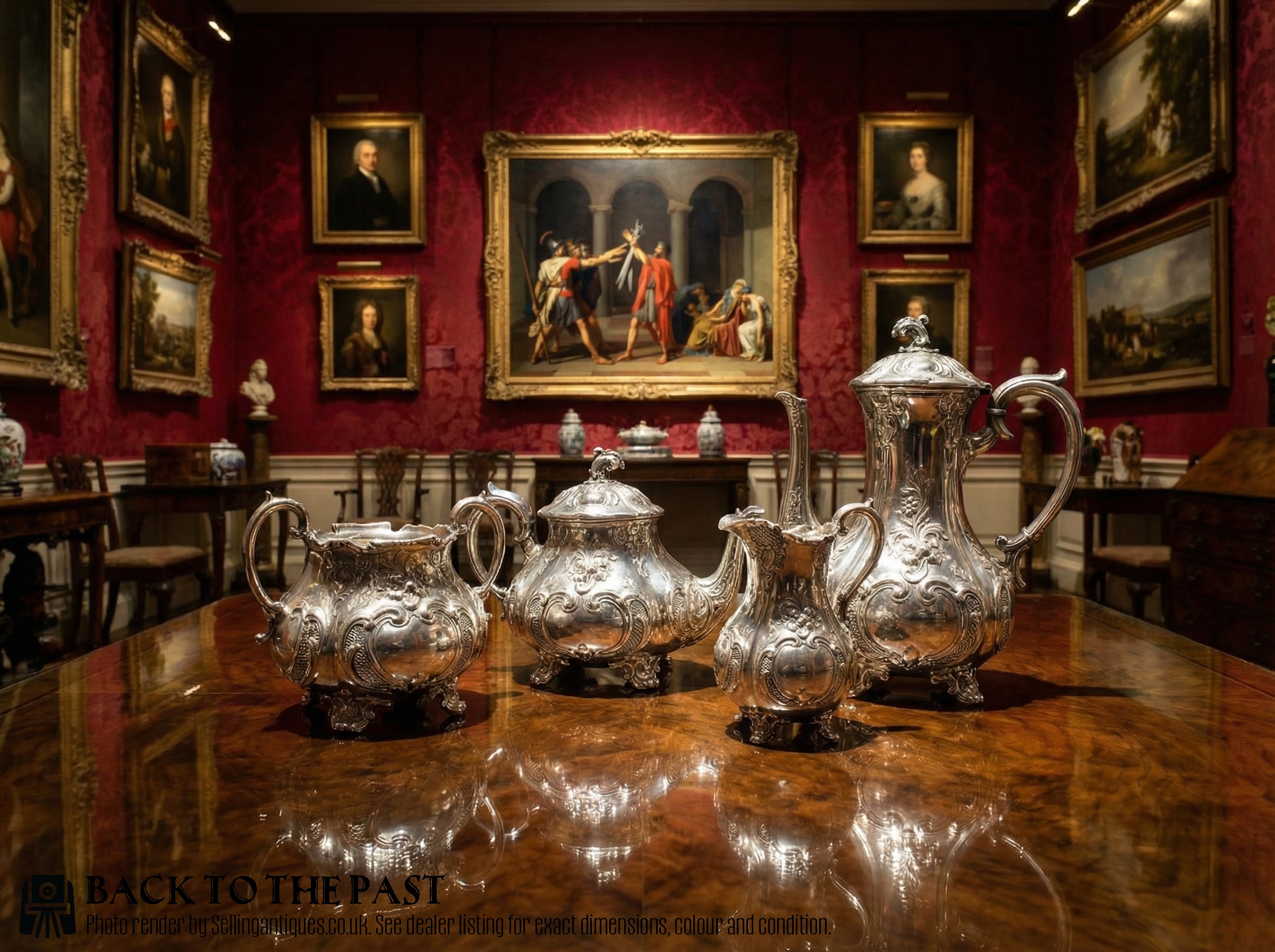
A vintage silver plated teapot forms the centrepiece of formal tea service, appearing across this selection in various configurations alongside matching coffee pots, creamers, and sugar basins. Buyers looking for a vintage silver plated teapot will frequently encounter examples originating from the Edwardian period, alongside items spanning the nineteenth century up to the Art Deco era of nineteen thirty.
Beyond single teapots, many pieces arrive as part of larger three, four, or six piece tea sets and services, occasionally accompanied by spirit kettles mounted on stands with burners. These vessels display diverse design influences, ranging from Victorian and Edwardian Rococo Revival to the geometric lines of the Art Deco style and the distinctive profile of The Cube tea set.
Materials and construction methods
Manufacturers built these vessels using a base metal foundation, frequently electroplated nickel silver or standard silver plate, which provided the lustre of solid silver at a lower cost. Artisans integrated contrasting elements such as wood, ebonised wood, ebony, and bone to insulate handles and finials from heat during use.
Production techniques involved shaping metal bodies through spinning or stamping, followed by the application of silver plating and decorative chasing or engraving. Many items incorporate functional mounts, burner stands, and hinged lids assembled by specialist metalworkers.
Listings span multiple decades, incorporating nineteenth-century pieces, Edwardian services, and nineteen-thirty Art Deco designs.
Factors determining quality
Quality in these pieces rests upon the thickness and durability of the silver plating over the base metal, as well as the crispness of chased or embossed ornamentation. Superior examples display balanced proportions, secure handle insulation made from materials like bone or ebony, and robust hinge mechanisms.
The presence of maker marks from established firms, alongside the completeness of multi-piece services or matching stands, distinguishes finer items from standard production. Weight, substantial metal gauge, and refined execution of revivalist or modernist styles further separate exemplary specimens from simpler utilitarian wares.
Walker and Hall·Goldsmiths and Silversmiths Co
The Vintage Silver Plated Teapot Glossary
- EPNS
- Electroplated nickel silver, a common base metal alloy coated with a thin layer of silver used extensively in British metalwork. This material offered a durable and bright surface resembling solid silver.
- Spirit kettle
- A water kettle mounted on a metal stand equipped with a small spirit burner underneath to keep water hot at the table. These kettles often feature a pivoting handle and a dedicated frame.
- Aesthetic Movement
- A late nineteenth-century design style emphasising visual beauty over narrative content, often incorporating stylised natural motifs. Pieces from this movement display restrained ornamentation compared to heavy Victorian designs.
- The Cube
- A patented modular tea and coffee set design where stacking components form a compact cubic shape. This innovative domestic ware represents a notable departure from traditional rounded tea service silhouettes.
Vintage Silver Plated Teapot: Frequently Asked Questions
Can I use these teapots for boiling water?
Standard teapots are designed solely for steeping and pouring brewed tea rather than placing them directly over a heat source.
Spirit kettles on stands are specifically engineered to heat water using their burners during tea service.
How do I date an Edwardian tea set?
Examine the style characteristics, such as restrained Edwardian Rococo Revival motifs, and look for stamped maker marks or registry numbers on the base.
Comparing the manufacturing style and alloy stamps against known records helps narrow the production decade.
What does electroplated nickel silver mean?
This term describes a durable alloy of copper, nickel, and zinc that serves as the base foundation before a layer of pure silver is applied via electrolysis.
It provided nineteenth and twentieth-century makers with a strong, corrosion-resistant alternative to solid silver.