


Vintage Silver Napkin Band
These vintage silver napkin bands offer small touches of table-setting craftsmanship, spanning decades of domestic metalwork.
Vintage Silver Napkin Band
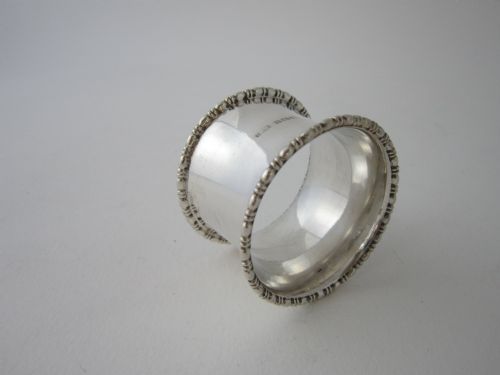
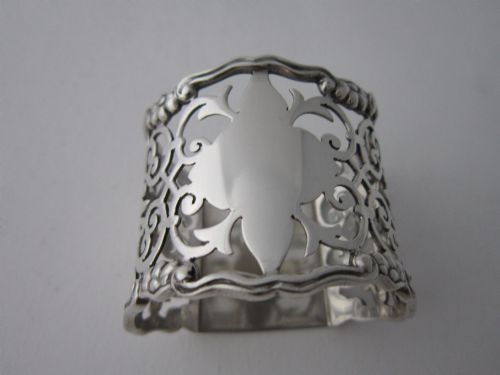
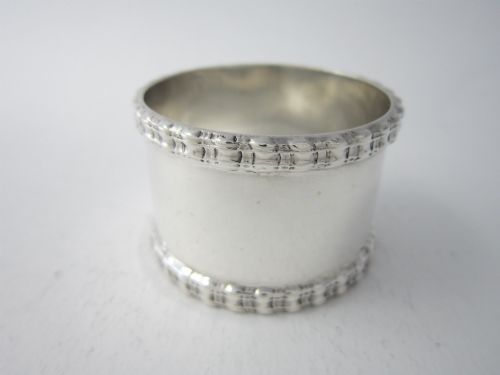
A vintage silver napkin band is a small domestic band used at the dining table, most frequently encountered here in sterling silver and silver plate from the Victorian, Edwardian, and George V periods. These items range from plain circular bands to decorated examples set with stones, enamel, or textured finishes.
The selection includes single pieces, matched pairs, and boxed sets of six, reflecting formal dining habits of the twentieth century. Makers and houses such as Liberty & Co and Albert Edward Jones appear alongside continental and Scandinavian silver gilt work.
Forms span simple geometric bands through to Arts and Crafts hammered surfaces, novelty designs, and Art Deco styles. They function as markers for family members or guests at meals, combining utility with decorative metalwork.
How they were made
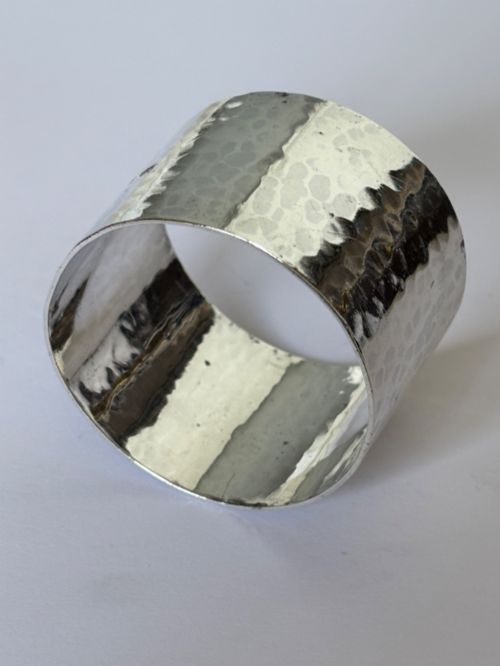
Silversmiths formed these bands from sterling silver, silver plate, pewter, and German silver, often shaping sheet metal into cylinders and soldering the seams. Techniques such as hammering created textured surfaces, as seen in Arts and Crafts examples.
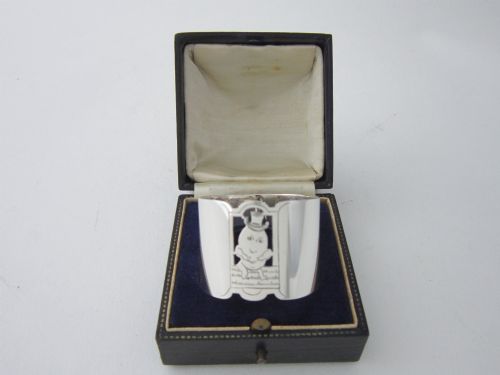
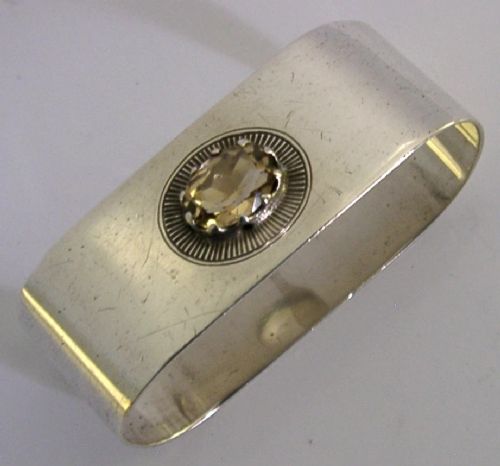
Enamelling, guilloche work, and gemstone settings like citrine added colour and visual weight to the metal body. Fitted presentation cases lined in silk, velvet, or leatherette accompanied many pairs and sets from retail houses.
A swift chariot race across continental enamel keeps the breakfast napkins in order.
What varies in quality
Quality rests in the weight of the metal and the precision of the smith's hand, distinguishing solid sterling silver from silver-plated alternatives. Substantial gauge silver maintains its structure and crisp hallmarks over decades of handling.
Artistic execution creates separation between standard production and workshop pieces, particularly where hand-hammering, champleve enamel, or guilloche work is applied. Original fitted presentation boxes and maker signatures further define the standing of individual pieces.
ALBERT EDWARD JONES·Liberty & Co·Cartier·David Andersen
The Vintage Silver Napkin Band Glossary
- Sterling silver
- A silver alloy containing 92.5 percent pure silver by mass, standard for British domestic tableware. It provides durability and a distinct lustre.
- Hallmark
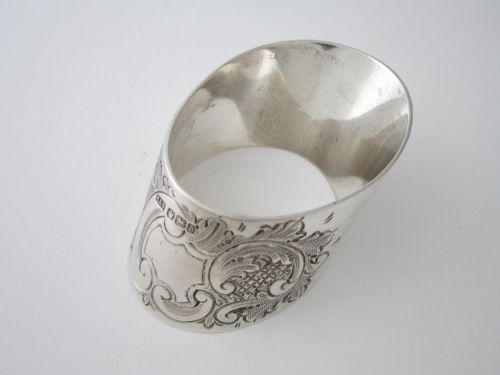
- An official stamp applied to precious metals indicating the standard of purity, assay office, and year of manufacture. These marks allow precise dating.
- Guilloche
- A decorative mechanical technique where a precise repeating pattern is engraved into metal beneath translucent enamel. It creates shimmering geometric depth.
- Silver plate
- A base metal substrate covered with a thin layer of pure silver. This method offered accessible domestic elegance during the Victorian and Edwardian eras.
- Pewter
- A malleable metal alloy historically composed of tin alloyed with copper and antimony. It yields a duller, softer finish than silver.
Vintage Silver Napkin Band: Frequently Asked Questions
How do I date silver rings?
Dating relies on stamped hallmarks that record the assay office, metal standard, and specific year letter. Maker marks provide additional chronological context.
Style periods such as Edwardian or Art Deco also indicate the era of manufacture.
Are cased sets common?
Many pairs and sets of six survive in their original fitted cases lined with silk, velvet, or leatherette. These boxes indicate formal presentation and storage.
Cased examples are particularly frequent among Edwardian and George V productions.
What metals are used?
The primary material is sterling silver, alongside silver plate, pewter, and German 800 standard silver. Some pieces incorporate gold wash over silver.
Enamel and gemstones frequently accent these metallic structures.