


Hallmark Silver Napkin Ring
A hallmark silver napkin ring brings individual distinction to a dining table through assayed precious metal and period craftsmanship.
Hallmark Silver Napkin Ring
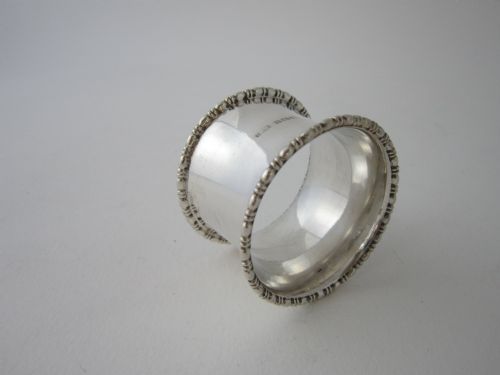
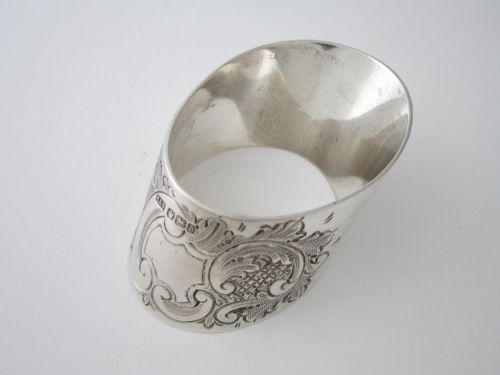
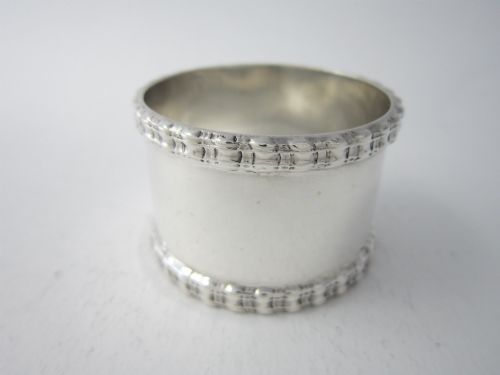
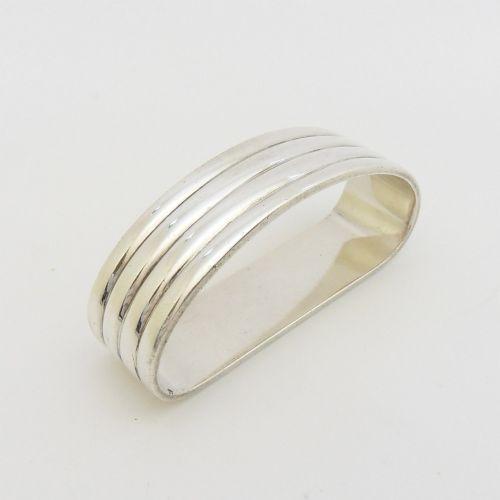
A hallmark silver napkin ring is a small circular band intended to identify and hold an individual dining napkin at the table. These pieces span from the late Victorian and Edwardian eras through the George V period and into mid-century modern design.
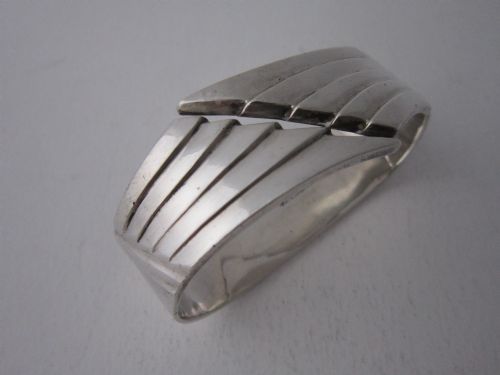
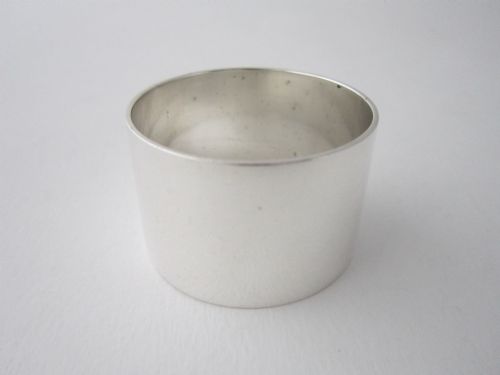
Originating from British assay offices in cities such as Birmingham, London, Sheffield, and Chester, these rings frequently display specific date letters and maker marks alongside the lion passant. Buyers encounter various stylistic influences, ranging from simple plain bands to Neoclassical Revival, Art Deco, and ornate scrollwork.
How They Were Made
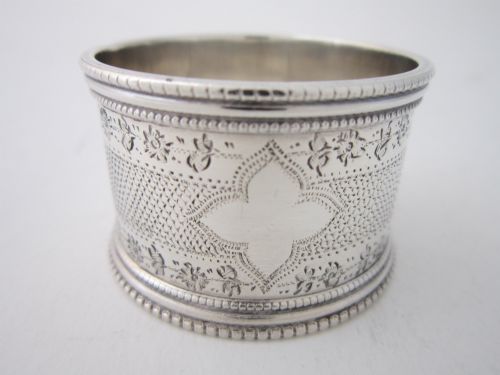
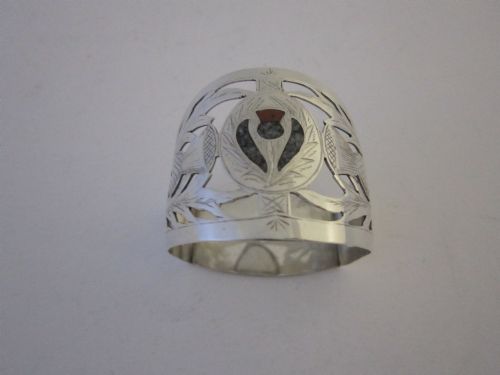
Silversmiths shaped sheets of sterling silver into cylindrical bands, soldering the seams before applying surface decoration through hand engraving, piercing, or applied aesthetic motifs. Many examples incorporate natural materials like Scottish horn or decorative inserts such as agate stone alongside the metal.
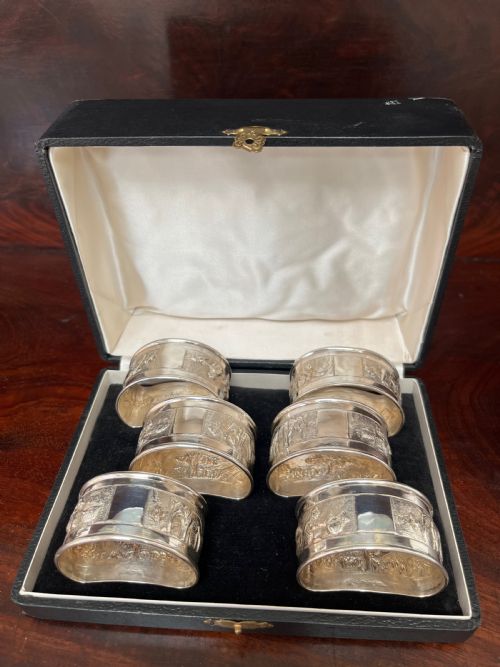
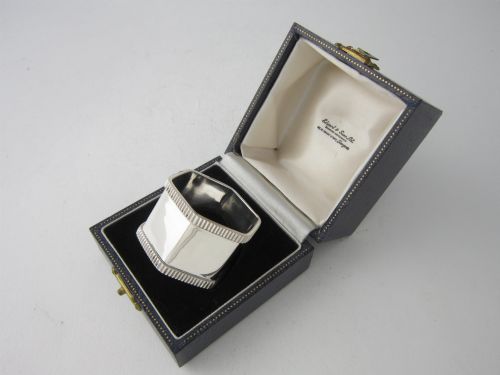
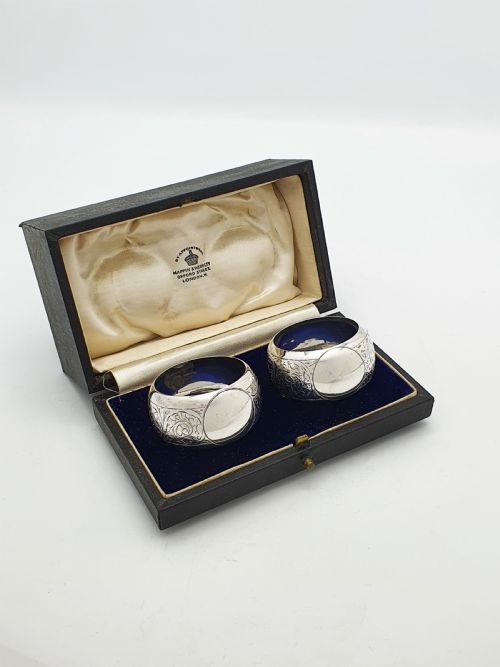
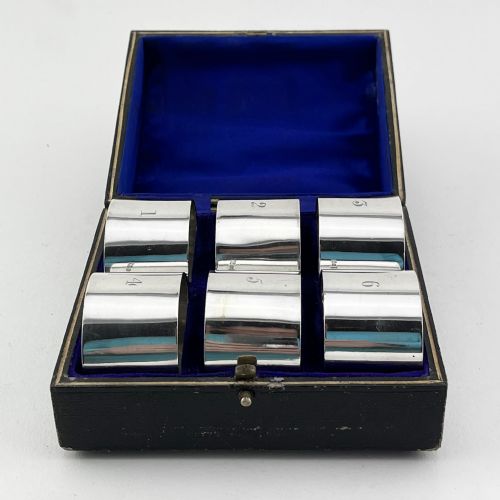
Fitted presentation boxes lined with silk, velvet, or leatherette accompanied sets from the Victorian era onwards, protecting the metalwork from tarnish and wear. Maker identification, town marks, and purity standards were stamped directly into the silver using traditional metal punches.
Listings feature sterling silver napkin rings spanning the Victorian, Edwardian, George V, and mid-century periods alongside continental 800 silver examples.
What Varies in Quality
Quality in a silver napkin ring depends upon the weight of the metal used in construction and the crispness of the stamped hallmarks and decorative engraving. Thicker gauge silver resists dents and maintains structural integrity during daily use.
The presence of an original fitted case lined in silk or velvet elevates the desirability of a set, as does the survival of matched groupings where each numbered ring corresponds to its original companion.
R. E. Stone·Georg Jensen·C. T. Burrows and Sons·Tiffany and Co·Henry Wilkinson·William Henry Sparrow·George Unite·Robert Pringle
The Hallmark Silver Napkin Ring Glossary
- Hallmark
- An official stamp applied to precious metals indicating purity, origin assay office, and year of manufacture. These marks provide the primary documentation for dating antique silver.
- Sterling Silver
- An alloy consisting of ninety-two point five percent silver and seven point five percent other metals, typically copper. This standard composition balances durability with the characteristic lustre of silver.
- Assay Office
- An official body responsible for testing the purity of precious metal items and stamping them with statutory marks. Prominent British offices include those in London, Birmingham, Sheffield, and Chester.
- Lion Passant
- The standard English hallmark symbol representing sterling silver purity of ninety-two point five percent. This walking lion motif appears alongside date letters and maker initials.
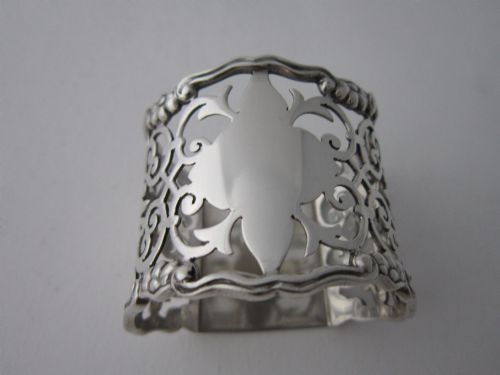
- Pierced Decoration
- A technique where portions of the silver band are cut away to create openwork patterns and geometric designs. This method lightens the visual weight of the object while maintaining structure.
Hallmark Silver Napkin Ring: Frequently Asked Questions
How do I clean antique silver napkin rings?
Clean silver napkin rings using a soft microfibre cloth and a specialist silver polish designed to remove tarnish without abrading the metal surface. Avoid harsh chemical dips, particularly on pieces with inset stones or organic materials like horn.
Store the rings in dry conditions, ideally within anti-tarnish cloth or their original fitted boxes lined with silk or velvet, to minimise exposure to air and moisture.
Were napkin rings used daily in the past?
Napkin rings served as practical household items during the Victorian and Edwardian periods, allowing families to reuse cloth napkins across multiple meals between laundry days. Each family member often had a designated numbered or monogrammed ring.
As domestic laundering practices changed through the twentieth century, these items transitioned from daily utility to formal dining accessories and traditional gifts for christenings and weddings.
How can I read the hallmarks on my ring?
Examine the inner band of the ring using a magnifying glass to locate the small stamped symbols. These typically include a maker mark, a purity standard such as the lion passant, an assay office town mark, and a sequential date letter.
Reference tables for British assay offices allow collectors to match the specific letter font and shield shape to an exact year of manufacture.
What is the difference between single rings and cased sets?
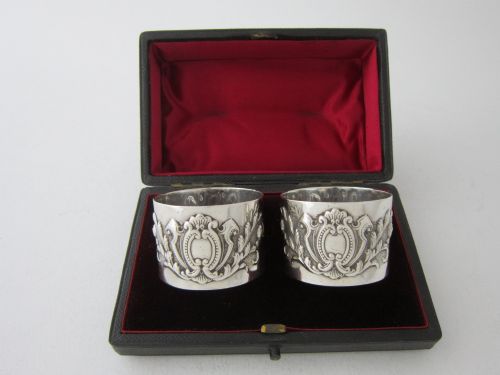
Single napkin rings were often purchased individually over time or acquired as personal presentation pieces, whereas cased sets were manufactured together as unified gifts or dining suites. Sets usually range from pairs to groupings of six.
Matched sets retained in their original leatherette, silk, or velvet-lined boxes generally command greater interest from collectors due to their complete survival.