



Vintage Silver Grape Scissors
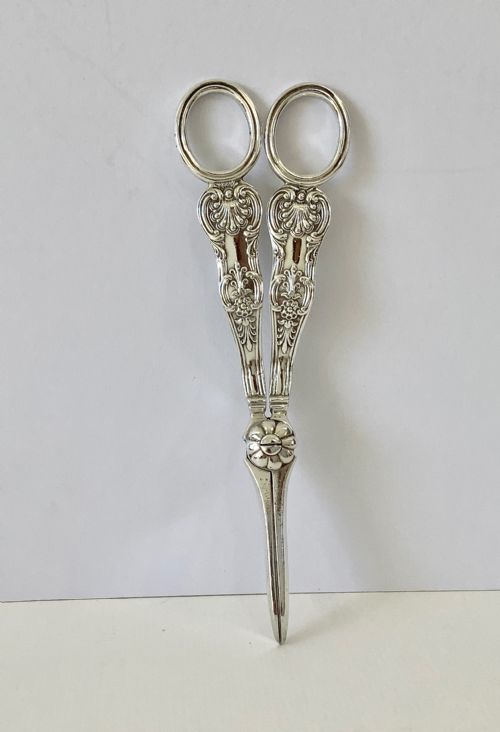
These vintage silver grape scissors are purpose-built dining implements for snipping fruit at the table, offering a touch of traditional luxury.
Vintage Silver Grape Scissors
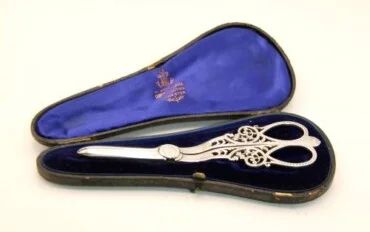
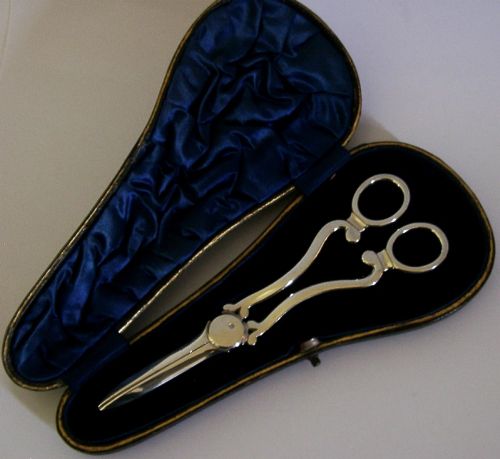
Vintage silver grape scissors are specialist serving pieces designed specifically for portioning bunches of fruit cleanly at the dining table. When you search for vintage silver grape scissors, you encounter dedicated fruit cutlery forged from sterling silver or silver plate, often appearing alongside fitted cases lined with velvet, silk, or satin.
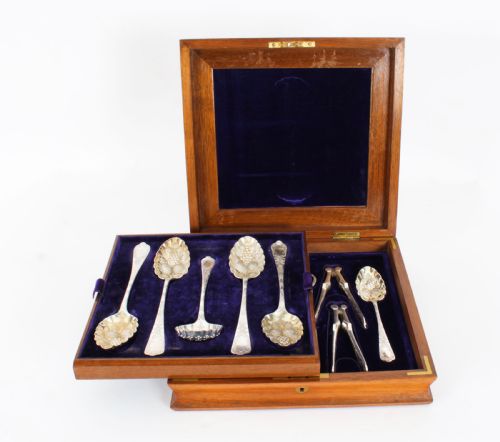
The pieces on this page span several distinct periods, including Victorian, Edwardian, and mid-twentieth-century designs. You will frequently find examples taking the form of grape shears, sometimes accompanied by broader boxed fruit sets that include nutcrackers and spoons.
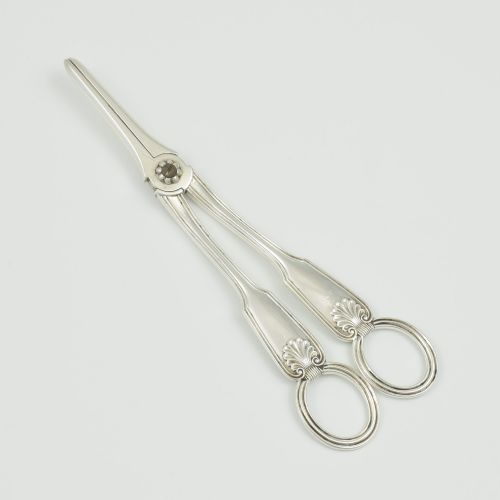
Origins stretch from early nineteenth-century William IV examples through to later Sheffield and London productions. The forms range from plain, elegant utility shapes to heavily cast and ornately engraved Gothic Revival patterns.
How they were made
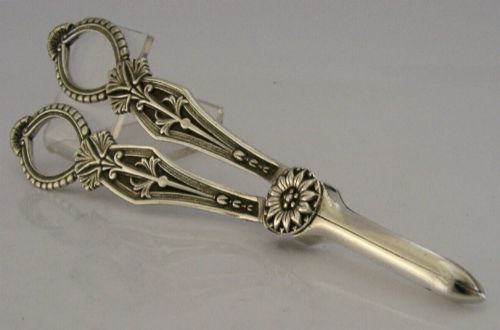
Makers utilised sterling silver and silver plate as the primary metals for these implements, shaping them through casting and hand-engraving. Cast silver examples provide substantial weight in the hand, while detailed chasing and engraving bring out floral or architectural motifs on the handles and blades.
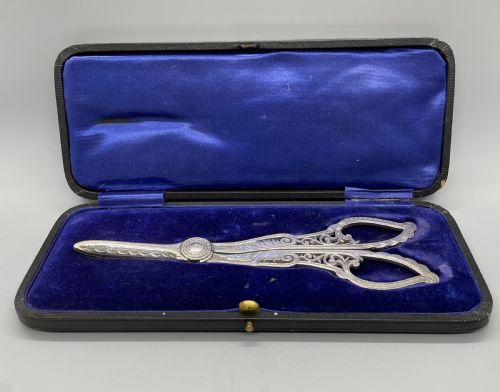
Presentation was a significant part of their manufacture, leading to the creation of fitted leather, leatherette, and satin-lined boxes. These custom cases protected the delicate blades and preserved the velvet and silk interiors designed to cradle the metalwork securely.
Listings feature periods spanning from the early nineteenth century through the Edwardian era up to mid-century 1960 productions.
What varies in quality
Quality in these implements rests upon the weight of the metal and the crispness of the cast decoration. Heavier gauges of sterling silver provide a more substantial balance during use, while sharply defined chasing indicates superior silversmithing skill compared to softer, shallower stamping.
The presence of an original fitted case lined with silk, satin, or velvet elevates an individual piece. Sets that retain their matching presentation boxes demonstrate a higher level of original commissioning and preservation through successive generations.
Goldsmiths & Silversmiths Co.·Charles Reily & George Storer·Paul Storr·Hukin & Heath·C.J. Vander
The Vintage Silver Grape Scissors Glossary
- Sterling silver
- A silver alloy containing 92.5 percent pure silver by mass, forming the predominant material for high-grade examples on this page. This standard ensures durability while maintaining a bright, reflective finish suitable for formal dining.
- Silver plate
- A base metal substrate coated with a thin layer of pure silver, offering an accessible alternative to solid sterling. Many serving pieces utilise this technique to achieve the appearance of precious metal at a lower production cost.
- Grape shears
- An alternative term for grape scissors, featuring robust pivot points and curved blades designed to slice through tough vine stems without bruising the fruit. They function as both serveware and display pieces on the dining table.
- Gothic Revival
- An architectural and decorative style popular during the nineteenth century, characterised by pointed arches, heavy tracery, and ornate engraved details. Pieces from this movement often display much deeper relief work than plain utilitarian designs.
- Fitted case
- A custom-made storage box lined with materials such as velvet, silk, satin, leather, or leatherette. These enclosures protect the delicate implements from tarnishing and physical damage when not in active use.
Vintage Silver Grape Scissors: Frequently Asked Questions
What are vintage silver grape scissors used for?
These implements are designed specifically for cutting small bunches of grapes from a larger cluster at the dining table. Using them prevents diners from having to pull fruit by hand, keeping fingers clean during formal dessert courses.
They function as a dedicated piece of serveware rather than general kitchen cutlery. Their specialised curved blades allow you to reach tightly packed stems without damaging the surrounding fruit.
How do I date a pair of grape scissors?
Dating relies heavily on hallmarks stamped into the silver, which indicate the assay office, year, and maker. Comparing the decorative style, such as early Victorian casting versus Edwardian engraving, provides a secondary method for estimating age.
The presence of a fitted presentation box can also offer clues about the manufacturing era. Interior silk and velvet linings often reflect the upholstery tastes of the specific decade in which the set was retailed.
Are these scissors made of solid silver?
The materials vary between solid sterling silver and silver plate over a base metal core. Hallmarks stamped directly onto the metal generally distinguish solid sterling pieces from plated alternatives.
Heavier examples often point toward solid silver construction, though weight alone is not a definitive test. Examining the metal for wear through to the base substrate helps identify silver-plated items.
How should I store grape scissors?
Storing these pieces in a dry environment helps prevent the silver from tarnishing too quickly. If your pair includes an original fitted leather or leatherette case, keeping them inside the velvet or satin lining provides ideal protection.
Avoid wrapping silver in ordinary rubber bands or certain papers that accelerate oxidation. Periodic gentle cleaning with a specialist silver cloth keeps the metal bright without wearing down engraved details.