


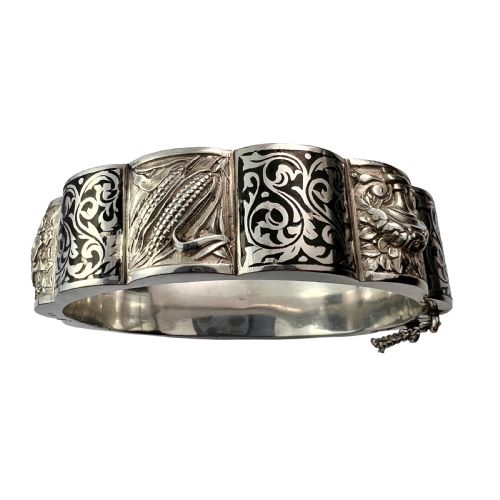
Vintage Silver Cuff
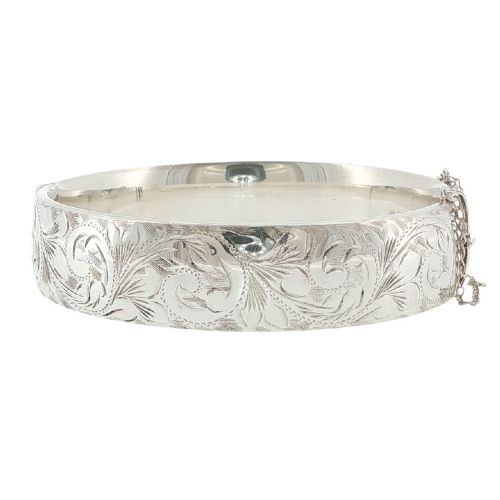
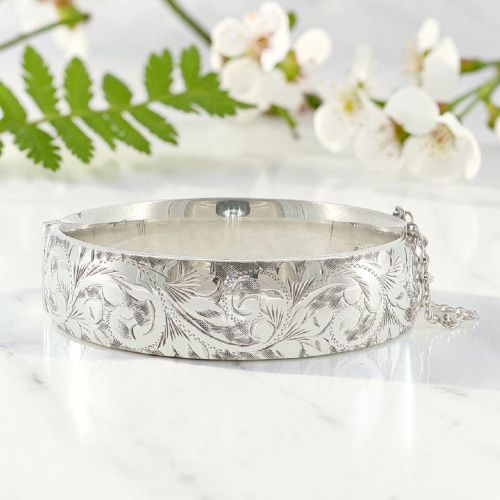
A vintage silver cuff offers substantial wrist presence, combining the tactile weight of solid metal with decades of decorative design history.
Vintage Silver Cuff
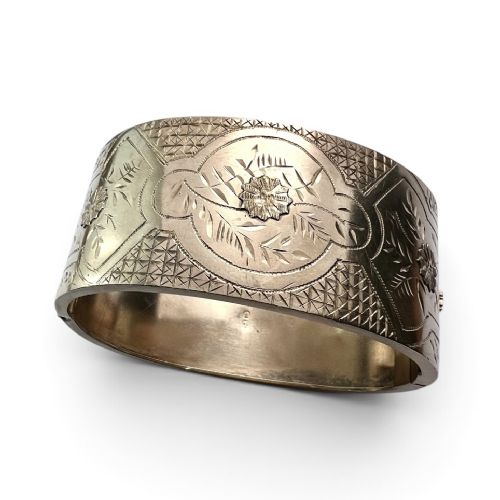
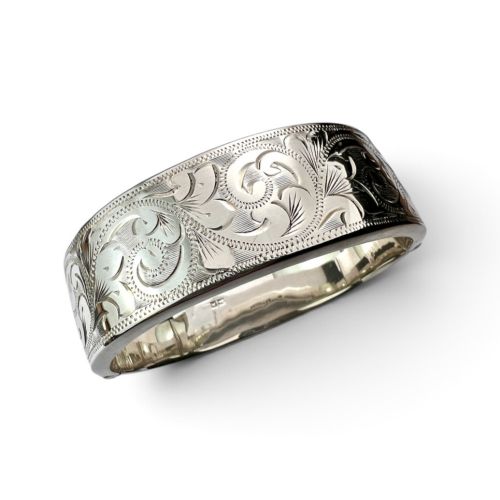
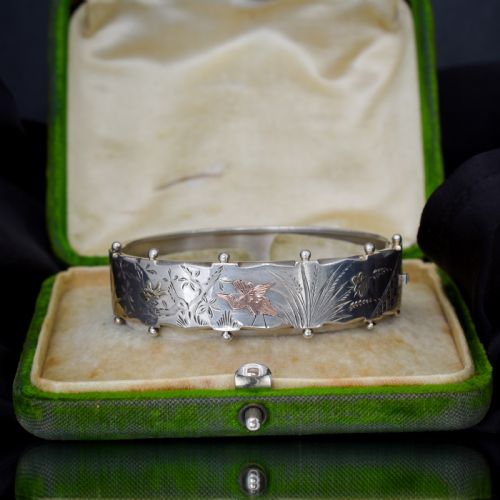
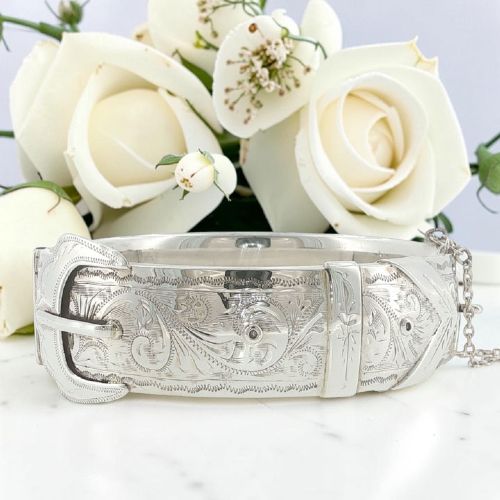
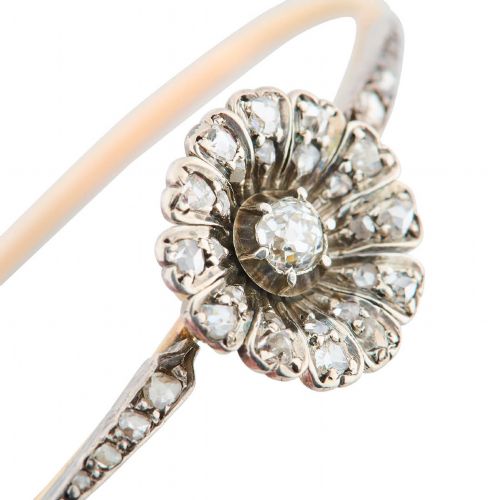
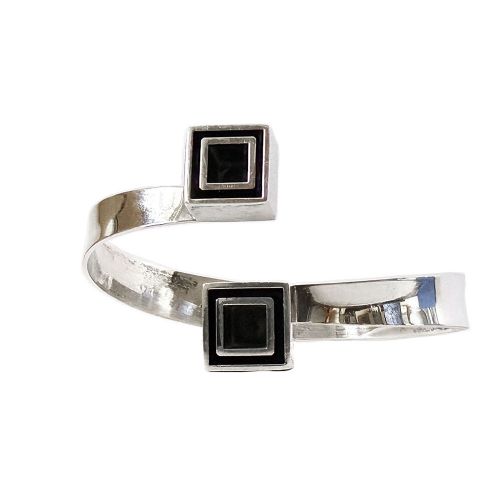
A vintage silver cuff encompasses solid hinged bangles, rigid slave bangles, and wide wrap-around bracelets designed to encircle the wrist with substantial metalwork. These pieces emerge from periods spanning the Victorian era through the mid-twentieth century, capturing shifts in design from ornate nineteenth-century chasing to geometric modernist lines.
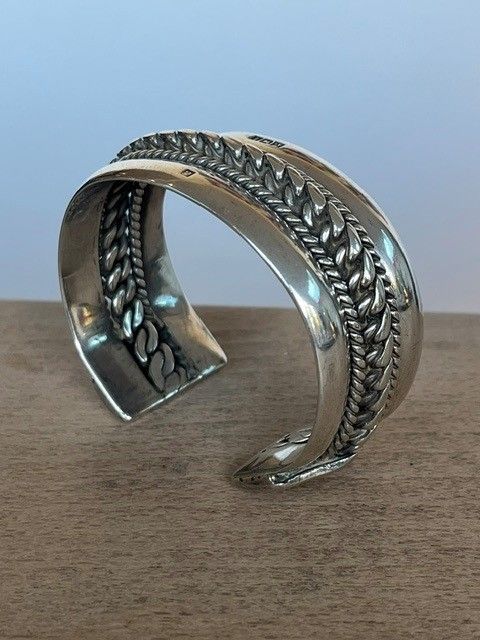
The selection here frequently centres on hinged sterling silver bangles from the Victorian period alongside mid-century Scandinavian and Art Deco creations. Buyers encounter everything from heavy chased regional work originating in the Middle East and Rajasthan to sleek English hallmarked pieces and European enamel designs.
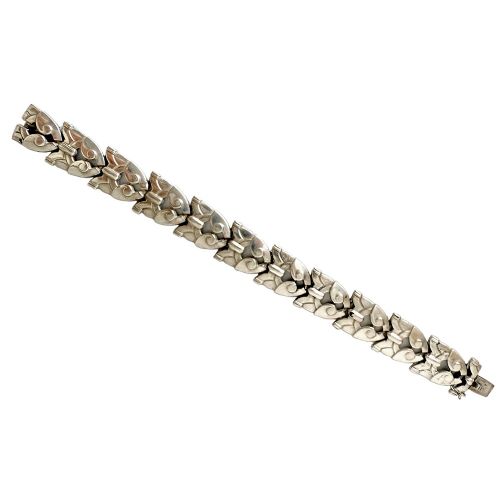
While the search targets cuffs, the category extends to rigid bangles and linked statement bracelets that share the same bold wrist profile. These items reflect the domestic and international silver output of makers from London, Birmingham, and continental workshops.
How they were made
Silversmiths formed these cuffs using sterling silver, solid silver, and silver plate, often shaping the metal through hand-engraving, casting, and piercing. Master craftsmen constructed hinges and secure box clasps to allow rigid bangles to open and fit snugly around the wrist.
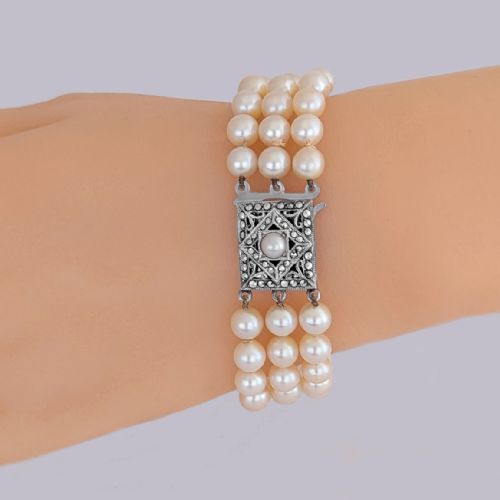
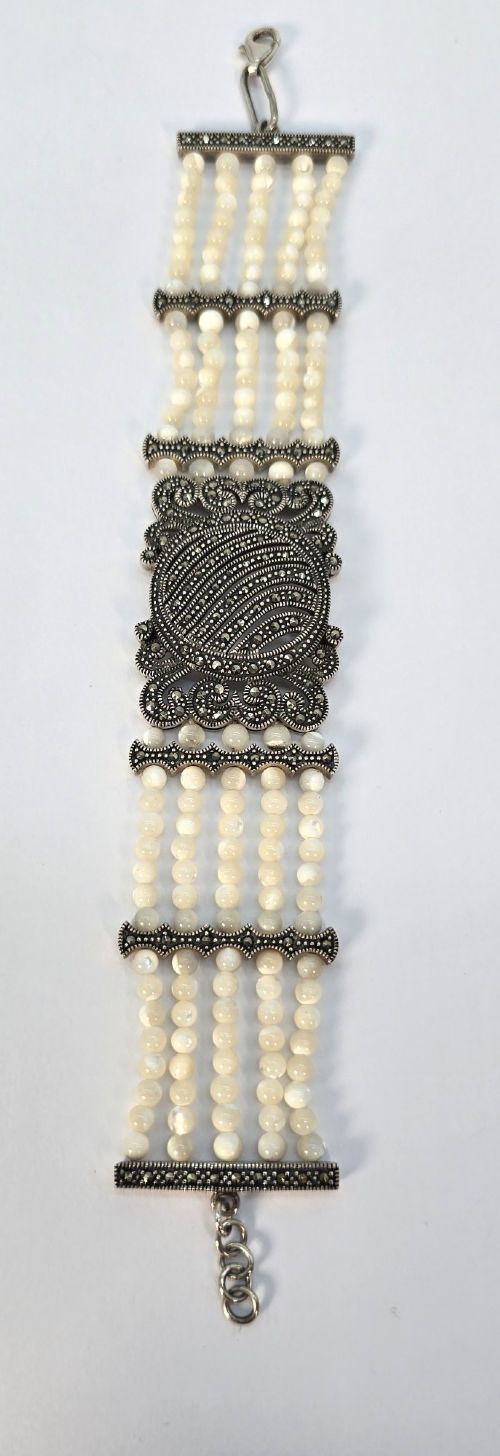
Many examples incorporate secondary materials such as colourful vitreous enamel, sparkling marcasite, cultured pearls, mother of pearl, onyx, and amber. Artisans set these stones flush into the metal or mounted them within detailed filigree settings to contrast against the polished silver ground.
The listings span from the nineteenth century through the mid-twentieth century, featuring materials including sterling silver, enamel, marcasite, and gold.
What varies in quality
Quality rests in the heaviness of the gauge metal utilised and the crispness of the hand-engraving or repoussé work. Superior pieces maintain structural rigidity in their hinges and retain intact safety chains where fitted.
The finesse of secondary embellishments dictates the standard of the piece, visible in the smoothness of the applied enamel free from chipping and the secure claw or flush setting of pearls and marcasite.
Georg Jensen·Walker & Hall·Jakob Bengel·Topazio
The Vintage Silver Cuff Glossary
- Bangle
- A rigid bracelet that slips over the hand or opens with a hinge. Many Victorian and mid-century examples utilise a hinged design with a secure pin or box clasp.
- Sterling silver
- An alloy comprising ninety-two point five percent silver and seven point five percent other metals, usually copper. British pieces frequently bear standard hallmarks confirming this standard.
- Marcasite
- Small faceted pieces of pyrite set into silver to resemble diamonds. This material enjoyed wide popularity during the Art Deco period.
- Repoussé
- A metalworking technique where the artisan hammers the metal from the reverse side to form a raised design in relief. This method appears on many Victorian and regional bangles.
- Filigree
- Delicate ornamental work consisting of fine silver wire twisted and soldered together. It creates openwork patterns often seen framing stones in mid-century settings.
Vintage Silver Cuff: Frequently Asked Questions
How do I know my wrist size for a vintage cuff?
Rigid cuffs and hinged bangles require careful measurement of your wrist circumference to ensure a proper fit. Measure closely against the skin and compare the internal diameter listed for each solid piece.
Hinged designs offer more leeway than closed solid bangles because the opening mechanism allows the metal to clear the widest part of the hand. Check the inner measurements carefully before selecting a rigid nineteenth-century piece.
Are these silver cuffs suitable for daily wear?
Most solid silver and sterling items withstand regular daily use provided the hinges and clasps remain secure. Items featuring delicate enamel or pearls demand greater care to prevent surface impacts.
Storing your cuff separately from other jewellery prevents scratching on polished silver surfaces. Regular gentle cleaning maintains the lustre without wearing away engraved details.
How do I date a silver cuff without a hallmark?
Stylistic indicators such as geometric Art Deco motifs or heavy Victorian chasing provide clear clues to a piece's age. The construction methods of the hinge and clasp also help narrow down the manufacturing decade.
Assay marks and maker stamps offer the most precise dating when present on British sterling pieces. Pieces lacking marks rely entirely on stylistic comparison with documented regional or period work.