
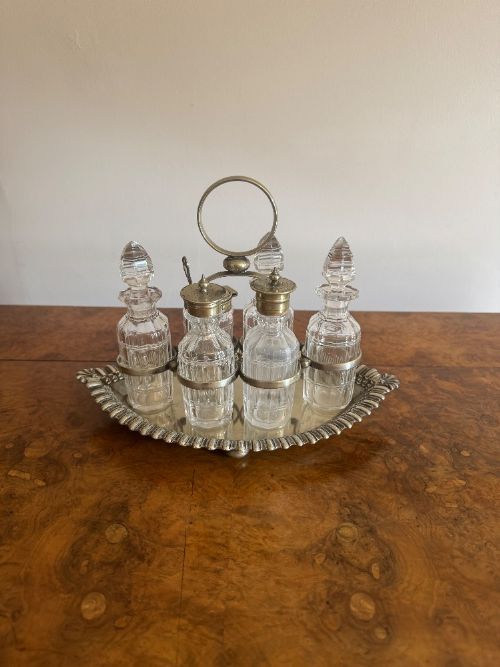
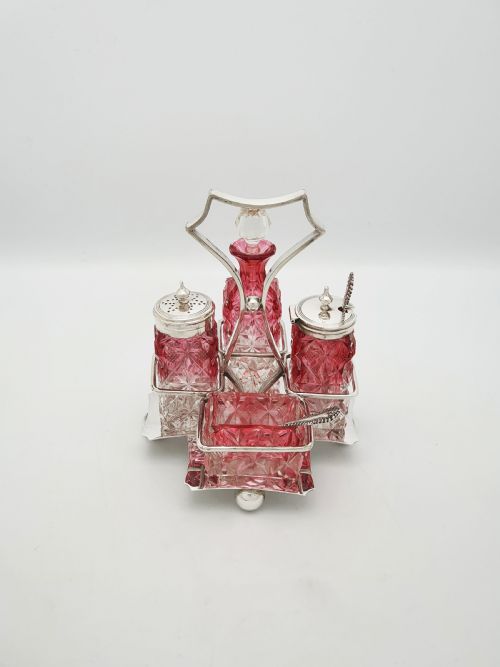


Vintage Silver Condiment Frame
These vintage silver condiment frame examples bring the dining table together, holding cruets and bottles in frames of sterling silver, silver plate and Sheffield plate.
Vintage Silver Condiment Frame
A vintage silver condiment frame gathers bottles, cruets and casters into a single structured holder for the table. When searching for a vintage silver condiment frame, buyers encounter pieces spanning the Georgian, Victorian, Edwardian and Art Deco periods, alongside examples from the eighteenth and nineteenth centuries.
The forms vary from three-bottle decanter cruets to large oval eight-piece sets, as well as relish caddies and novelty figural designs. Silver plate and sterling silver dominate the selection, frequently paired with cut glass and cranberry flashed glass.
How they were made
Silversmiths formed these frames using sterling silver, silver plate and Old Sheffield plate, shaping the metal to support multiple glass vessels securely. Frames often feature decorative mounts and handles designed for regular dining use.
Vessels within the frames typically consist of cut glass, cranberry glass and clear glass bottles, sometimes accompanied by matching casters. The combination of heavy metalwork and fitted glass required precise manufacturing to ensure each piece rested correctly in the stand.
Victorian novelty sets included charming figural designs that brought unexpected characters straight to the dinner table.
What varies in quality
Quality rests upon the weight of the silver or plating and the complexity of the frame's construction, such as whether it holds three bottles or eight pieces. Heavier metalwork and intact matched glass sets distinguish finer examples from simpler functional stands.
The presence of original fitted bottles, casters and decanters elevates a piece considerably. Finer items exhibit crisp detail in their Edwardian, Georgian or Victorian styling rather than heavy wear to the silver plate.
The Vintage Silver Condiment Frame Glossary
- Cruet set
- A collection of small glass bottles or jars for holding vinegar, oil, mustard and other seasonings, fitted into a frame.
- Sheffield plate
- An early form of silver plating produced by fusing a sheet of silver to a copper ingot before rolling.
- Cranberry glass
- A rich red-pink glass created by adding gold to the molten batch, frequently seen in Victorian and Edwardian tablewares.
- Caster
- A small jar with a perforated top used for shaking sugar or dry spices over food.
- Decanter set
- A framework holding multiple small decanters for spirits or liqueurs rather than table condiments.
Vintage Silver Condiment Frame: Frequently Asked Questions
What is a condiment frame used for?
These frames organise sauce bottles, mustard pots and oil cruets together on the dining table for easy passing and service. They keep the table tidy during meals.
Historically, larger sets held up to eight pieces including casters for sugar and spices, serving multiple courses in grand dining rooms.
How do I clean a silver plated frame?
Use a soft cloth and a gentle silver polish specifically formulated for plated items to maintain the surface without removing the thin silver layer. Avoid harsh abrasives that scratch the metal.
Glass inserts lift out for separate washing in warm soapy water, which prevents moisture from becoming trapped in the frame joints.
How do I date a cruet set?
Dating relies on stylistic clues, registration marks, maker marks and the specific cut of the glass bottles. Georgian pieces show different proportions compared to Edwardian or Art Deco designs.
Sheffield plate and sterling hallmarks offer direct chronological evidence when clear stamps remain visible on the base or handle.
Are the glass bottles usually original?
Many sets retain their original cut glass or cranberry glass bottles, though replacements occur due to accidental breakage over generations. Matching bottle shapes and neck sizes indicate original pairing.
Collectors prefer sets where the glass cut and tint match uniformly across every bottle in the frame.
What is the difference between a cruet and a decanter set?
A cruet set holds small bottles for table condiments like vinegar, oil and sauces, whereas a decanter set holds larger vessels for beverages.
Decanter frames generally appear heavier to support larger liquid volumes, while condiment frames feature smaller openings for seasoning bottles.