


Cut Glass Oil Bottles
Cut glass oil bottles bring functional elegance to the dining table, combining heavy crystal vessels with precious silver mounts for everyday service.
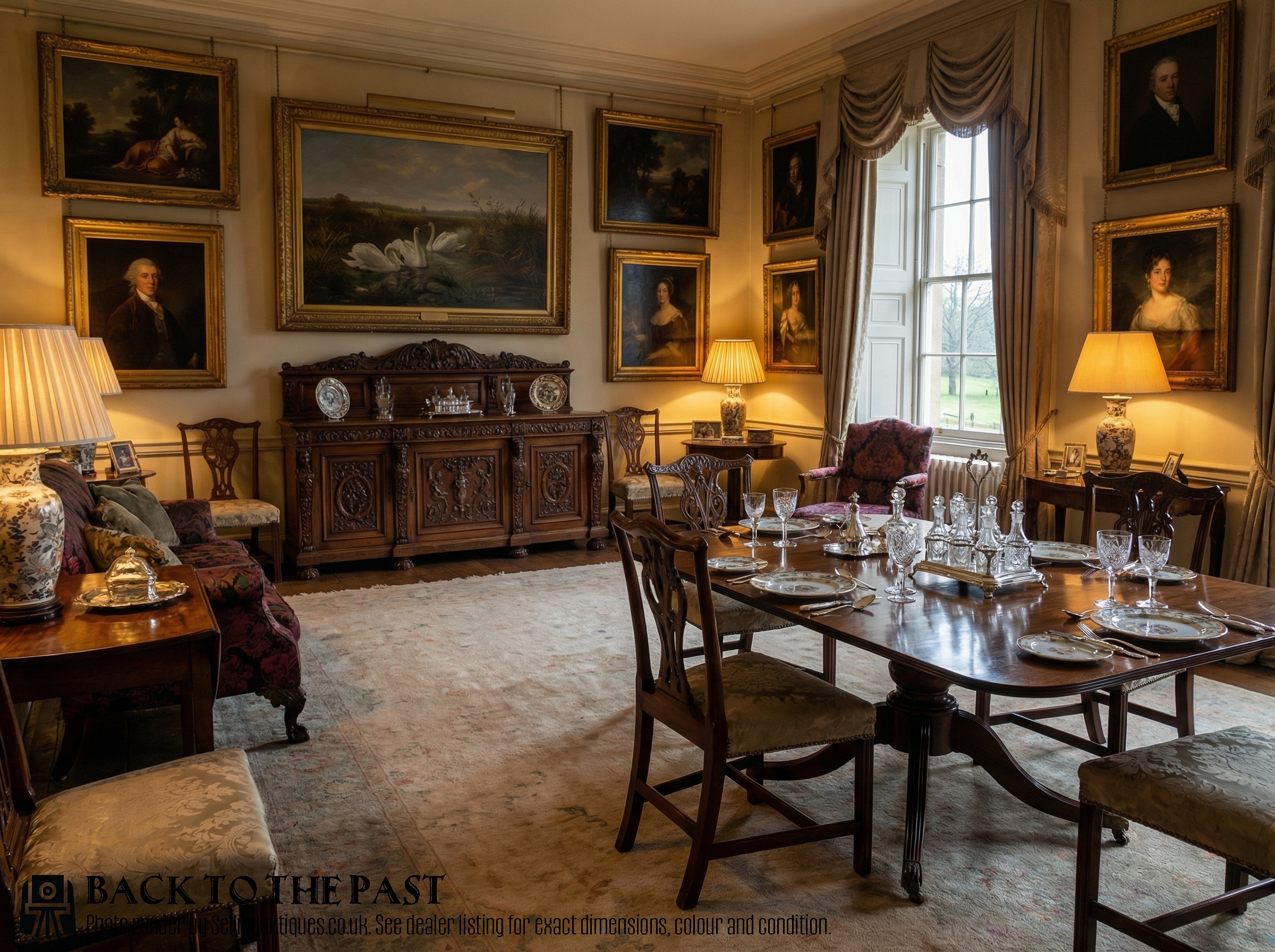
Cut Glass Oil Bottles
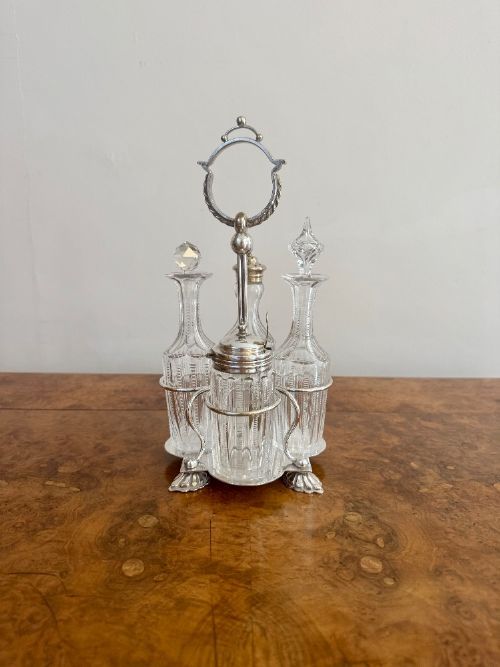
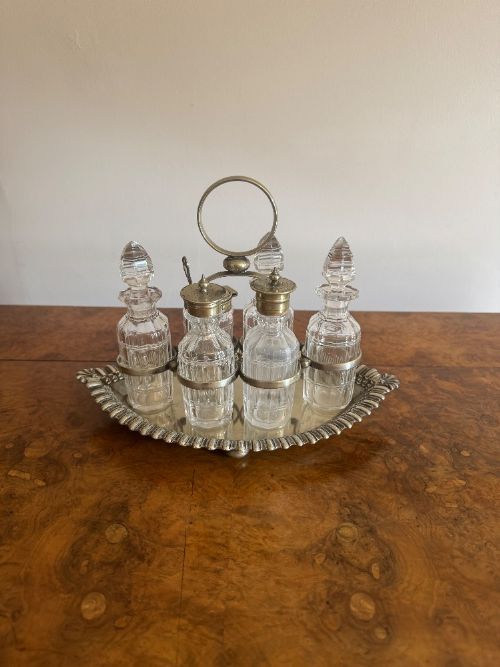
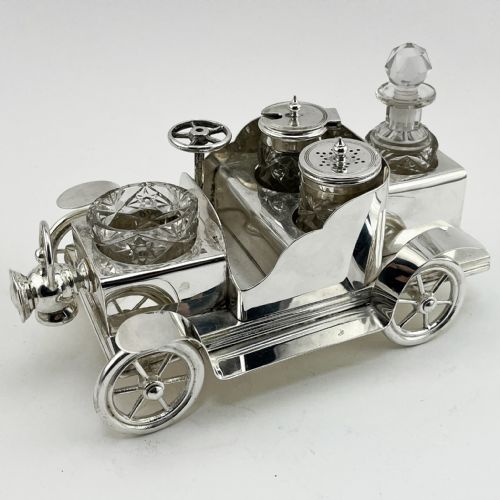
Cut glass oil bottles appear primarily within larger cruet sets and stands, alongside individual pairings for oil and vinegar. These tablewares date from the eighteenth, nineteenth, and early twentieth centuries, spanning the Georgian, Victorian, and Edwardian periods.
The pieces on this page range from single ewers and decanters to multi-bottle condiment frames in silver plate and sterling silver. Edwardian silver plated six-bottle sets and Victorian pairs dominate the available selection.
Makers produced these items for domestic dining tables, where guests dispensed oils and vinegars directly onto food. Surviving examples reflect the shifting dining fashions across the eighteenth, nineteenth, and twentieth centuries.
What varies in quality
Quality rests on the depth and precision of the glass cutting and the weight of the metal mounts. Heavy lead crystal with crisp hand-cut facets separates finer items from lighter, simpler pressed glass alternatives.
The integrity of the silver plate or sterling silver mounts, alongside hallmarks and maker attributions, elevates a piece. Complete sets retaining all original matching bottles command greater interest than assembled groups.
Listings feature items spanning the eighteenth century through to the Edwardian and Art Deco periods, predominantly utilising silver plate and cut glass.
Walker & Hall·Charles Thomas Fox·Elkington & Co·Hester Bateman·Wade Wingfield Wilkins
The Cut Glass Oil Bottles Glossary
- Cruet set
- A matched collection of bottles and casters held in a metal or wooden stand for table condiments. These sets typically include containers for oil, vinegar, mustard, and pepper.
- Ewer
- A jug with a wide spout used for holding and pouring liquids like oil or wine. They often feature applied handles and decorative cut glass bodies.
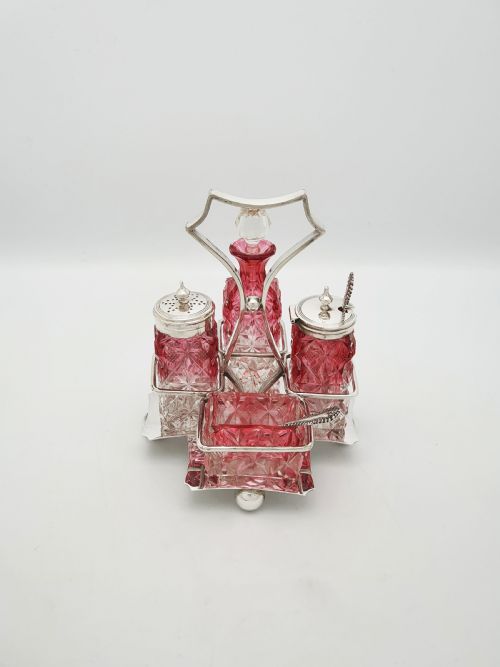
- Cranberry glass
- A rich red-pink glass coloured with gold chloride during production. Makers utilised this striking material across Victorian tableware.
- Lead crystal
- Glass containing lead oxide to increase weight, brilliance, and clarity. This heavy material allows for deep, sharp hand-cut decoration.
- Silver plate
- A base metal coated with a thin layer of silver through electroplating or older fusion methods. It offered the appearance of solid silver at a lower cost.
Cut Glass Oil Bottles: Frequently Asked Questions
How do you date an antique cruet set?
Dating relies on stylistic markers, manufacturing techniques, and any accompanying hallmarks stamped on the silver mounts.
Georgian pieces display different metalwork and cutting styles compared to Victorian or Edwardian examples listed on the page.
How were oil bottles used historically?
Dinners placed these bottles on the dining table or sideboard within cruet stands so guests could season their food.
They held oils and vinegars for dressings, functioning as both practical utensils and decorative table centerpieces.
How do you clean antique cut glass?
Cleaning requires warm water and mild detergent, avoiding harsh abrasives that might scratch the old glass or strip thin silver plate.
Makers constructed these to be washed by hand, taking care around delicate cut facets and hinged silver mounts.
What is the difference between glass and lead crystal?
Lead crystal contains lead oxide, which increases the material's weight, density, and light-refracting properties compared to standard glass.
This heavier composition allowed artisans to cut deeper, sharper geometric patterns into the surface.