
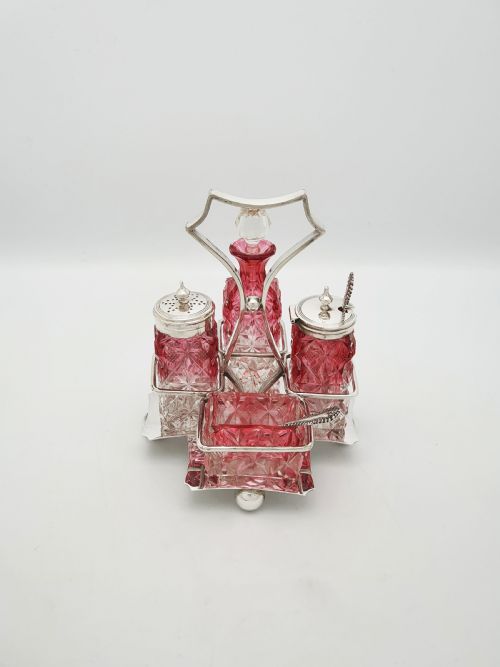


Silver Plated Table Cruet
A silver plated table cruet organises dining condiments with elegance, offering structured sets of bottles and stands to enhance any traditional table setting.
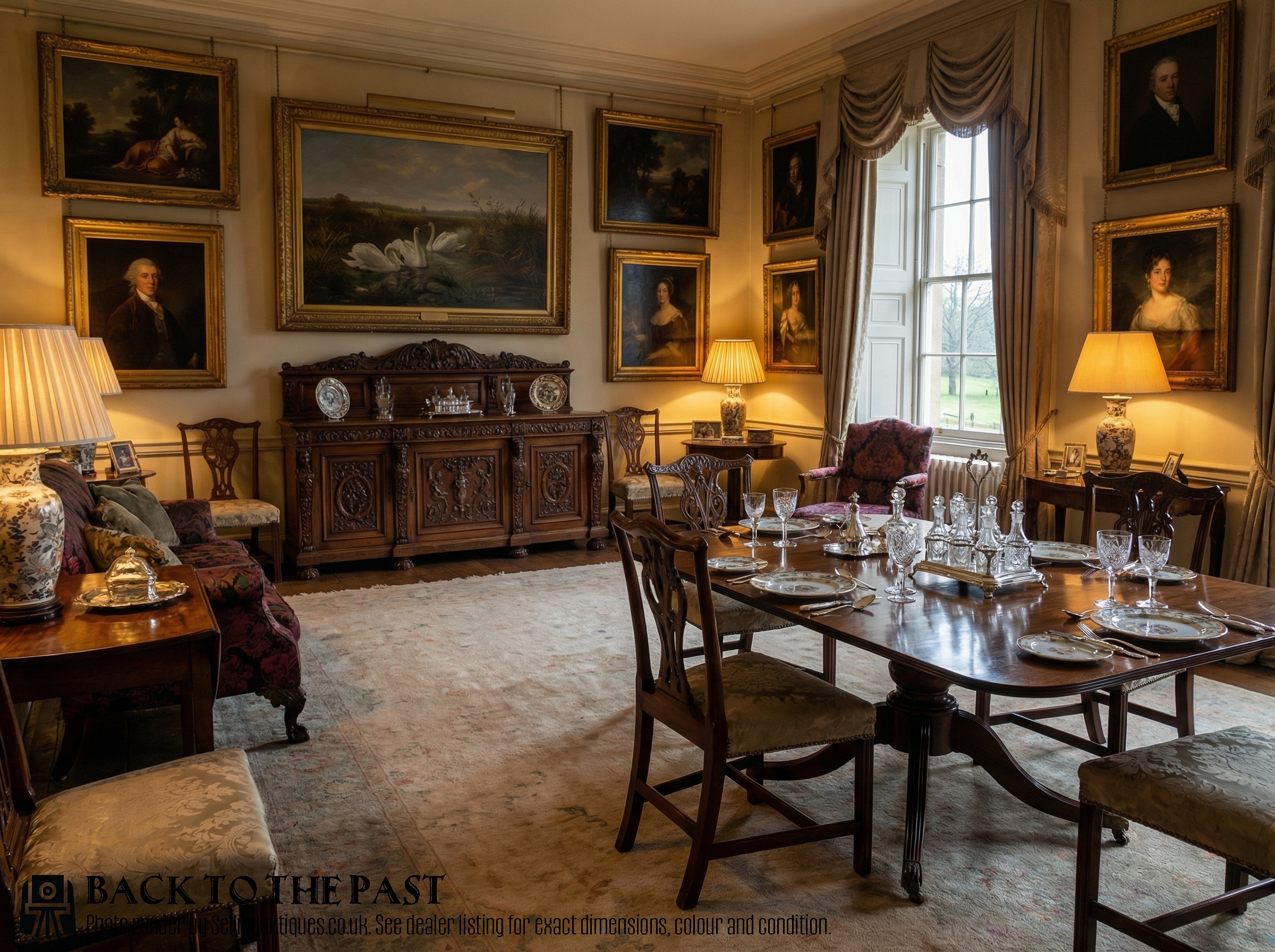
Silver Plated Table Cruet
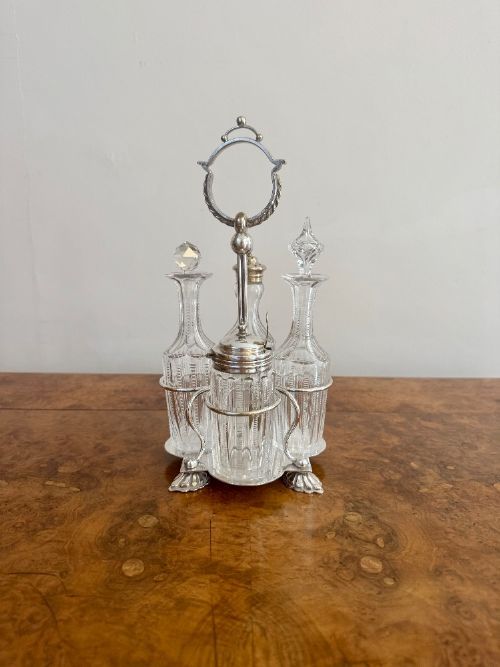
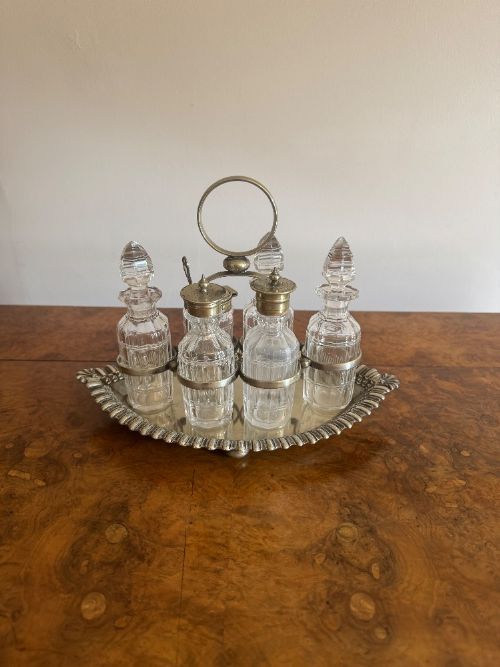
When you search for a silver plated table cruet, you look for a coordinated tableware set designed to hold essential table condiments like oil, vinegar, mustard, and pepper. These serving pieces typically sit on a metal frame or stand, often featuring a central carrying handle for easy movement around the table.
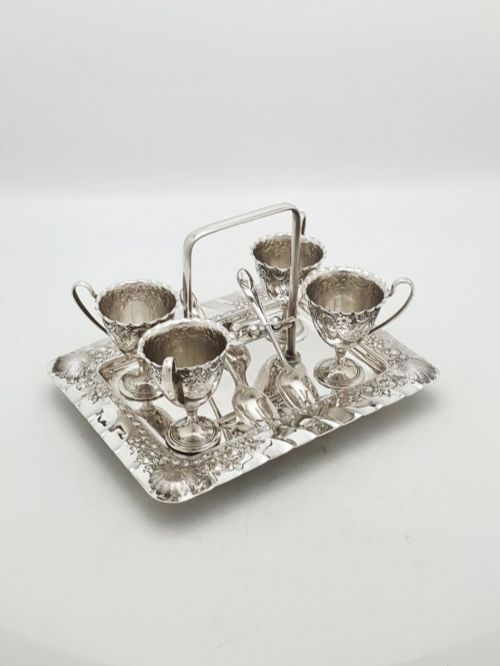
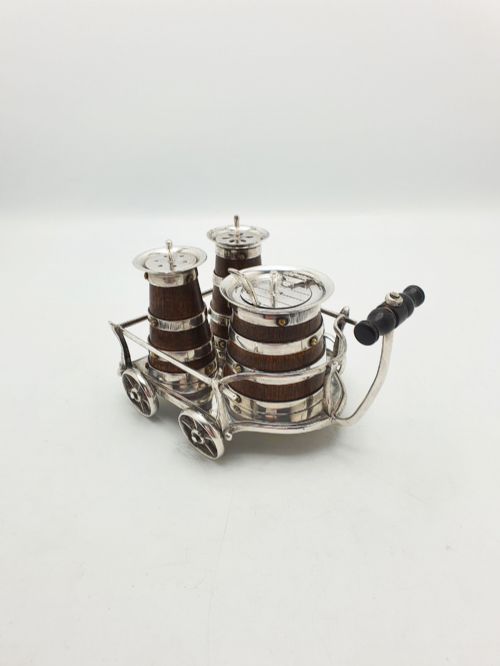
The versions you are most likely to meet on this page span the Victorian and Edwardian periods, alongside Georgian influences and later Art Deco designs. Many examples take the form of multi-bottle stands holding cut glass bottles, while others present specific formats such as egg cruets or novelty carriage and farmyard configurations.
Beyond standard bottle stands, the selection includes oak barrel condiments, butler tray servers, and bachelor sets designed for smaller settings. These diverse configurations reflect the changing dining habits and social customs of the nineteenth and early twentieth centuries.
Materials and Construction
Makers constructed the framework and stands using silver plate over base metals, frequently utilising electroplated nickel silver to provide a durable and reflective metallic surface. Oak and other woods also appear as structural materials, particularly in barrel and tray designs that combine timber with metal mounts.
The bottles and cruet containers employ cut glass and cranberry glass, demonstrating skilled glass-cutting techniques that catch the light on the dining table. Silver plate application methods ensure a uniform metallic sheen across the handles, frames, and bottle collars.
Listings feature items spanning the Victorian and Edwardian periods, alongside Georgian influences and Art Deco designs.
Separating the Best Examples
Quality in these sets often reveals itself through the complexity of the design and the weight of the metal frame. Finer pieces demonstrate precise chasing, embossing, or ornate casting around the rims and handles, whereas simpler versions rely on plain metal surfaces.
The integration of materials also dictates standing quality, particularly where cut glass bottles match the exact contours of the silver plated frame. Sets that incorporate specialised forms, such as novelty carriages or multi-person egg holders, display greater manufacturing ambition than standard bottle stands.
Mappin Brothers·Wade Wingfield Wilkins
The Silver Plated Table Cruet Glossary
- Silver Plate
- A thin layer of silver bonded to a base metal such as nickel silver or copper. This technique allowed manufacturers to produce lustrous tableware without the expense of solid silver.
- Electroplated Nickel Silver
- A durable alloy of copper, nickel, and zinc coated with an electrolytic layer of silver. It serves as the sturdy foundation for many Victorian and Edwardian metal frames.
- Cranberry Glass
- A rich red-pink glass created by adding gold chloride to the molten glass batch. It appears frequently in decorative inserts and condiment bottles from the period.
- Cruet Set
- A collection of small glass bottles or containers for holding liquid and dry condiments. These sets sit within a dedicated stand for service at the dining table.
- Bachelor Cruet Set
- A small-scale condiment set designed for individual use or intimate dining. These compact pieces typically feature fewer bottles than family-sized stands.
Silver Plated Table Cruet: Frequently Asked Questions
What is a silver plated table cruet?
A silver plated table cruet is a structured frame or stand holding glass bottles and containers for condiments like vinegar, oil, and pepper.
These sets served a practical purpose on dining tables during the Victorian and Edwardian eras, keeping seasonings organised and readily accessible for guests.
How were different cruet sets used?
Standard bottle stands held liquid dressings and dry spices for general meal service, while specialised forms served specific foods.
For example, egg cruets held boiled eggs alongside dedicated compartments for salt and pepper during breakfast service, whereas novelty sets brought theatrical flair to formal dinners.
How do I date an antique cruet set?
Dating relies on stylistic clues, manufacturing techniques, and registered design marks found on the metal framework.
Victorian pieces often display ornate Gothic or heavily embossed decoration, while Edwardian examples tend toward lighter proportions and Georgian revival motifs.
Are the glass bottles usually original?
Many surviving sets retain their original cut glass or cranberry glass bottles, which fit precisely into the designated rings of the metal stand.
Because glass is fragile, some pieces encountered today may feature period-appropriate replacement bottles that match the dimensions of the frame.