

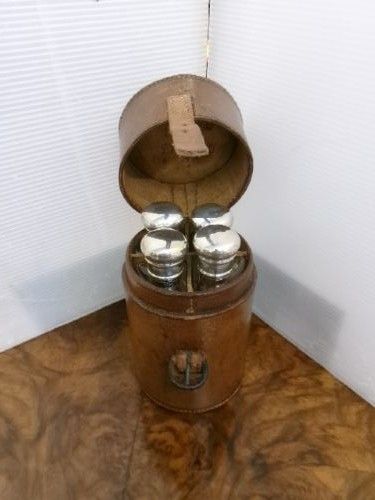


Vintage Silver Canteen
These vintage silver canteens range from fitted oak chests to campaign sets, offering a complete set of tableware for the dining room.
Vintage Silver Canteen
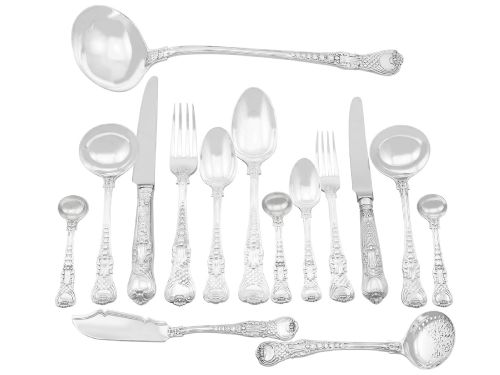
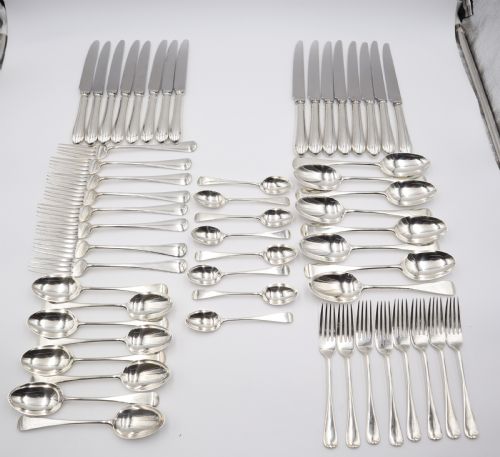
A vintage silver canteen provides a matched collection of forks, spoons, and knives housed within a dedicated fitted case, box, or stand. Buyers searching for this phrase encounter setups designed for six, eight, twelve, or more persons, spanning periods from the nineteenth century through the Art Deco era.
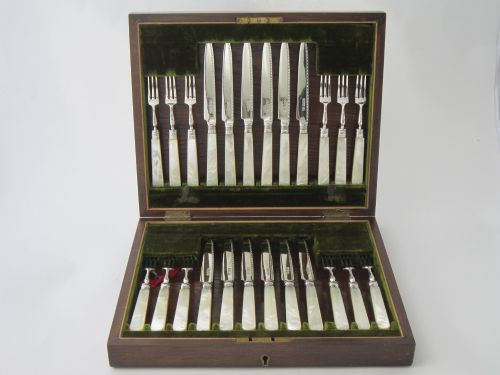
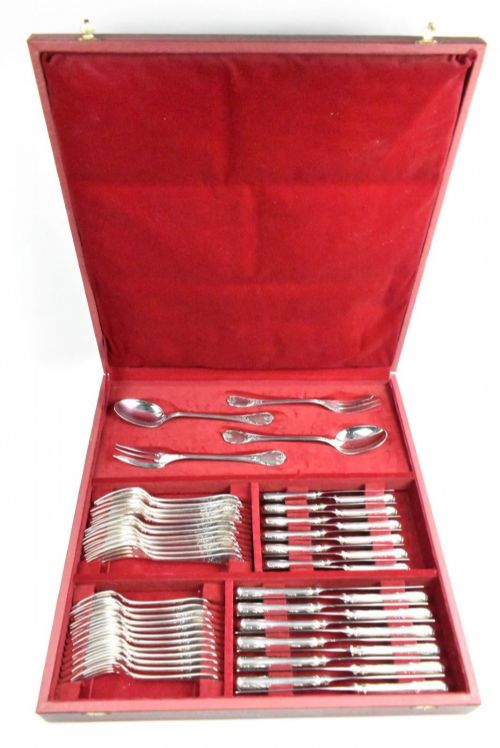
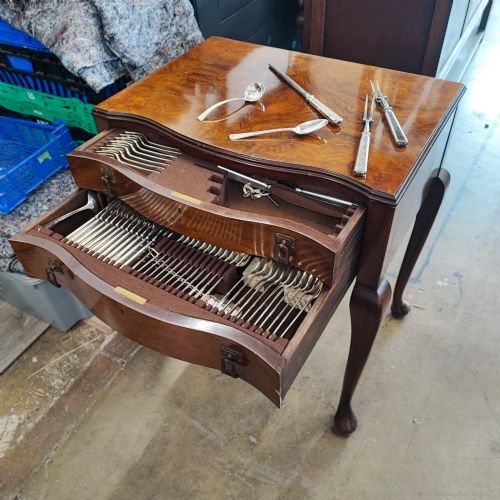
The contents vary from extensive sterling silver flatware services to practical silver-plated sets, alongside occasional campaign spirit sets and barware. Most examples appear in fitted wooden chests made of mahogany or oak, often lined with velvet to protect the metalwork.
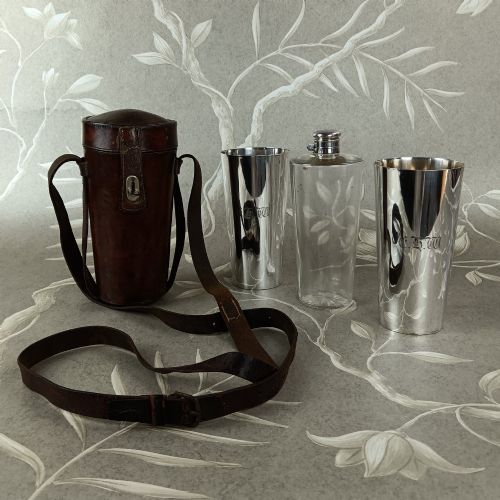
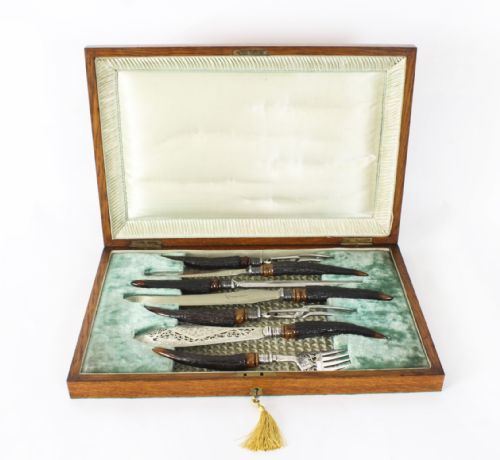
Alongside traditional dining services, the selection includes specialised carving sets with antler horn handles, mother-of-pearl dessert sets, and leather-cased flasks. These pieces reflect the dining habits of the Victorian, Edwardian, and George V periods, utilising durable materials built for frequent use.
Factors of quality
Quality rests upon the completeness of the service and the condition of the individual utensils within the fitted interior. Sets that retain their full complement of matching pieces across multiple tiers command greater interest than assembled services.
The craftsmanship of the housing matters equally, with substantial mahogany or oak chests featuring sound joinery, original brass hardware, and fitted velvet linings representing superior production. Maker attribution to established firms also elevates the standing of a service.
The choice of material, whether heavy sterling silver or durable silver plate, dictates the grade of the flatware, while specialised items like antler horn or mother-of-pearl handles require careful preservation to maintain their integrity.
Materials range from sterling silver and silver plate to steel, brass, and leather.
James Dixon And Sons·Christofle Marly·Tiffany·Walker And Hall·Mappin And Webb·Waring And Gillows
The Vintage Silver Canteen Glossary
- Flatware
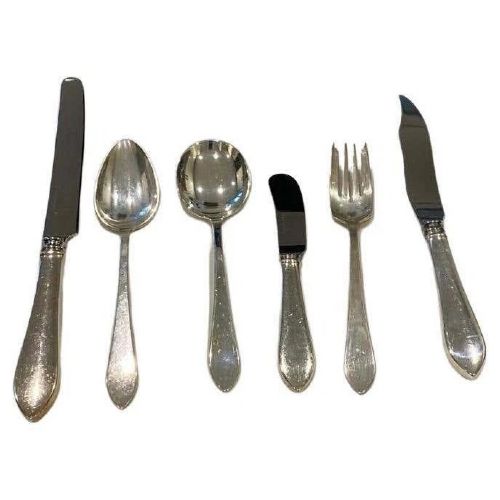
- Table cutlery including forks, spoons, and related implements used for dining. These items form the primary contents of most canteens.
- Sterling silver
- An alloy containing a high proportion of pure silver, traditionally marked with hallmarks indicating standard purity and origin. Many formal canteens utilise this material for the entire service.
- Silver plate
- A base metal coated with a thin layer of silver through electroplating or older techniques. This material offered a durable alternative to solid silver for large household services.
- Campaign set
- Portable equipment including flasks, beakers, and spirit sets housed in leather cases for travel. These pieces date from the Victorian and nineteenth-century periods.
- Faneuil pattern
- A specific decorative style featuring stepped, classical lines often associated with twentieth-century flatware production. It appears on notable Art Deco silver services.
Vintage Silver Canteen: Frequently Asked Questions
What is included in a vintage silver canteen?
A vintage silver canteen typically contains a matched set of dining utensils, such as forks, spoons, and knives, arranged in a fitted chest or box.
Larger services provide complete settings for twelve or more persons, while others include specialised pieces like dessert sets or carving knives.
How do I care for a silver canteen?
Regular use helps prevent tarnish, and utensils should be washed promptly after dining using mild soap and warm water.
Store the items within their designated wooden chests and velvet-lined compartments to protect the metal from excessive air exposure and scratching.
What is the difference between sterling and plated sets?
Sterling silver canteens consist of solid silver alloy throughout, usually stamped with official assay office hallmarks indicating the standard.
Silver-plated sets utilise a base metal core coated with a layer of silver, offering a similar appearance at a different scale of production.
How do I date a cutlery chest?
Dating relies on stylistic clues in the cabinetwork, such as the use of mahogany, oak, or walnut, alongside brass hardware and interior configuration.
Metal items within the chest often bear hallmarks, registration marks, or maker stamps that narrow down the period of manufacture.