


Vintage Signalling Cannon
These vintage signalling cannon pieces are robust maritime and military artefacts designed for sound-making and display, offering collectors a solid tangible link to historical ordnance.
Vintage Signalling Cannon
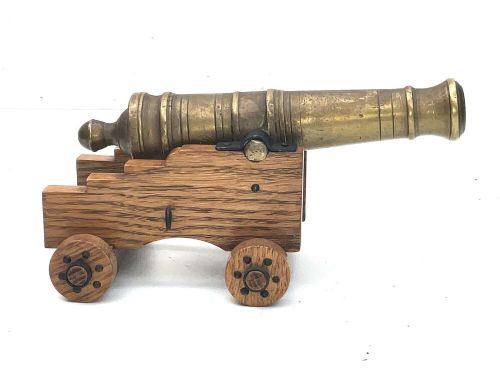
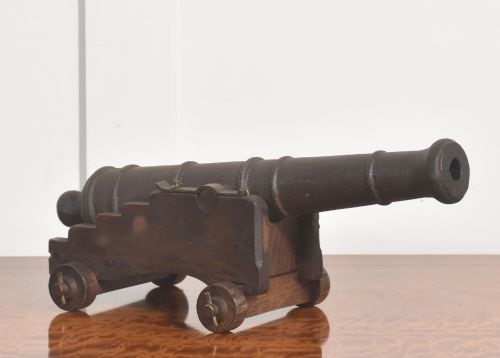
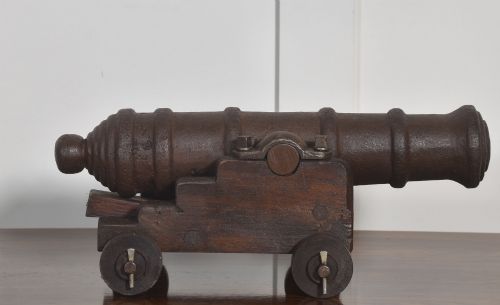
When you search for vintage signalling cannon, you encounter a specialised selection of heavy metal pieces built for acoustic report or ceremonial display. These objects take the form of scale models, garden ornaments, and desk ornaments.
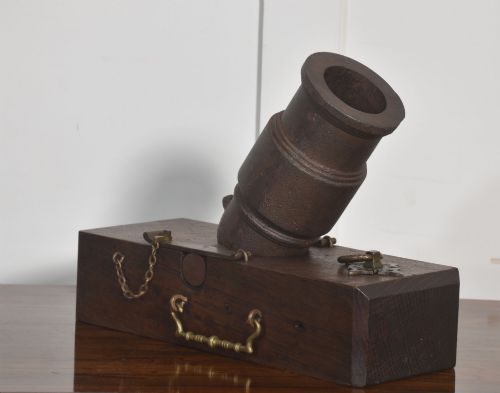
The specimens on this page originate predominantly from the 18th century, 19th century, Victorian era, Edwardian period, and early 20th century. Forms range from simple signal mortars on oak carriages to substantial garden cannons and polished bronze desk models.
You are most likely to meet cast iron and brass examples mounted on timber carriages, reflecting the maritime and military origins recorded in the listings. These pieces serve as striking decorative objects and historical militaria for the study or garden.
How They Were Made
Makers cast the barrels of these pieces from durable metals including cast iron, brass, bronze, and polished steel to withstand the rigours of firing charges or long-term display. Each metal imparts a distinct weight and surface finish to the barrel.
Carriages and undercarriages were constructed from dense hardwoods such as oak and mahogany to support the heavy metal barrels securely. These wooden mounts were often shaped specifically to complement the proportions of the ordnance.
The listings on this site feature pieces constructed from cast iron, brass, bronze, and steel, paired with oak and mahogany carriages.
What Varies in Quality
The distinction between standard items and superior examples lies in the precision of the casting and the quality of the timber carriage work. Finely rendered decorative details on the metal and robust joinery on the wood elevate the piece.
Proportion and material integrity dictate the overall character of each item, separating simple novelty models from substantial, well-engineered military and maritime pieces.
The Vintage Signalling Cannon Glossary
- Signal cannon
- A small piece of ordnance used to fire blanks for starting races, signalling distress, or marking time. These pieces were often mounted on wooden blocks or wheeled carriages.
- Signal mortar
- A short, wide-mouthed variant of the cannon designed to project noise vertically rather than deliver a flat trajectory. These typically sat on heavy timber beds.
- Carriage
- The wooden or metal mounting frame that supports the barrel of a cannon. Oak and mahogany are common woods found on these listings.
- Militaria
- Artefacts collected for their association with military history and armed forces. This category encompasses model artillery and ordnance.
- Undercarriage
- The base or supporting frame beneath a desk model or small cannon. These are frequently fashioned from polished hardwoods.
Vintage Signalling Cannon: Frequently Asked Questions
What was a signalling cannon used for?
These cannons were utilised primarily to create a loud noise for maritime signals, starting yacht races, or celebrating local events. They served a functional purpose rather than acting as combat weapons.
Over time, many transitioned into decorative desk ornaments or garden pieces, appreciated for their solid construction and historical associations.
How do I date a brass cannon?
Dating relies heavily on the style of the mounting carriage, the finishing techniques on the metal barrel, and any associated provenance. Victorian and Edwardian examples often exhibit specific casting marks and wood turning.
Comparing the alloy composition and the design of the undercarriage against documented periods helps establish a reliable timeframe.
Are these cannons still capable of firing?
Many of these pieces were engineered as functional signal cannons, but their current operational status depends entirely on individual condition and professional inspection. Collectors generally treat them as decorative objects or historical artefacts.
Consulting an expert is essential before attempting any discharge, as old metal and wood can degrade.
Where should I display a heavy desk cannon?
Heavy bronze or brass desk cannons require a sturdy surface like a mahogany desk, a robust bookcase, or a dedicated display cabinet. Their substantial weight demands stable placement.
Keeping them away from damp environments protects both the metal finish and the hardwood carriages from unnecessary wear.