




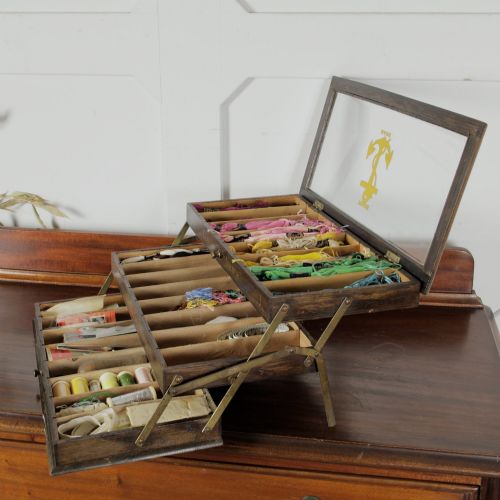






Vintage Shop Counter Case
A vintage shop counter case brings tangible retail history into a room, offering glazed protection for small collections and curiosities.
Vintage Shop Counter Case
A vintage shop counter case acts as a tangible remnant of commercial interiors from the Victorian, Edwardian, and early twentieth-century eras. These pieces range from compact tabletop boxes to large freestanding retail counters utilised by chemists, confectioners, and drapers.
Buyers meet sturdy oak and mahogany structures frequently on this page, often featuring glazed panels designed to protect confectionery, cottons, or pharmacy goods. Many examples bear the lettering or trademarks of historical brands such as Fry, Cadbury, and F. Sage & Co.
The assortment includes specialised forms such as bow-end display units, pentagonal counters, and narrow apothecary boxes meant for customer-facing retail environments. Each item reflects the specific merchandising needs of nineteenth and twentieth-century commerce.
Materials and construction methods
Cabinet makers built these commercial units predominantly in solid mahogany and oak, applying brass hinges, catches, and occasional mirror glass interiors to maximise light reflection. Some later examples incorporate ebonised finishes or lightweight aluminium framing.
Glazing forms the central structural element, requiring robust timber framing to support large sheets of glass safely within busy retail spaces. Internal shelving often utilises adjustable wooden brackets or glass plates to accommodate varying heights of stock.
Vintage Shop Counter Case Retail Price Guide 2026
Typical asking prices for vintage shop counter case among the pieces listed under this phrase on Sellingantiques today, from the lower quarter to the upper quarter. They describe what is for sale here now, not the wider market.
Chocolate and cotton brands once fought for counter space using clever glass displays that tempted customers right up to the till.
Markers of distinction in retail joinery
Quality rests in the precision of the original commercial joinery, visible in tight mitred joints, smooth drawer actions, and the integrity of the timber framing. Maker signatures stamped into the woodwork elevate certain pieces above anonymous workshop productions.
Originality of the glass and hardware dictates the integrity of a piece, distinguishing intact historical examples from heavily restored or modernised units. The presence of authentic painted advertising fascia adds specific historical weight to branded confectionery and pharmaceutical cabinets.
F. Sage & Co·Saml. Elliott & Sons
The Vintage Shop Counter Case Glossary
- Countertop display
- A compact glazed cabinet designed to sit directly upon a retail serving counter for customer temptation. These units usually feature rear sliding doors for staff access.
- Bow end
- A curved glass end profile utilised on cabinets and counters to soften sharp angles and improve visibility. This technique requires skilled glass bending.
- Haberdashery case
- A specialised multi-drawer or glazed cabinet intended for sorting and displaying sewing threads, buttons, and ribbons. Brands like Chadwick and Ermen & Roby frequently commissioned these.
- Apothecary box
- A small compartmentalised container or cabinet built to hold medicines, pills, and chemist supplies. They often utilise tight-fitting lids or glazed drop-front doors.
- Ebonised
- Wood treated with a chemical stain or black finish to imitate ebony. This dark surface treatment appears on select twentieth-century retail furnishings.
Vintage Shop Counter Case: Frequently Asked Questions
How do I identify an authentic period shop counter?
Examine the timber construction, hardware patination, and the method of glass retention within the frame. Older examples typically show hand-cut joinery and minor wear consistent with decades of commercial service.
Look closely at the rear doors and interior shelving for signs of heavy use. Original maker plaques or painted retailer lettering further confirm period authenticity.
Were these cases made for specific types of goods?
Many units served distinct trades, such as confectioners displaying chocolates or chemists housing bottled remedies. Haberdashery variants featured shallow drawers tailored for spools of cotton and small sewing notions.
General merchants utilised large freestanding oak counters with glass viewing panels for dry goods and tobacco. The internal configuration usually reveals the intended commercial application.
How should I clean the glass and wood on a display case?
Use a soft, dry cloth for dusting timber surfaces and apply natural beeswax sparingly to nourish aged mahogany or oak. Avoid harsh modern chemical polishes that strip historical patination.
Clean glass panels with a mild solution applied directly to the cloth rather than the wood to prevent moisture damage. Take care around painted advertising lettering and fragile antique joints.
Can I use a countertop display case in a modern home?
These glazed units suit contemporary living spaces well for displaying small collections, ceramics, or natural curiosities securely. Their compact footprints allow placement on sideboards, desks, or kitchen islands.
The clear glass panels protect delicate items from dust while maintaining high visibility within a room.