



Vintage Ship Art
Vintage ship art captures maritime history through oil on canvas, watercolours, and carved dioramas from the nineteenth and twentieth centuries.
Vintage Ship Art
Vintage ship art encompasses paintings, watercolours, etchings, and three-dimensional dioramas depicting naval vessels, commercial shipping, and coastal scenes. Buyers searching this phrase look for authentic maritime representations spanning the Victorian period through the Edwardian era and into the 1930s and 1950s.
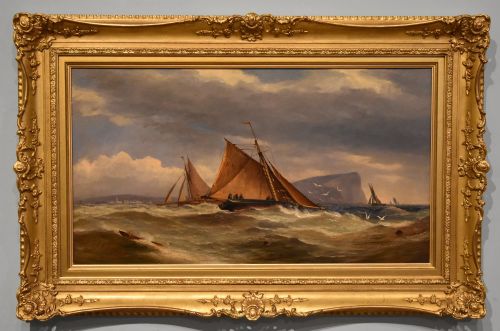
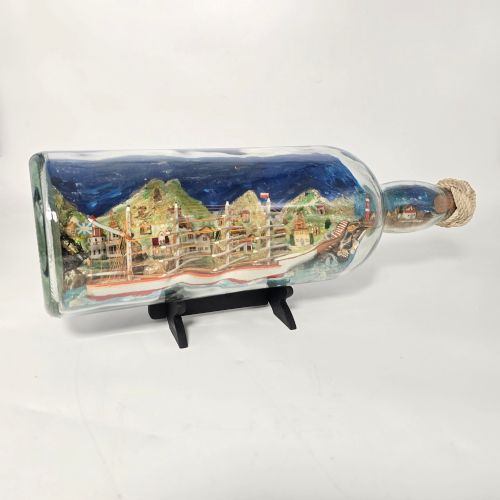
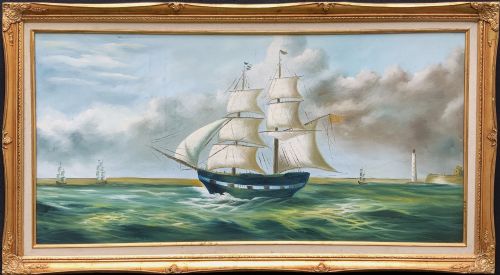
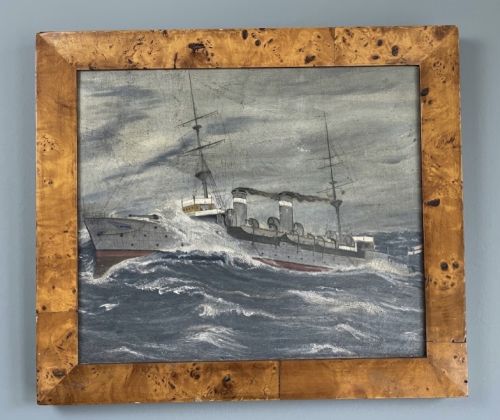
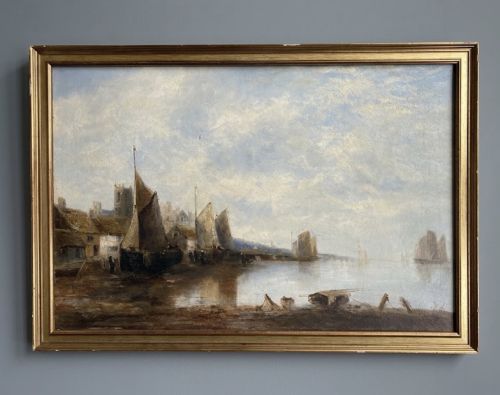
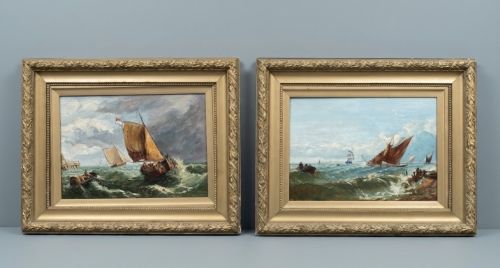
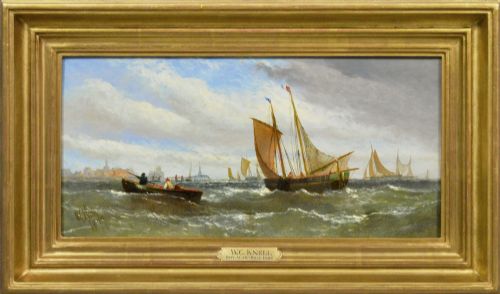
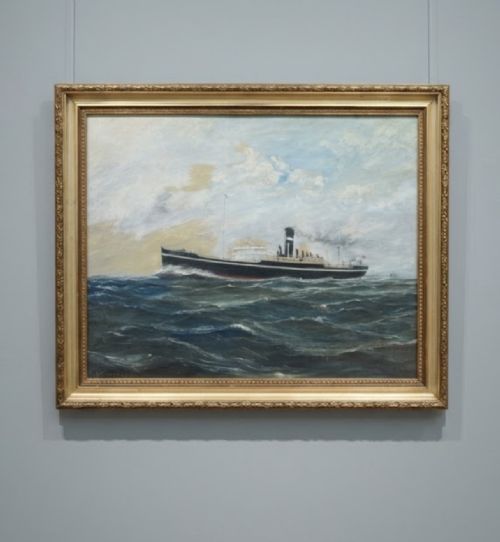
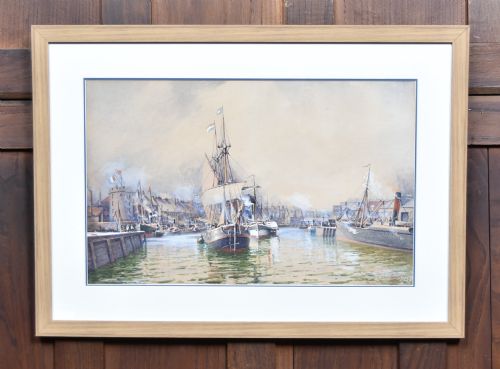
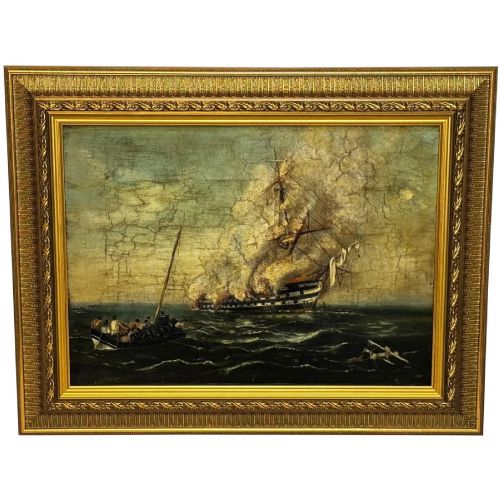
The most common examples on this page are oil paintings on canvas or board, alongside framed watercolours and detailed ship models in bottles. These works record specific vessels, historic naval engagements, and busy international ports.
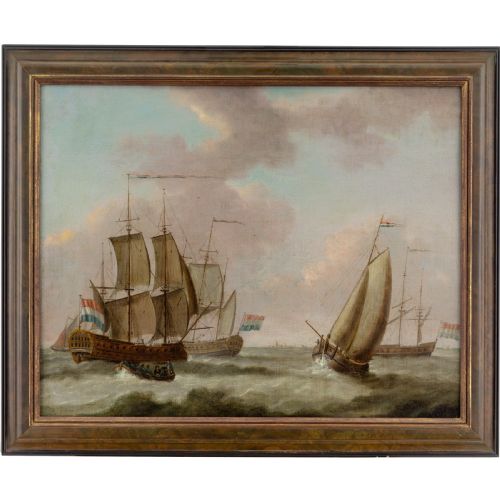
Originating from British, Dutch, French, and other European schools, these pieces reflect the maritime dominance and coastal heritage of their respective periods. A buyer encounters everything from large historical battle scenes to intimate folk art portrayals of local cobles and steamers.
Materials and construction
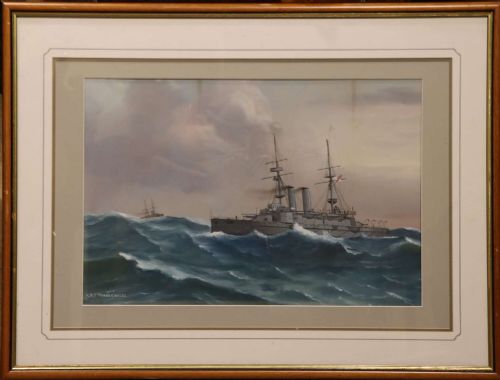
Makers utilised traditional artist materials including oil paint, watercolour, gouache, and pencil on paper, canvas, board, and wood. Many works are housed in their original gilt frames or mounted behind glass to protect the delicate media.
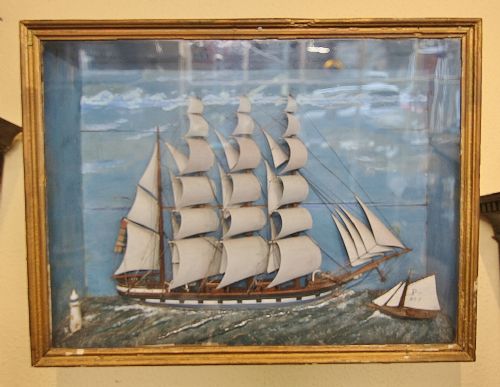
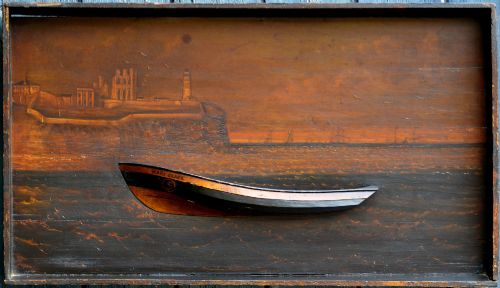
Three-dimensional pieces combine carved wood, glass, and painted elements to construct half-hull models, boxed dioramas, and intricate ship-in-a-bottle arrangements. These constructions demand careful handcrafting to fit complex rigging and miniature hulls into confined glass vessels.
Vintage Ship Art Retail Price Guide 2026
Typical asking prices for vintage ship art among the pieces listed under this phrase on Sellingantiques today, from the lower quarter to the upper quarter. They describe what is for sale here now, not the wider market.
Listings include nineteenth-century oil paintings, Edwardian watercolours, and folk art ship models in bottles.
Quality and execution
Quality in these works rests on the artist's command of perspective, light, and maritime anatomy, separating professional academic paintings from simpler folk art expressions. The handling of churning water, atmospheric skies, and accurate vessel rigging demonstrates the creator's technical skill.
Condition and originality dictate desirability, particularly the survival of untouched painted surfaces, authentic period framing, and intact glass in dioramas. Works bearing clear signatures or documented historical associations carry greater weight than unsigned, anonymous school pieces.
William Woolard·Hans Harlander·Eugène-Louis Gillot·William McAlpine·Reginald Arthur Borstel·James Kay·Bernard Gribble·William Lionel Wyllie·Frank William Scarbrough·Paul Bret·Bernard Benedict Hemy·Nicholas Condy·Abraham Hulk·Alexander Harwood
The Vintage Ship Art Glossary
- Maritime diorama
- A three-dimensional display featuring a model ship set against a painted coastal or open sea background, usually enclosed in a glass-fronted wooden box.
- Gouache
- An opaque water-based paint that dries to a matte finish, frequently utilised alongside watercolour to add bright highlights to shipping scenes.
- Folk art
- Art created by self-taught or non-professional makers, often characterised by charming perspective and direct use of readily available materials like carved wood and glass bottles.
- Half model
- A three-dimensional representation of the port or starboard side of a hull, mounted on a backboard for display or design reference.
- Etching
- A printmaking technique where an artist uses acid to cut lines into a metal plate, producing fine, detailed monochrome impressions on paper.
Vintage Ship Art: Frequently Asked Questions
What periods do these pieces come from?
The selection spans from the eighteenth century through the Victorian and Edwardian periods up to the mid-twentieth century.
Most items date from the nineteenth century and the early decades of the 1900s, reflecting active eras of maritime trade and naval history.
How were ship dioramas made?
Makers constructed miniature wooden hulls and delicate fabric rigging inside wooden boxes or glass bottles.
Painted paper or canvas backdrops created the illusion of depth, sea, and sky behind the model.
Are all the paintings signed by artists?
Not every piece bears a signature, as many works were produced by regional schools or anonymous folk artists.
Signed works by documented painters appear alongside unsigned professional canvases and naive depictions.
How should I display framed maritime art?
These works suit traditional study, library, or hallway settings where their historical subjects complement classic interiors.
Protect watercolour and gouache pieces from direct sunlight to prevent fading of the original pigments.