




Vintage Shell Back Chair
A vintage shell back chair brings curving lines and distinctive fluted upholstery to a room, offering both character and comfort.
Vintage Shell Back Chair
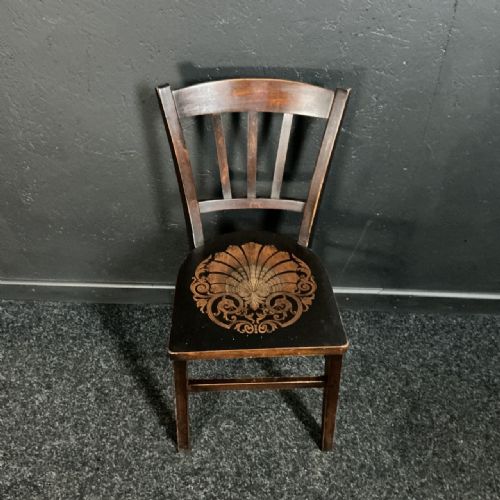
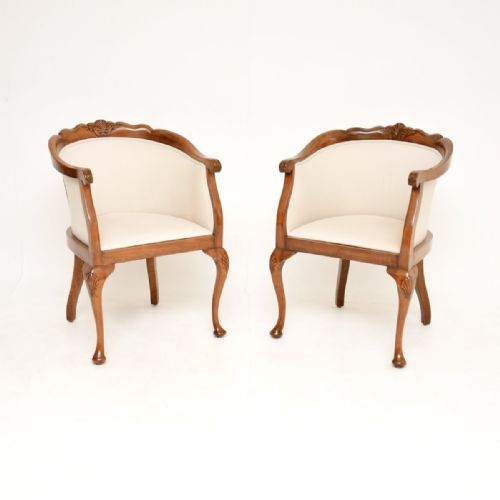
A vintage shell back chair typically takes the form of an armchair, tub chair, or occasional seat with a curved, fluted backrest resembling a seashell. The examples collected under this search phrase span multiple eras, including Victorian, Edwardian, and Art Deco periods, alongside revivals of Georgian and Queen Anne styles.
Most pieces encountered on this page date from the nineteenth and twentieth centuries, taking shapes such as upholstered tub armchairs, cocktail chairs, and slipper chairs. Materials vary from walnut and mahogany frames to beech and oak, often paired with textile or velvet upholstery.
Buyers seeking this phrase find seating that ranges from elaborate Victorian showwood frames to streamlined 1930s armchairs and occasional chairs. The overarching characteristic remains the rounded back design, which unites diverse periods from the 1890s through to the 1940s.
How they were made
Makers constructed the frames of these chairs using hardwoods such as mahogany, walnut, oak, and beech, frequently employing traditional joinery and carved details. Some Victorian and Edwardian examples feature ebonised finishes, inlay, or moulded wooden panels.
The distinctive fluted back requires careful upholstery techniques to gather fabric evenly across curved ribs or channels. Workshops utilised textiles, velvet, brass fittings, and piping to finish the edges of the upholstered shell.
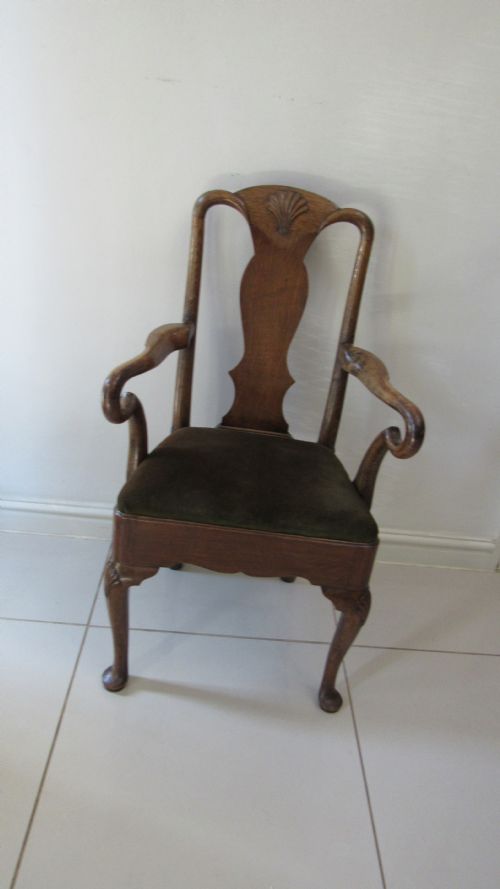
A tiny child's armchair occasionally sneaks in among the full-sized seating, proving that even toddlers require proper period style.
What varies in quality
Quality rests in the sculptural integrity of the wooden frame, the crispness of any carving or inlay, and the precision of the fluted upholstery channels. Pieces with solid mahogany or walnut frames and well-executed joinery represent the finer end of the range.
The choice of covering material and the harmony between the frame and the fabric also dictate the distinction between ordinary production and superior craftsmanship. A well-proportioned tub chair or slipper chair maintains its supportive curve and balanced stance across different stylistic periods.
The Vintage Shell Back Chair Glossary
- Tub armchair
- A rounded, fully upholstered armchair where the arms and back form a continuous, curved enclosure. This shape provides a snug seat and frequently forms the basis of shell back designs.
- Showwood
- Exposed wooden framing around an upholstered piece, allowing the polished grain of walnut or mahogany to remain visible. Victorian makers often utilised showwood to highlight the craftsmanship of the structure.
- Slipper chair
- A low-seated upholstered chair designed originally for bedrooms, allowing women to sit comfortably while putting on shoes. They appear frequently in twentieth-century forms.
- Bentwood
- Wood softened by steam and bent into curved structural components. Edwardian makers applied this technique to create light, resilient seating frames.
- Occasional chair
- A movable, decorative seat intended for intermittent use in various rooms rather than as primary seating. These often incorporate inlaid details or distinctive back designs.
Vintage Shell Back Chair: Frequently Asked Questions
How do I date a vintage shell back chair?
Dating depends on observing the underlying timber, the framing style, and the character of any carved details or upholstery work. Pieces range from nineteenth-century Victorian ebonised designs to 1930s and 1940s cocktail chairs.
Comparing the structural wood, such as mahogany, walnut, or beech, helps place the chair within periods like the Edwardian era or the interwar years.
Where should I place a vintage shell back chair?
These chairs suit living rooms, bedrooms, or reading corners where their curved silhouettes can function as focal points. Slipper chairs and tub armchairs fit well in smaller spaces due to their compact footprints.
Pairing them with neutral surroundings allows the fluted upholstery and polished wooden frames to stand out visually.
Are shell back chairs comfortable?
The curved, enclosing backrest provides natural support around the sides and back of the sitter. Upholstered versions offer padded surfaces designed for relaxation in both lounge and bedroom settings.
Comfort ultimately depends on the depth of the seat and the firmness of the interior padding retained within the frame.