

Vintage Serpentine Drawers
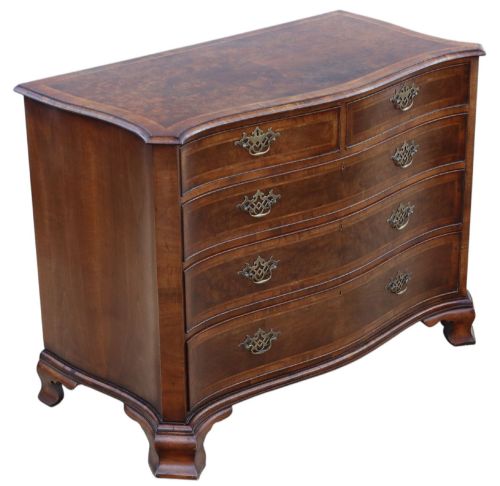
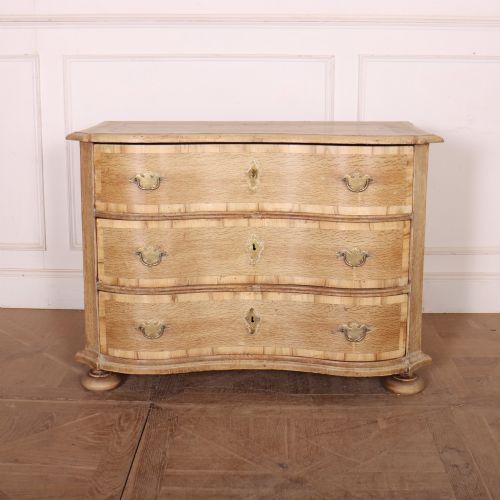
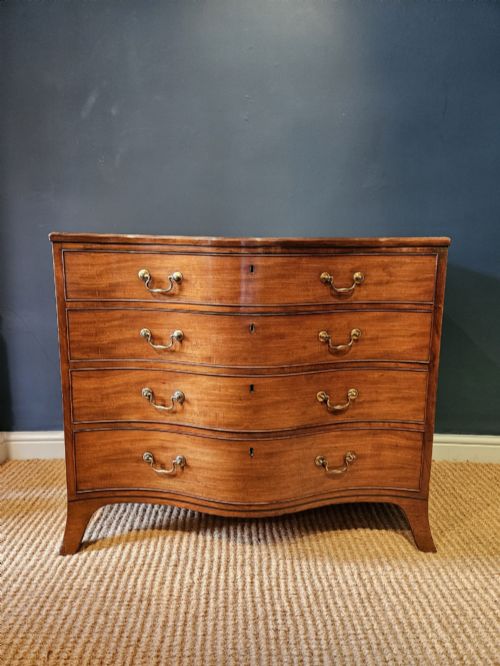
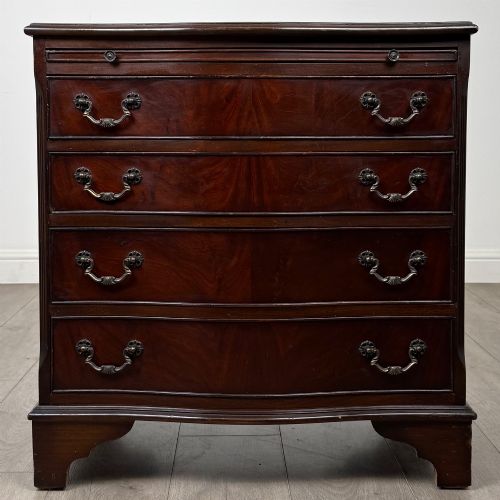
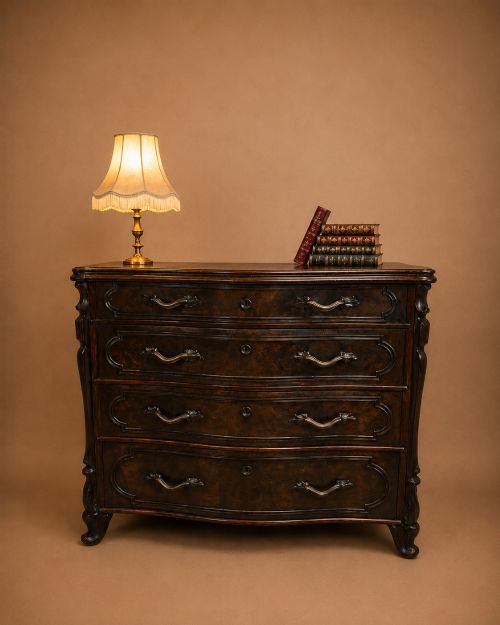
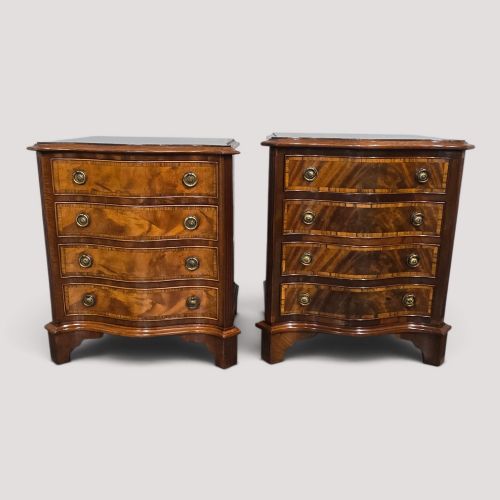
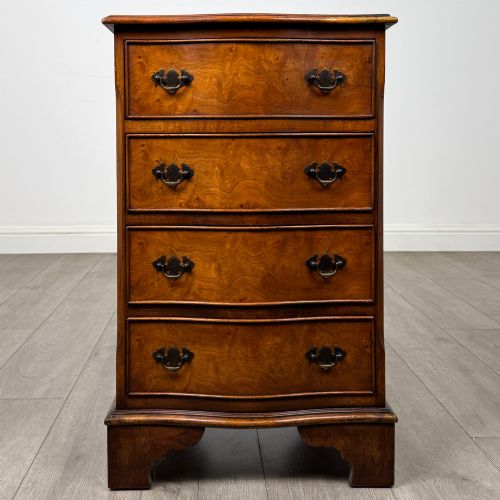
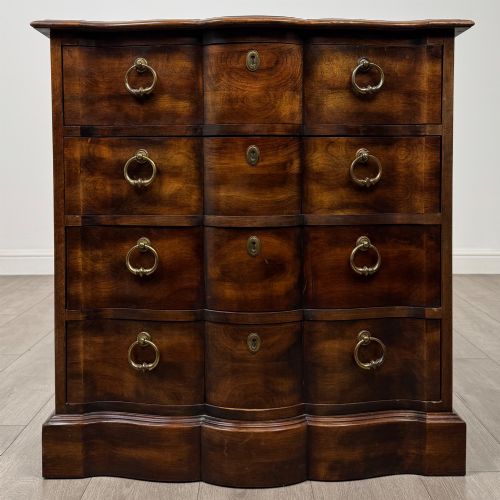
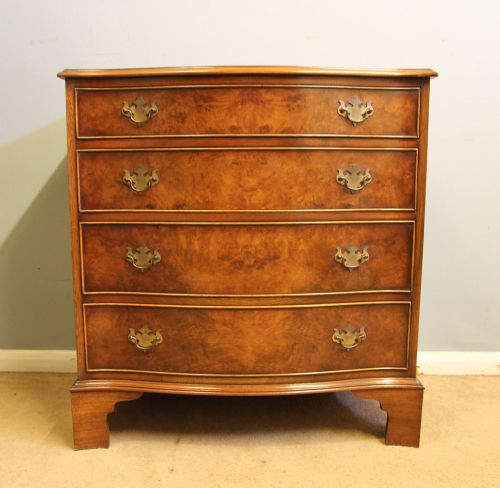
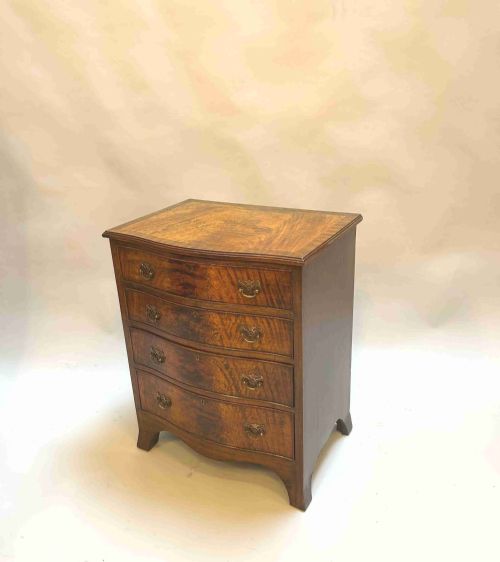
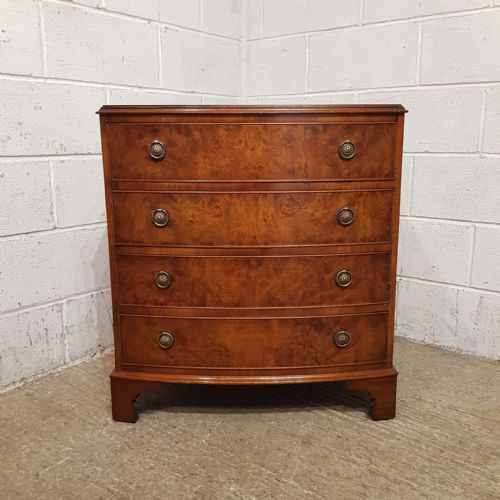
These vintage serpentine drawers bring fluid, curving lines and rich timber figuring into a room.
Vintage Serpentine Drawers
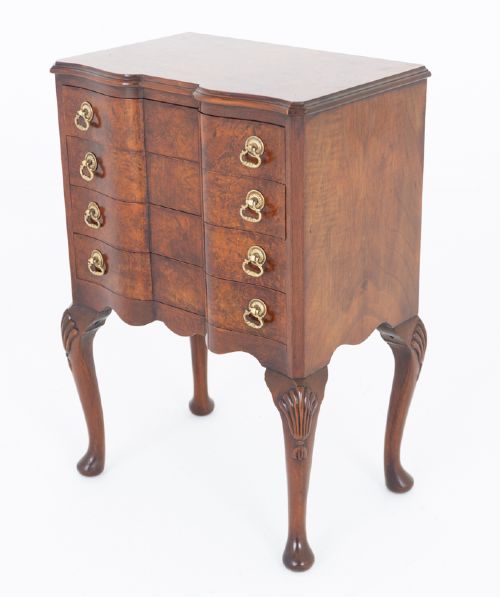
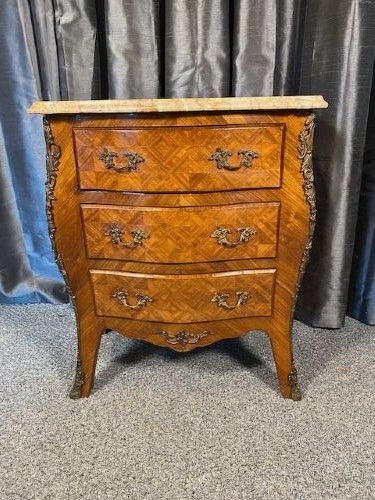
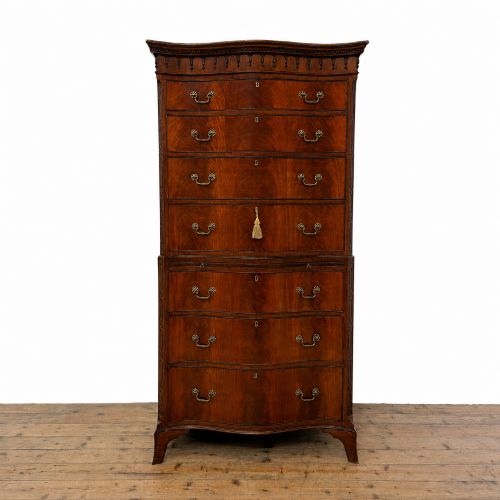
When searching for vintage serpentine drawers, buyers encounter pieces defined by their undulating, convex-concave fronts. The selection on this page centres primarily on chests of drawers, bedside tables, and commodes spanning the eighteenth century through to the nineteen thirties. These forms range from compact Edwardian hardwood chests to large eighteenth-century walnut commodes and twentieth-century burr walnut tallboys.
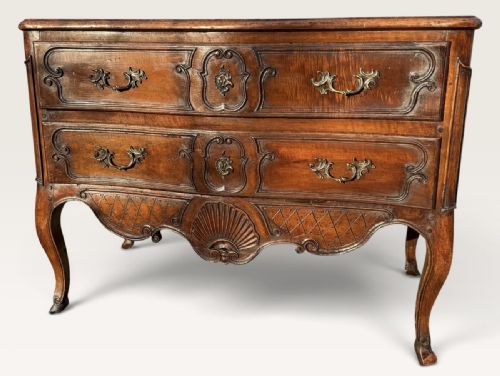
Beyond standard chests, the evidence shows related forms including writing tables, pedestal desks, dressing table mirrors, and bedside cabinets. Many pieces reflect revival periods such as Georgian Revival and Queen Anne style, alongside continental origins like French Louis XV style. Walnut, mahogany, and burr walnut dominate the timber choices across these decades.
The characteristic serpentine silhouette demands considerable cabinet-making skill to achieve smooth curves across multiple drawers. Pieces often incorporate brass hardware, leather writing surfaces, or marble tops depending on the specific form. Buyers select these items for their architectural presence and practical storage capacity.
How they were made
Cabinet-makers constructed these pieces using solid and veneered timbers including mahogany, walnut, burr walnut, and kingwood. Fine crossbanding and marquetry inlay frequently ornament the drawer fronts and surfaces, requiring precise hand-cut joinery. Marble tops appear on several commodes and bedside cabinets, adding weight and a smooth cold counterpoint to the timber.
The curving serpentine drawer fronts were shaped from solid timber blocks or carefully built up using multi-layered construction to hold the contour over time. Brass handles, escutcheons, and ormolu mounts were fitted by hand to complement the polished wood grains. Secondary woods support the internal drawer structures while exterior surfaces received multiple coats of polish.
Some nineteenth-century drawers hide pull-out leather writing slides designed for standing correspondence.
What varies in quality
The quality of these serpentine forms depends heavily on the crispness of the curved drawer fronts and the symmetry of the timber grain. Burr walnut and figured mahogany veneers require expert matching across the undulating surfaces to maintain visual harmony. Superior examples display tight, hand-cut dovetails and heavy, well-cast brass hardware that operates smoothly.
Construction depth dictates longevity, particularly in how drawers fit within the curving carcass without binding. Finer pieces preserve original marble tops, leather inserts, and internal slides without later alterations. The integration of revival styles against authentic eighteenth-century proportions also separates standard commercial production from master workshops.
The Vintage Serpentine Drawers Glossary
- Serpentine
- A front contour characterised by a convex centre flanked by two concave curves. This shape requires specialist joinery to ensure drawers slide correctly along the undulating line.
- Commode
- A low chest of drawers or cabinet, often of continental origin with marble tops and decorative veneer work. They frequently serve as bedside storage or principal room focal points.
- Burr Walnut
- A distinctively figured wood grain taken from walnut tree growths, prized for rich swirling patterns. It is frequently used for veneering high-end drawer fronts.
- Crossbanding
- A decorative border technique where strips of veneer are laid perpendicular to the main grain. This frames the drawer face and highlights the serpentine outline.
- Tallboy
- A tall chest of drawers, often constructed in two stacked sections. These pieces maximise vertical storage while maintaining a compact floor footprint.
Vintage Serpentine Drawers: Frequently Asked Questions
Where should I place a serpentine chest?
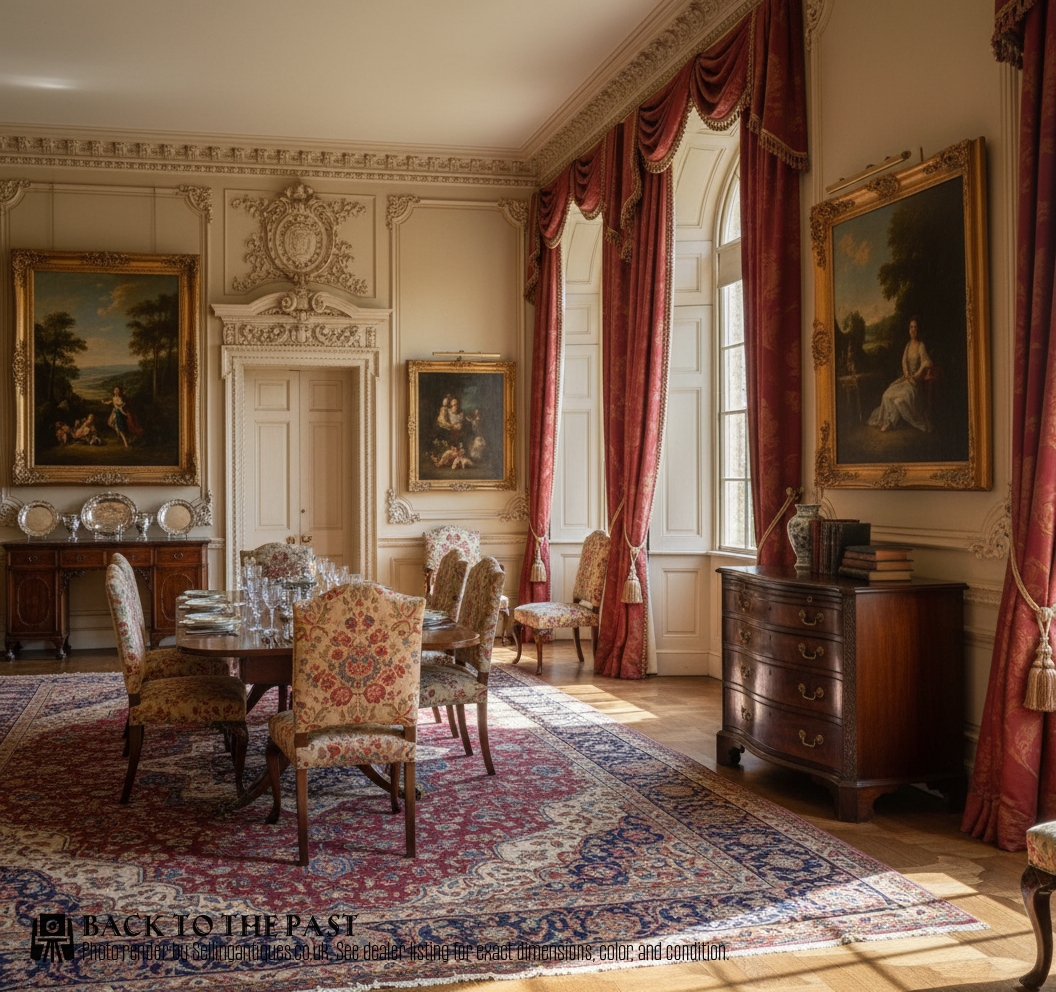
These chests suit living rooms, hallways, and bedrooms where their curved profile softens rigid architectural corners. Their finished silhouettes allow them to stand away from walls or anchor focal points.
Bedside tables and smaller cabinets fit well beside low bed frames while larger commodes anchor dining or reception spaces.
Are marble top commodes difficult to move?
Marble tops add considerable weight to commodes and bedside cabinets, making them heavier than all-wood equivalents. The stone slabs usually rest loose upon the timber frame rather than being permanently fixed.
Lifting the marble separately before moving the wooden base protects both materials from accidental damage during relocation.
How do I care for burr walnut veneer?
Burr walnut surfaces require protection from direct sunlight and excessive moisture to prevent veneer lifting or fading. Regular dusting with a soft dry cloth maintains the polished finish without chemical buildup.
Applying occasional appropriate wax preserves the depth of the grain patterns and protects the historical timber.