







Vintage Serapi Carpet
These vintage serapi carpet selections bring bold geometric designs and rich wool warmth into a room.
Vintage Serapi Carpet
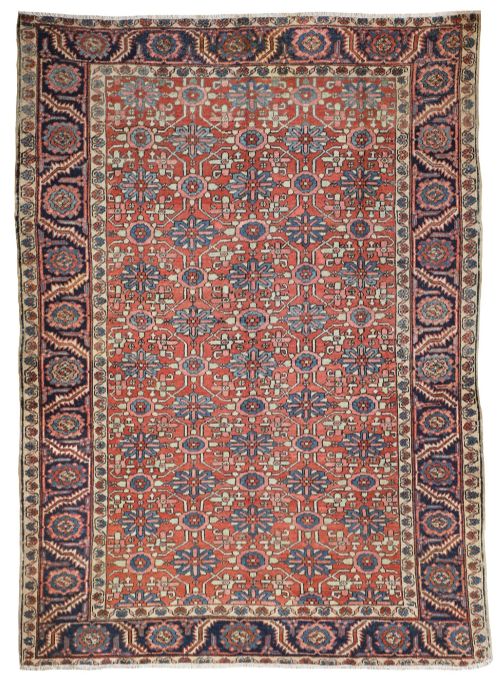
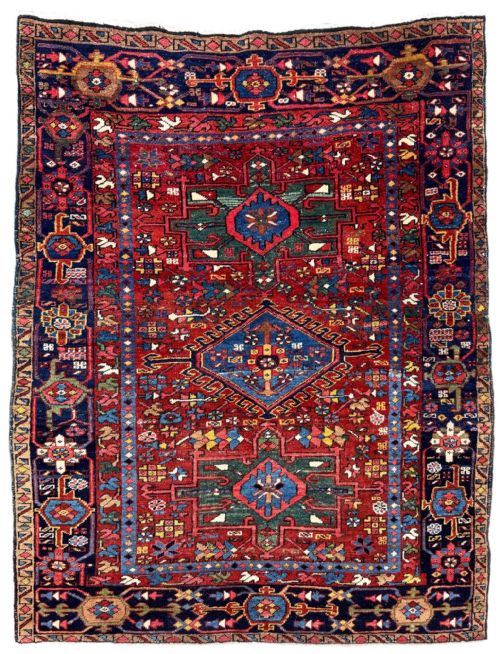
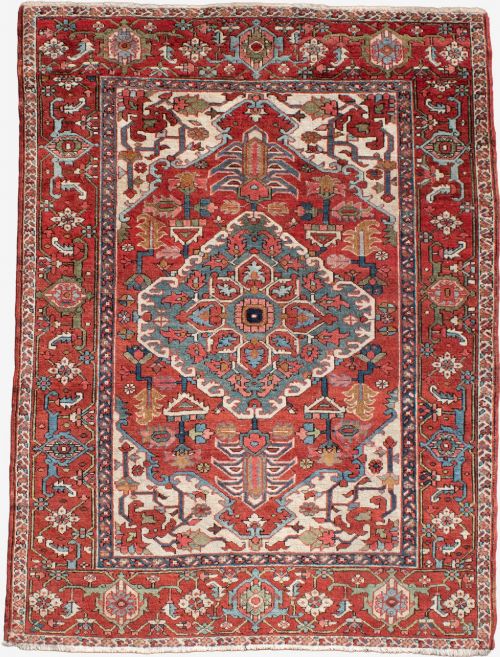
A vintage serapi carpet represents a specific geometric lineage of Northwest Persian weaving traditions. Buyers searching for a vintage serapi carpet encounter room-sized carpets, large gallery carpets, and smaller rugs originating from the late nineteenth century up through the nineteen thirties. These woven objects span traditional Persian styles closely related to Heriz workshops.
The most common formats found here include large carpets alongside narrow runners and square area rugs. Weavers constructed these floor coverings utilising wool pile on cotton foundations, deploying distinct geometric medallions and all-over field designs. Pieces range from compact scatter rugs measuring under two metres to expansive carpets exceeding four metres in length.
Materials and Construction
Traditional weavers employed durable wool for the visible pile, yielding a resilient surface suited for heavy foot traffic in hallways and reception rooms. This wool pile was hand-knotted onto sturdy cotton warp and weft foundations.
The combination of wool and cotton materials provided structural stability to large formats like gallery runners and area carpets. Natural dyeing traditions contributed deep saturated tones to the geometric field patterns.
Some runners measure over four metres long, ready to patrol grand corridors with enduring geometric confidence.
Judging Quality and Execution
Quality separates along the precision of the geometric medallion drawing and the crispness of the border motifs. Tighter knot density on the reverse side indicates greater artisanal control during the weaving process.
Material preservation dictates the overall condition of surviving examples from the nineteenth and early twentieth centuries. Even pile wear across the wool surface and intact cotton foundation edges distinguish superior specimens.
The Vintage Serapi Carpet Glossary
- Medallion
- The central ornamental motif dominating the field of the carpet. Traditional Serapi designs often utilise a large geometric centrepiece.
- Warp
- The vertical foundation threads stretched lengthwise on the loom before knotting begins. Cotton warps provide structural rigidity.
- Weft
- The horizontal threads passed alternately over and under the warp threads to secure the knots in place. This material works alongside the warp to form the foundation.
- Runner
- A long, narrow carpet format designed specifically for corridors and hallways. These pieces measure significantly longer than they are wide.
Vintage Serapi Carpet: Frequently Asked Questions
Where should I place a long runner?
Runners suit narrow hallways, corridors, and long entryways where floor protection and visual warmth are required.
Their elongated proportions bridge connecting rooms without overwhelming tighter spatial dimensions.
How do I clean my wool rug?
Vacuum gently using a suction-only attachment without rotating bristle brushes that pull at the pile.
Professional specialist cleaning is recommended for antique wool and cotton textiles to preserve structural integrity.
What defines a geometric field design?
Geometric field patterns rely on straight lines, angular polygons, and stylized botanical motifs rather than curving floral arcs.
These graphic layouts originate from Northwest Persian weaving districts.
How do I identify different weaving periods?
Dating relies on assessing structural materials, palette shifts, and design evolution across nineteenth and twentieth-century examples.
Earlier pieces often display more expansive medallion layouts and saturated natural dyes.