
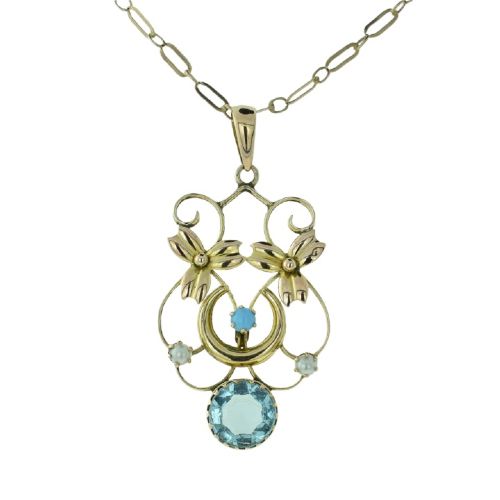
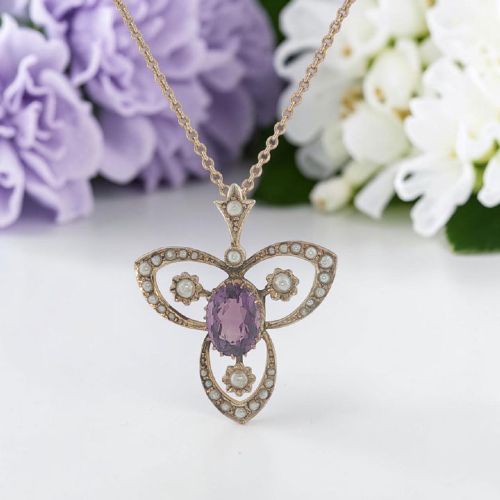
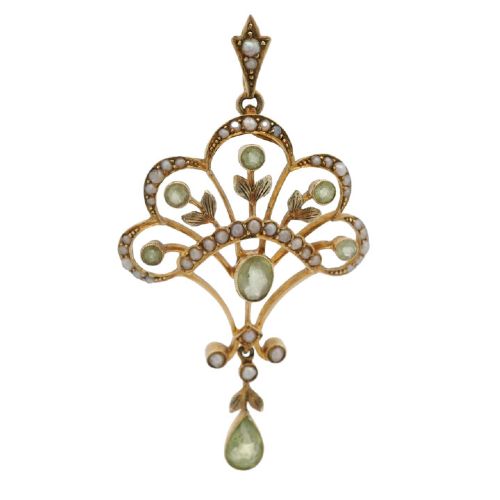
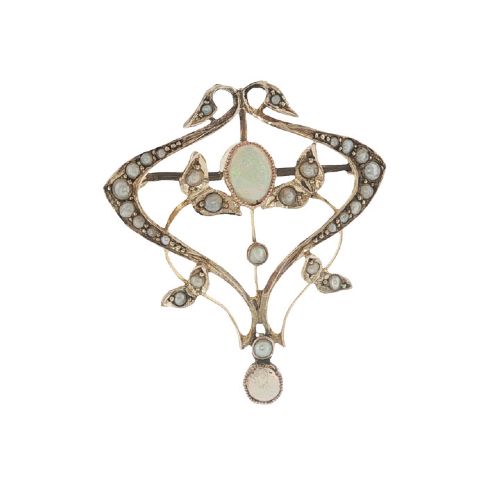
Vintage Seed Pearl Pendant
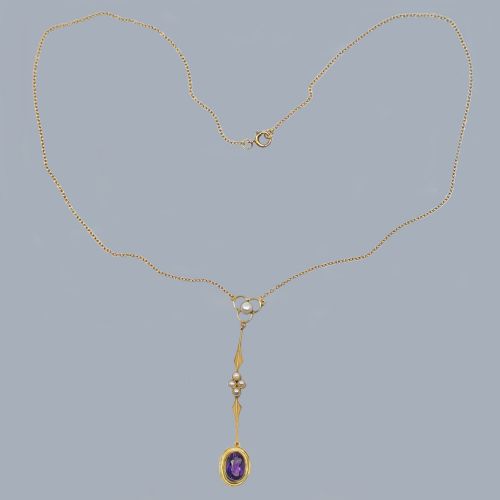
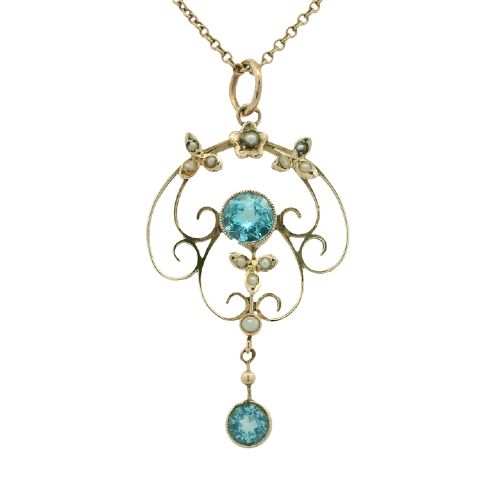
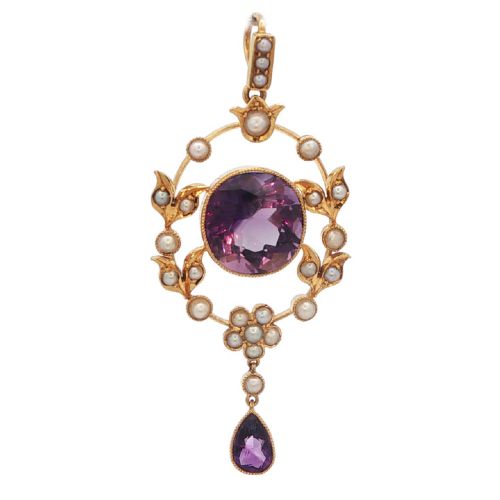
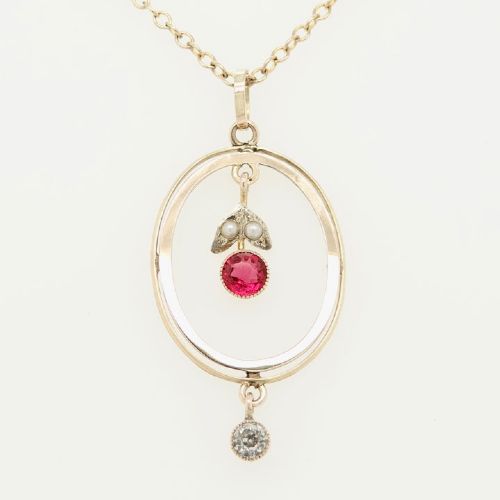
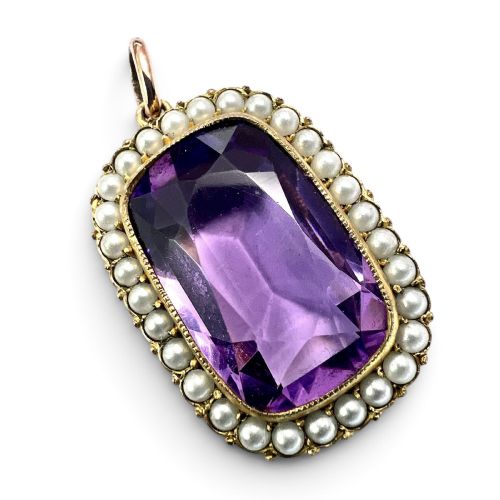
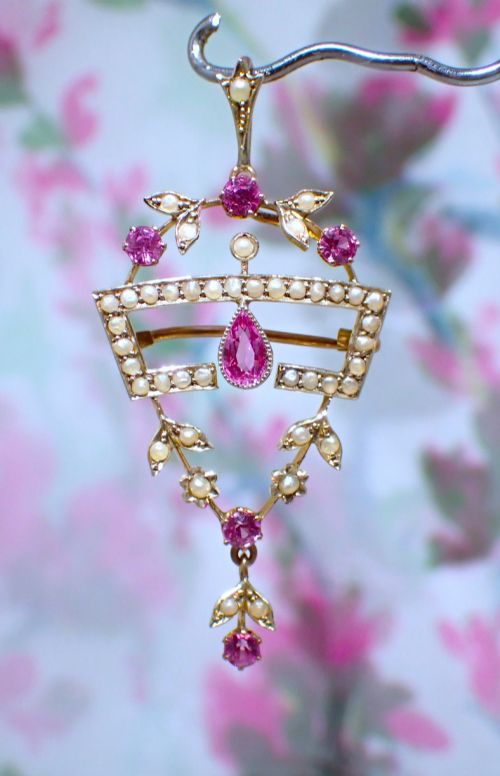
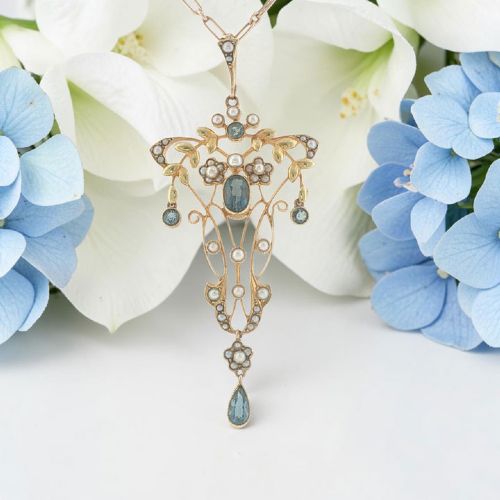
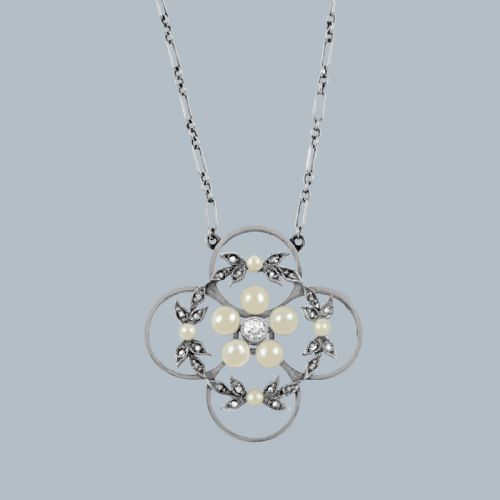
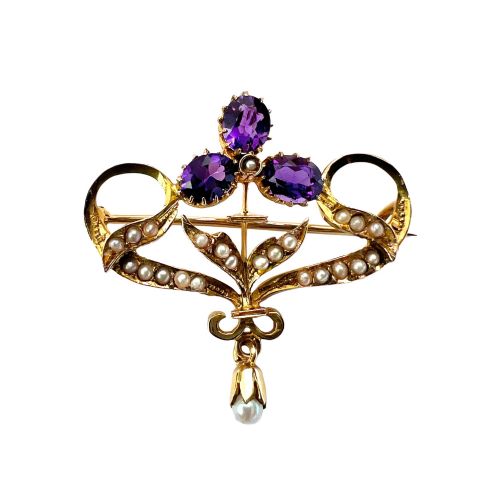
A vintage seed pearl pendant brings delicate floral geometry and Edwardian grace to the neckline through centuries of craftsmanship.
Vintage Seed Pearl Pendant
The selection frequently highlights intricate metalwork alongside pearls, spanning Art Nouveau curves and geometric configurations. Buyers often find pendants combined with period chains, lockets, or convertible brooch fittings.
How they were made
Jewellers utilised nine-carat and fifteen-carat gold alongside platinum to set fragile seed pearls by hand. Techniques such as filigree, plique-à-jour enamel, and claw settings secured these minute pearls into complex garland and clover motifs.
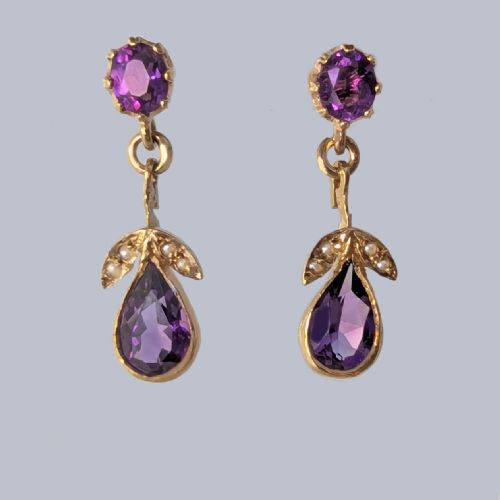
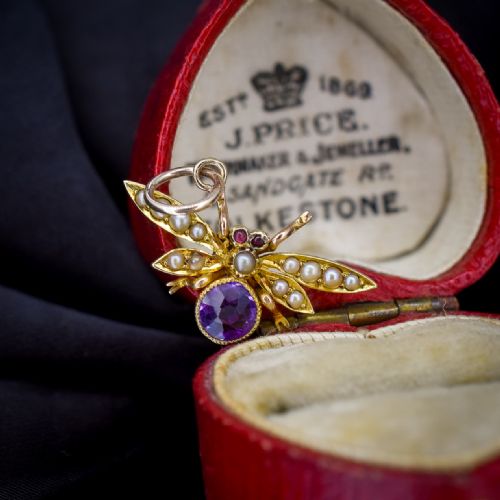
Makers combined seed pearls with amethyst, peridot, and turquoise, mounting stones onto articulated drops or hollow gold frames. The construction relied on meticulous soldering and wirework to support delicate pearl arrangements.
Tiny seed pearls were sometimes sewn directly onto silk backings before wire bezel settings became standard practice in workshops.
What varies in quality
The distinction between tiers rests upon the uniformity of the seed pearls and the complexity of the gold framework. Higher quality items display tightly matched, lustrous pearls securely held within balanced, ornate metal designs without visible solder marks.
S. Blanckensee & Son·Chaumet·Sellier
The Vintage Seed Pearl Pendant Glossary
- Seed pearl
- A very small, naturally occurring pearl, typically under two millimetres in diameter. These tiny spheres form the delicate surface texture of Edwardian and Victorian clusters.
- Lavalier
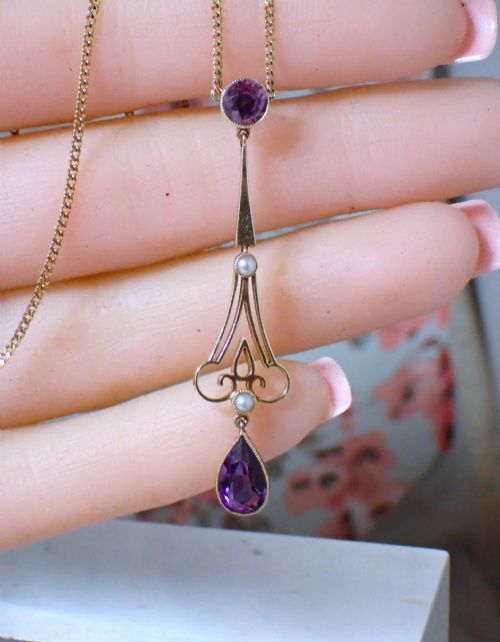
- A pendant featuring a small central drop suspended from a longer chain. This style gained immense popularity during the Edwardian period.
- Plique-à-jour
- A vitreous enamelling technique where the enamel has no backing, resembling miniature stained glass. It allows light to shine through translucent coloured areas.
- Filigree
- Ornamental work consisting of fine wire scrolled into openwork patterns. Jewellers soldered these delicate metallic threads onto backing plates or frames.
- Garland style
- A decorative design mimicking looped ribbons, floral swags, and foliage. This motif dominated high-end jewellery production around nineteen ten.
Vintage Seed Pearl Pendant: Frequently Asked Questions
How do I wear a seed pearl pendant?
These pendants pair wonderfully with fine gold chains or velvet ribbons to highlight their delicate scale. Their versatile nature allows them to sit comfortably against both high-necked garments and evening wear.
Because the pearls are secured with fine wirework, avoid wearing them during vigorous physical activities or swimming. Store them flat in a lined jewellery box to prevent friction against harder gemstones.
What periods do these pendants come from?
The pieces listed span the Victorian, Edwardian, and Art Deco eras, with many originating around nineteen ten. You will also encounter mid-century revivals that emulate earlier aesthetic movements.
Examining the metal purity marks, clasp types, and gemstone cuts helps determine the precise era. Edwardian examples frequently utilise platinum-topped gold alongside peridots and amethysts.
Are these pearls natural or cultured?
The pearls found in these antique pieces are natural saltwater or freshwater seed pearls harvested before cultured pearl farming became widespread in the early twentieth century. Their organic origin accounts for their slight variations in shape and soft lustre.
Due to their delicate nature, these pearls require gentle care without exposure to harsh chemicals, perfumes, or ultrasonic cleaners. Wipe them softly with a dry cloth after wearing.
Can I replace a missing seed pearl?
Sourcing a matching antique seed pearl requires patience, as natural pearls vary tremendously in size, shape, and creamy hue. A skilled antique jeweller can often match the dimensions and re-secure the setting.
Prevent further loss by checking the setting prongs periodically under magnification. Keeping the pendant away from moisture preserves the historical adhesive used in original assemblies.