



Vintage Sectional Shelves
Vintage sectional shelves offer modular adaptability for libraries and studies, combining period timber with glazed stacking units that lift and slide.
Vintage Sectional Shelves
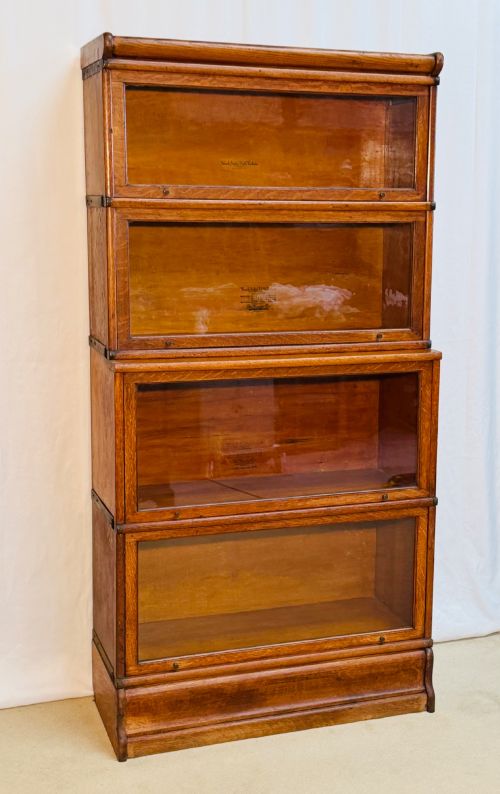
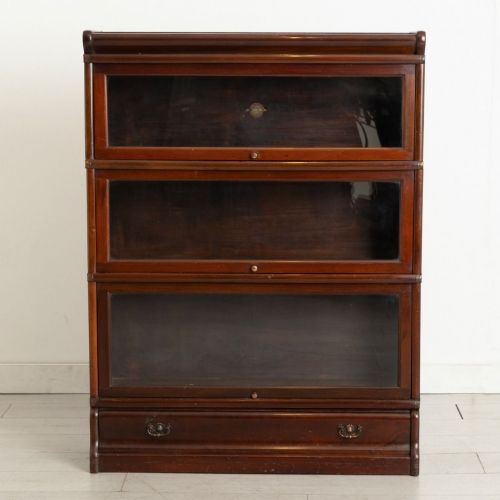
When buyers search for vintage sectional shelves, they are looking at modular stacking bookcases that divide libraries into individual tiers. These pieces take the form of barrister and office bookcases originating from the Edwardian period, 1910, 1920, and 1930.
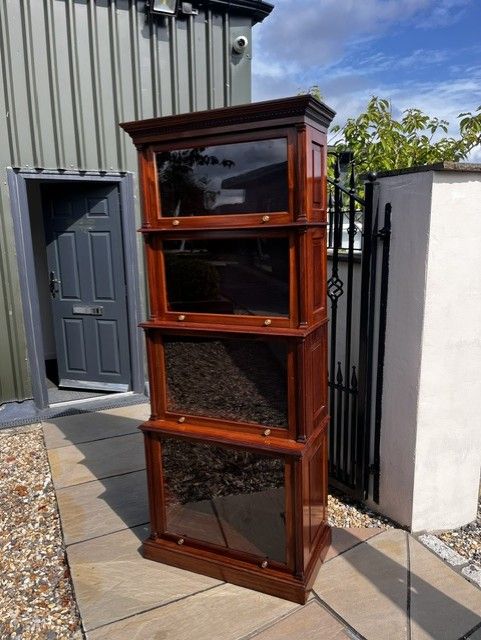
The version most likely to meet a buyer on this page is the oak or mahogany stacking bookcase with glazed lifting doors. Makers such as Globe Wernicke and Lebus shaped these modular systems during the early twentieth century.
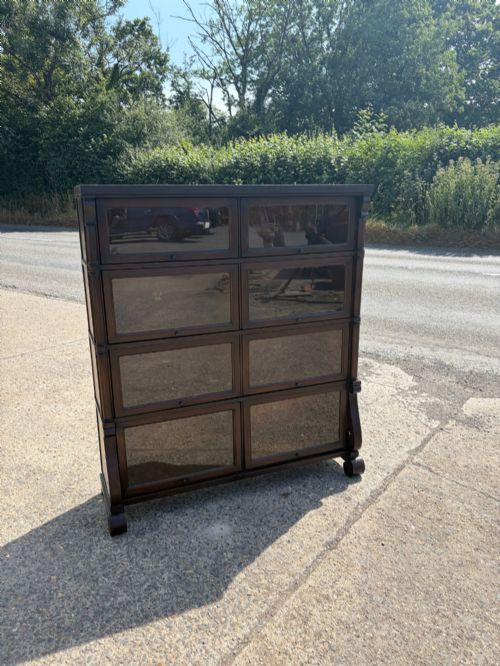
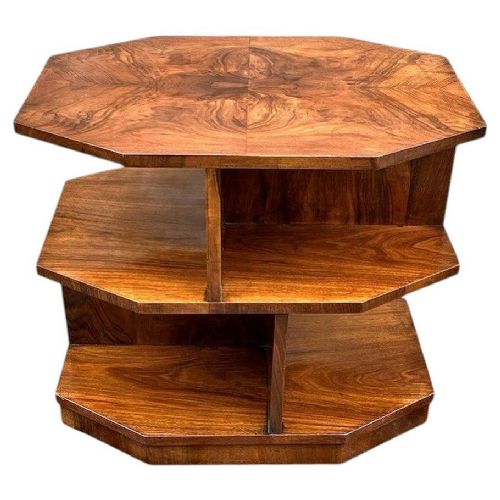
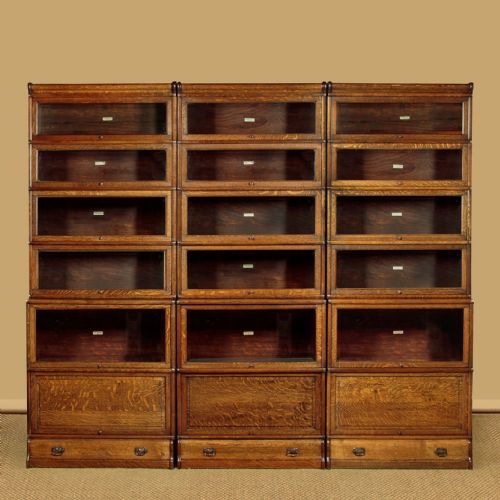
Tall configurations appear alongside pairs and sets of three or four sections. Art Deco examples join Edwardian and 1920s designs to provide flexible storage across different heights.
How they were made
Craftsmen built these sectional units using solid oak and mahogany timber frames fitted with glass panels. Metal mechanisms and brass hardware allow individual tiers to stack securely and open smoothly.
Lead secures the glass panes within certain doors while internal brass fittings guide the stacking action. Timber construction relies on sturdy joinery to support heavy rows of books across multiple tiers.
Lawyers once stacked these glass-fronted boxes high so they could grab a statute and slam the lid shut before opposing counsel noticed.
What varies in quality
Quality rests in the fidelity of the timber selection and the integrity of the mechanical stacking system. Solid mahogany and oak versions by established makers demonstrate superior cabinet-making compared to generic alternatives.
The original condition of the glass panels and brass hardware distinguishes fine examples from altered pieces. Original glazed doors that lift and slide properly maintain the structural harmony intended by the workshop.
Globe Wernicke·Heal's·Lebus
The Vintage Sectional Shelves Glossary
- Barrister bookcase
- A specific form of stacking bookcase traditionally used by lawyers to protect heavy volumes behind glass tiers. These units separate into individual modular layers.
- Globe Wernicke
- A prominent maker and style of sectional barrister bookcase popular in the early twentieth century. Their patented stacking design defined modular office furniture.
- Glazed
- Fitted with glass panels, typically set within wooden frames on the doors of each bookcase section. This allows books to remain visible while protected from dust.
- Art Deco
- A design style prominent around 1930 that influenced the geometric lines and forms of later stacking bookcases. It brought modern aesthetic touches to traditional office furniture.
Vintage Sectional Shelves: Frequently Asked Questions
How do sectional shelves work?
Each tier operates as an independent wooden box with a glass door that lifts and slides into the cabinet above the books. The separate sections stack on top of a base and sit beneath a top cornice without permanent fixings.
This modular construction allows owners to add or remove tiers depending on library size. The weight of each section keeps the stack stable when assembled.
What periods do these pieces come from?
The pieces span the Edwardian era through the 1910s, 1920s, and into the 1930s Art Deco period. Early twentieth-century workshops produced the majority of these modular stacking systems.
Stylistic details change across these decades from traditional Edwardian oak mouldings to cleaner 1930s lines. Maker preferences also shifted during this timeframe.
Are the sections fixed together?
The individual tiers rest securely upon one another using gravity and interlocking pins or side brackets rather than permanent glue or screws. This allows the entire bookcase to be disassembled easily for transport.
Buyers can reconfigure the height of the bookcase by rearranging the order of the sections. The base and top crown complete the stacked tower.
What woods were used?
Makers constructed these stacking bookcases primarily in oak and solid mahogany. These durable hardwoods provided the strength needed to support rows of heavy books within modular frames.
Brass and metal hardware complemented the timber construction alongside lead-framed glass panels. The choice of wood often reflects the manufacturing period and workshop style.