
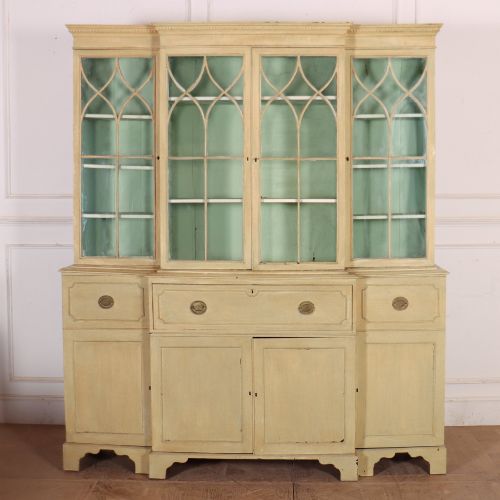


Vintage Secretaire Display Cabinet
A vintage secretaire display cabinet combines a working writing drawer with glazed upper shelving, offering a practical centrepiece for any room.
Vintage Secretaire Display Cabinet
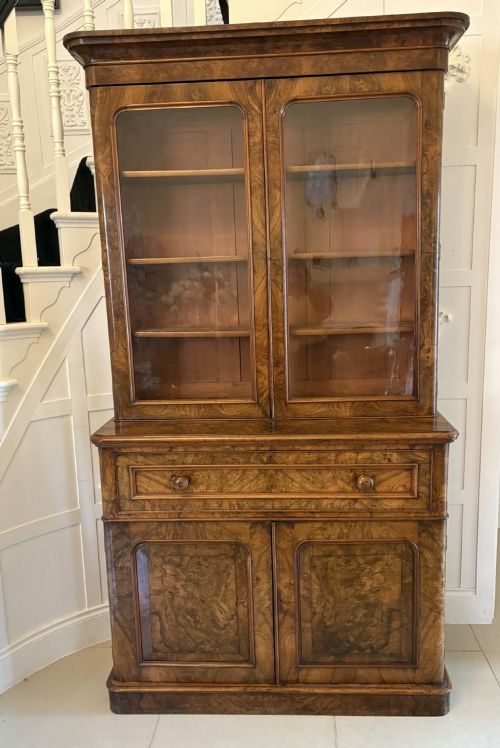
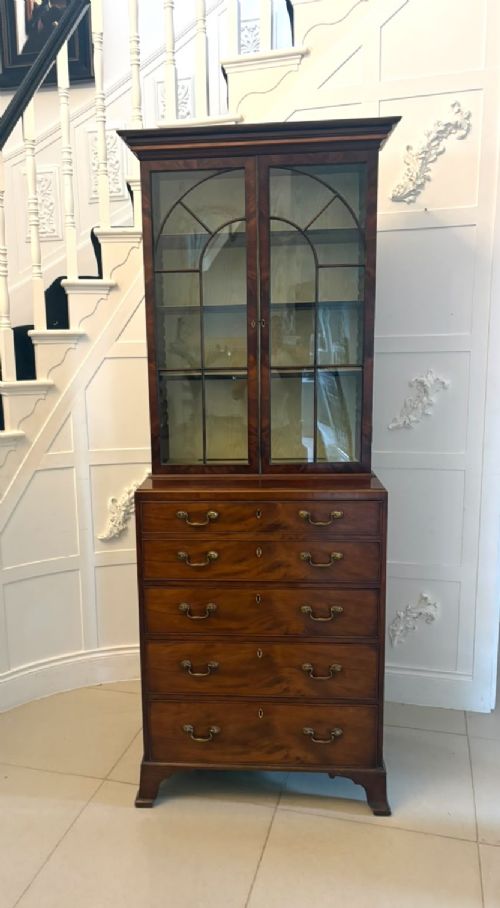
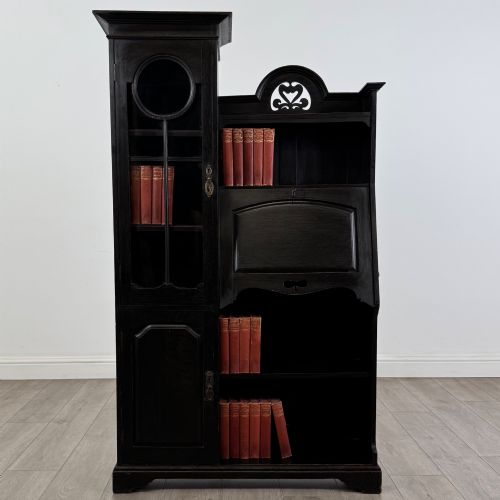
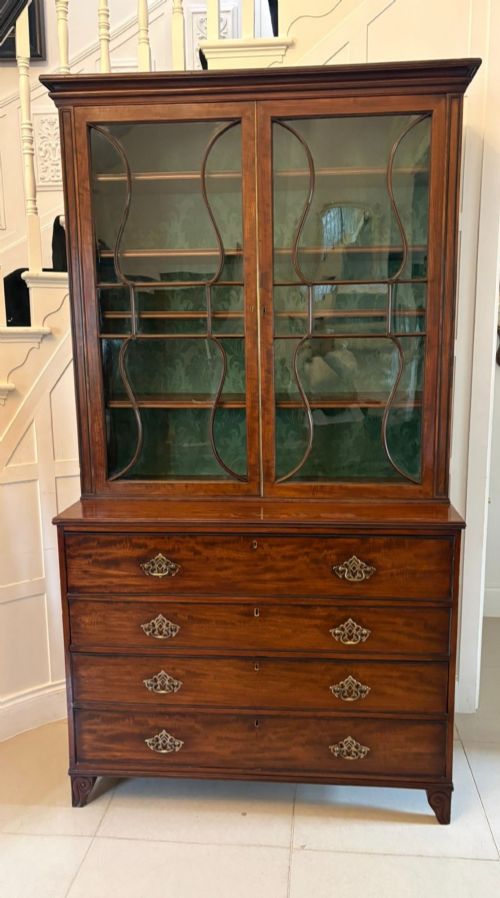
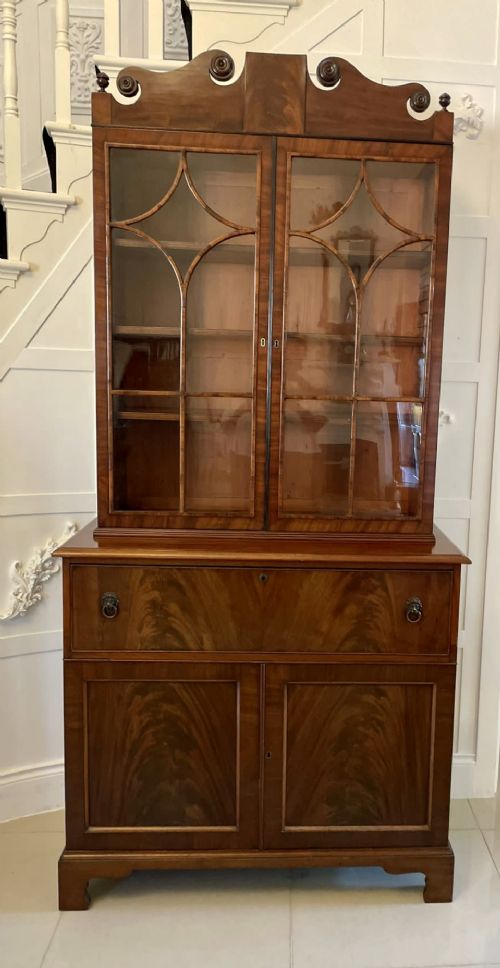
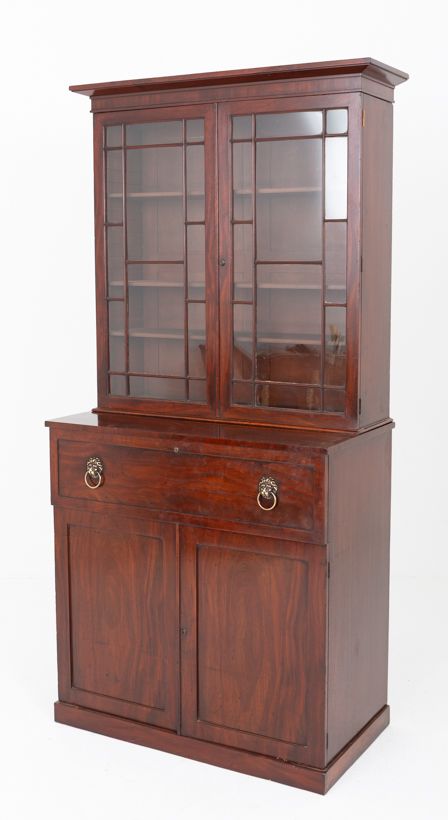
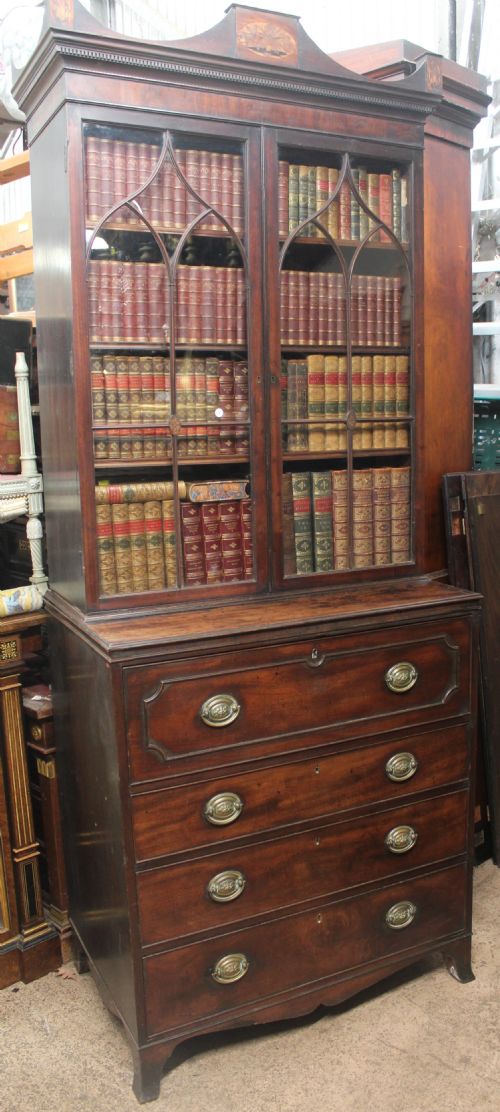
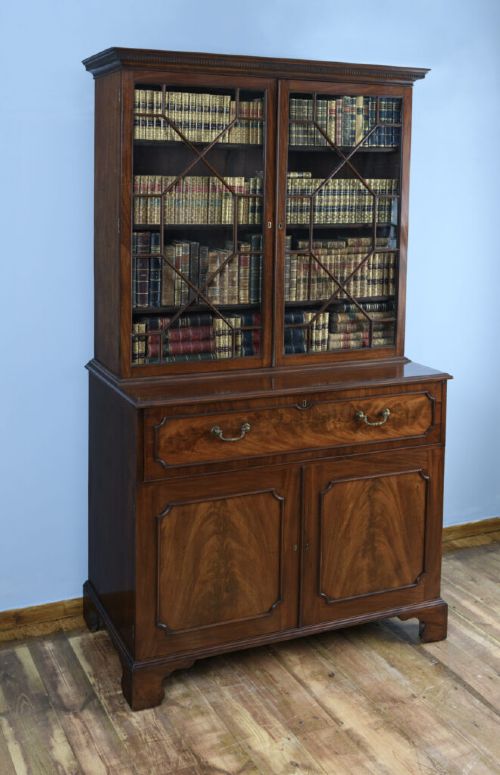
A vintage secretaire display cabinet serves as a dual-purpose piece of furniture, combining a shelved upper section for books or china with a fitted writing drawer that drops down to form a desk surface. These hybrid pieces bridge the gap between a traditional bookcase and a bureau, offering concealed stationery compartments alongside prominent display space.
The versions most frequently met on this page span the eighteenth, nineteenth, and early twentieth centuries, drawing on Georgian, Regency, Victorian, and Edwardian design traditions. They appear primarily in mahogany, oak, and satinwood, often featuring astragal glazed doors that protect the contents while keeping them visible.
How they were made
Cabinetmakers constructed these pieces predominantly from solid timbers and veneers such as mahogany, oak, and satinwood, frequently incorporating flame mahogany and marquetry inlays to create decorative surface patterns. Brass hardware, including handles and escutcheons, secures the drawers and doors, whilst glass is glazed into the upper cabinet frames.
The drop-front writing drawer utilises internal pigeonholes, small drawers, and fitted compartments to organise writing materials, often supported by side arms or pulls when opened. Structural joinery ensures the heavy glazed upper bookcase remains securely mounted to the lower bureau or cabinet base.
Listings feature mahogany, oak, satinwood, and pine, spanning Georgian, Victorian, Edwardian, and Regency periods.
What varies in quality
The refinement of the timber selection and inlay work separates standard examples from finer pieces, with figured mahogany and intricate marquetry marking out superior cabinetmaking. The crispness of the astragal glazing bars and the complexity of the internal fitted writing compartments also indicate the tier of craftsmanship.
Proportion and stylistic coherence define the upper end of the range, where Georgian and Regency pieces maintain balanced dimensions between the display cabinet and the bureau base. Original hardware, glass panes, and fitted interiors further distinguish exceptional items from later or heavily altered pieces.
Gillows
The Vintage Secretaire Display Cabinet Glossary
- Secretaire bookcase
- A tall piece of furniture featuring a glazed upper section for books and a central drawer that folds down for writing. This combination provides both storage and a compact desk.
- Astragal glazed
- A method of framing glass doors with narrow wooden bars arranged in geometric or curved patterns. These bars divide the glass into smaller panes characteristic of Georgian and Regency cabinetry.
- Flame mahogany
- A wood veneer cut from the branch junction of a mahogany tree to produce a flickering, flame-like grain pattern. Cabinetmakers used this timber on prominent drawer fronts and doors.
- Marquetry
- The art of applying decorative veneer pieces to a structure to form intricate picture designs or patterns. Craftsmen utilised various coloured woods to achieve detailed ornamentation on cabinet surfaces.
- Breakfront
- A cabinet design where the central section projects forward from the flanking wings. This architectural form adds depth and visual rhythm to large bookcases.
Vintage Secretaire Display Cabinet: Frequently Asked Questions
How do I use the secretaire drawer?
The drop-front drawer pulls down to reveal a writing surface accompanied by small drawers and pigeonholes for letters and stationery.
When closed, it locks securely to conceal your working area and papers from view.
Can I adjust the shelves in the display section?
Most antique glazed upper sections feature fixed wooden shelving grooved into the cabinet sides.
Early pieces rarely include modern adjustable metal peg systems, so it is best to check the interior depth for taller volumes.
How do I date a mahogany secretaire?
Georgian and Regency examples tend to feature finer astragal glazing bars, flame mahogany veneers, and solid brass hardware.
Victorian and Edwardian versions often display darker finishes, heavier proportions, or revival styling such as Gothic and Rococo details.