

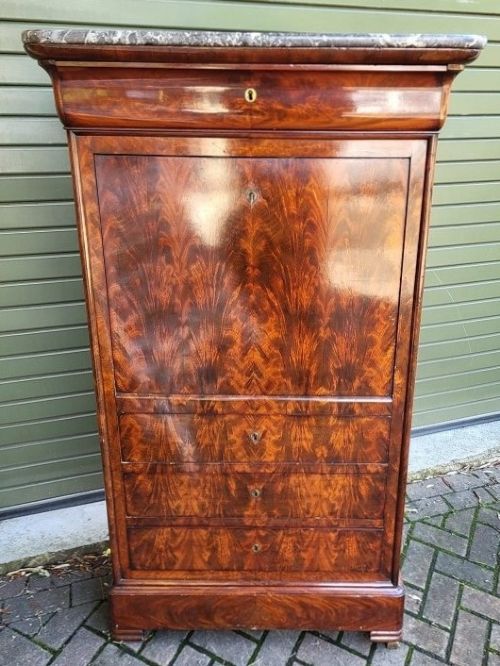
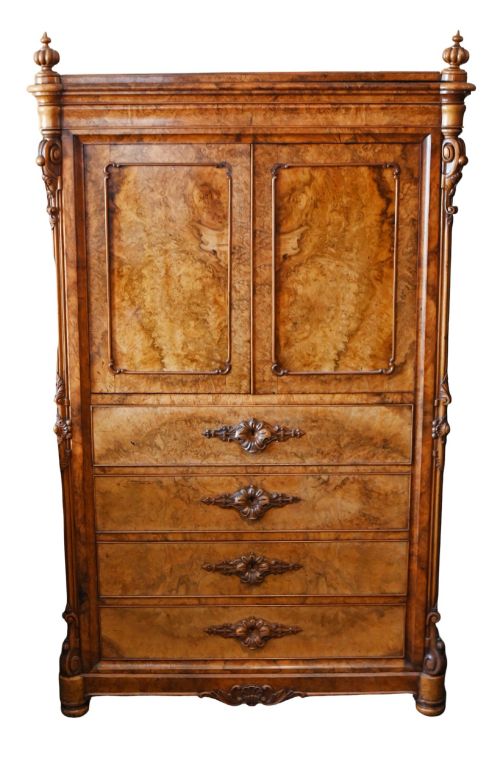
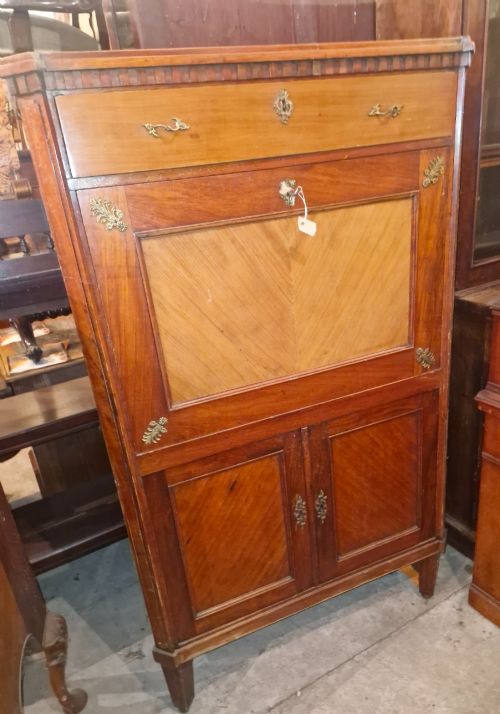
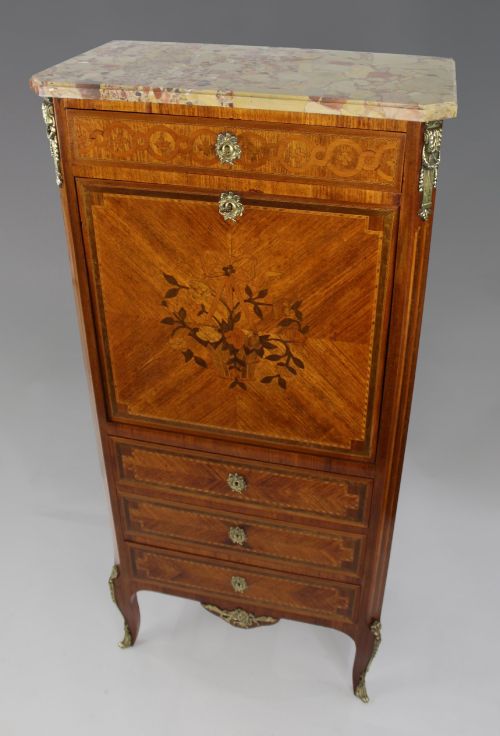
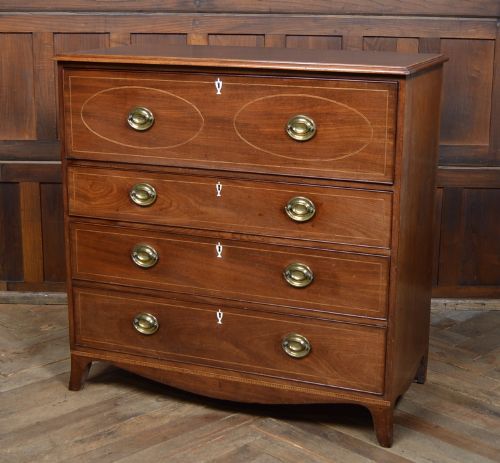


Vintage Secretaire Abattant
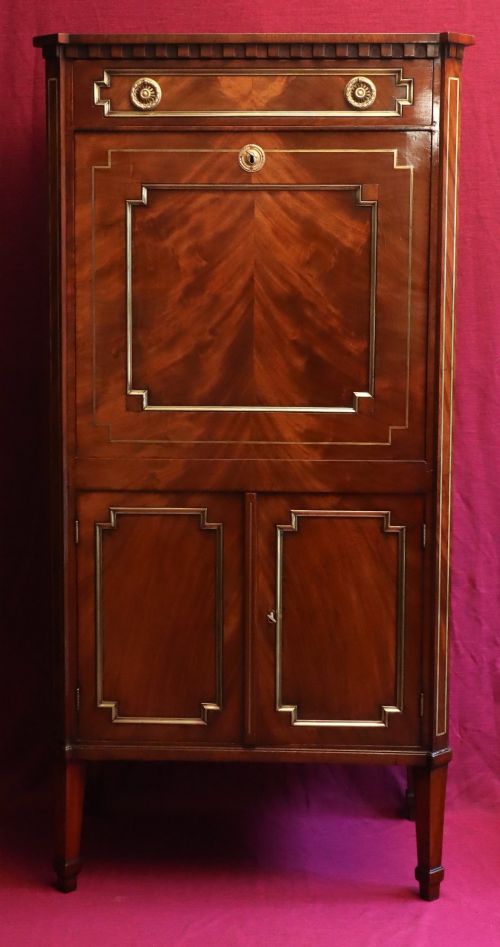
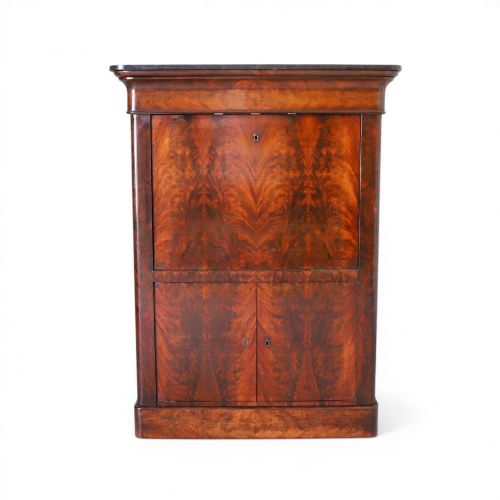
These vintage secretaire abattant pieces combine a practical drop-down writing surface with concealed drawers behind a vertical facade, offering refined storage.
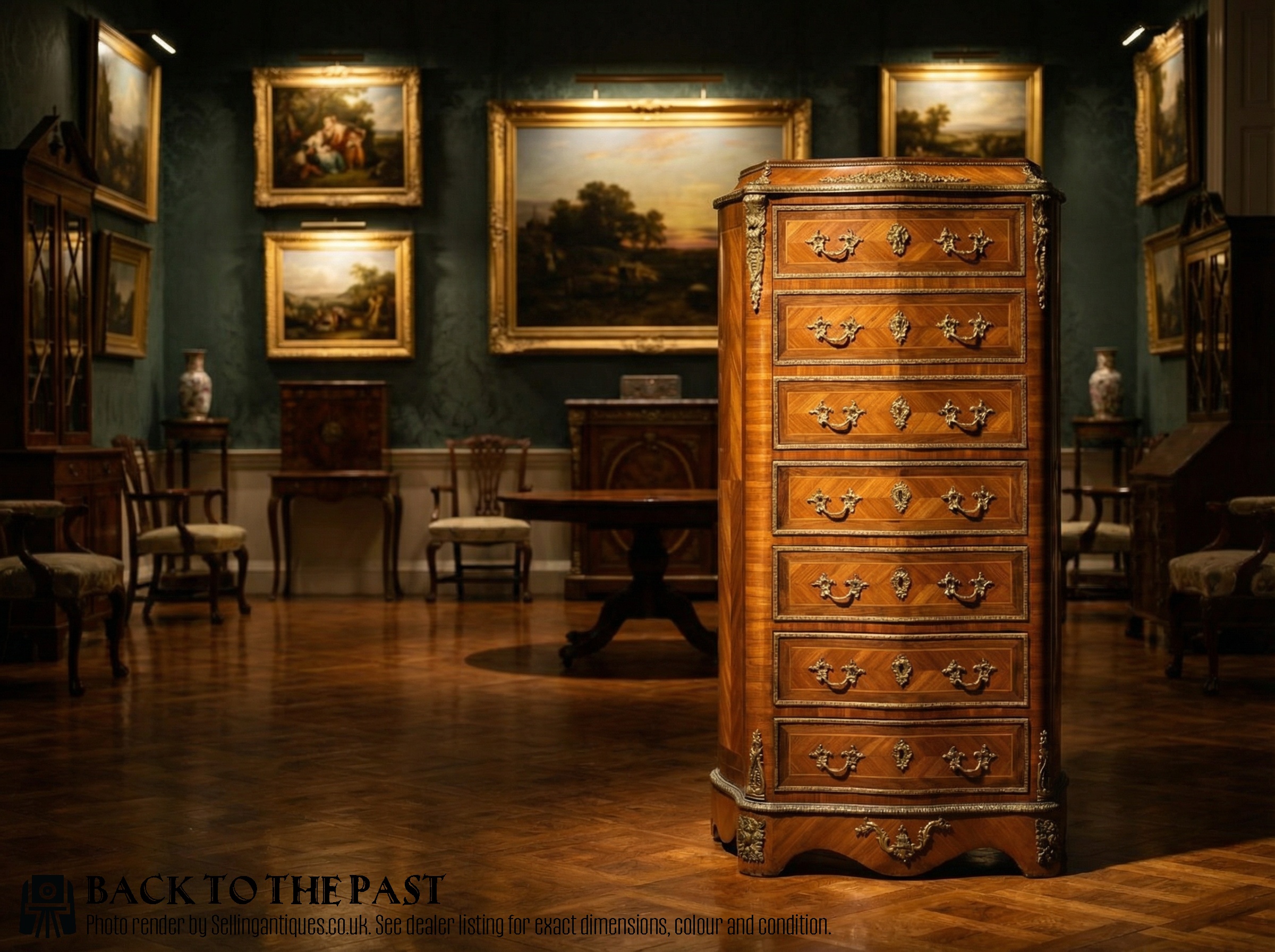
Vintage Secretaire Abattant
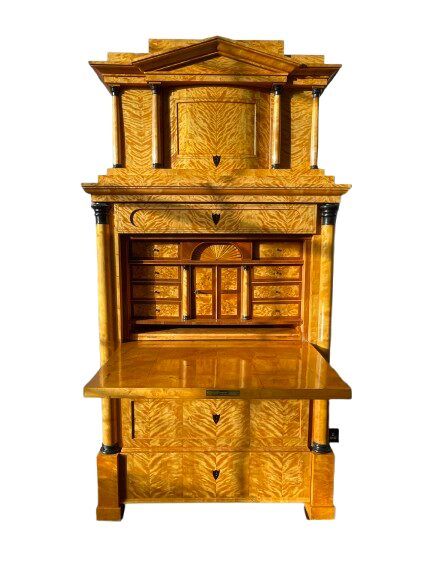
A vintage secretaire abattant is a tall, vertical cabinet featuring a drop-front writing surface that conceals an interior fitted with small drawers and pigeonholes. These pieces serve as both elegant display items and functional writing desks for domestic interiors.
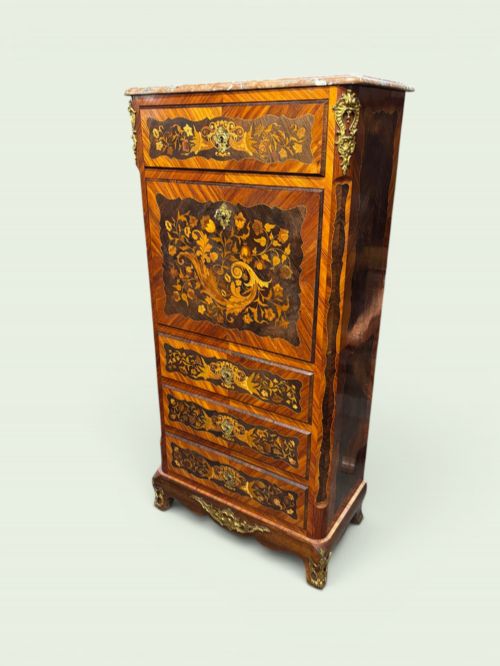
The selections available here span numerous periods and stylistic revivals, with particular emphasis on 19th Century French designs. You will frequently encounter forms finished in marquetry or accented with marble tops alongside simpler mahogany and walnut variants.
Beyond the standard fall-front writing cabinet, related forms in this category include escritoires, secretaire chests, and writing desks with integrated drawers or slopes. Some examples also double as drinks or cocktail cabinets, reflecting later adaptations of the form.
How they were made
Cabinet makers constructed these pieces using dense structural timbers such as mahogany, walnut, and oak, often applying decorative veneers of kingwood, rosewood, satinwood, and floral marquetry across the exterior surfaces. These veneers create intricate geometric or pictorial patterns on the drop-front panels and drawer fronts.
Many French and continental examples incorporate heavy veined marble slabs fitted to the top surface, alongside cast or chased ormolu mounts and brass hardware. Internal compartments frequently hide secret drawers, requiring specific mechanisms or hidden releases to access them.
Vintage Secretaire Abattant Retail Price Guide 2026
Typical asking prices for vintage secretaire abattant among the pieces listed under this phrase on Sellingantiques today, from the lower quarter to the upper quarter. They describe what is for sale here now, not the wider market.
Materials documented across these listings include marble, brass, ormolu, mahogany, kingwood, walnut, rosewood, oak, and satinwood.
What varies in quality
Quality in a vintage secretaire abattant rests primarily on the crispness of the marquetry work, the selection of figured wood veneers, and the structural integrity of the fall-front hinge mechanism. Superior examples display seamless alignment when the writing flap is closed, concealing the internal joinery entirely.
The choice of secondary materials further separates standard production from finer craftsmanship, seen in the weight and polish of the marble tops, the precision of cast ormolu mounts, and the complexity of the internal secret drawer arrangements.
The Vintage Secretaire Abattant Glossary
- Secretaire abattant
- A tall writing cabinet with a drop-front panel that hinges downward to form a writing surface. This vertical form saves floor space while providing extensive internal compartment storage.
- Ormolu
- Gilded bronze mounts and decorative accents applied to furniture. It is characteristic of French Empire and Rococo Revival pieces.
- Marquetry
- The art of applying decorative pieces of veneer to a structure to form intricate patterns or pictures. Floral and geometric motifs appear frequently on these cabinets.
- Escritoire
- A writing desk or cabinet, often used interchangeably with secretaire. These units range from simple slant-front boxes to tall vertical desks.
- Biedermeier
- A Central European style dating from the 19th Century emphasising utilitarian comfort and clean lines. Pieces from this tradition avoid excessive ornamentation in favour of polished wood grain.
Vintage Secretaire Abattant: Frequently Asked Questions
How do you open secret drawers?
Secret drawers are typically concealed behind false compartment dividers or within the internal architectural framework of the desk. Accessing them often requires releasing hidden wooden springs or removing an internal partition.
Because mechanisms vary between individual workshops and periods, owners must examine the internal pigeonhole assembly carefully to locate the release points without forcing the wood.
What rooms suit a secretaire abattant?
These vertical cabinets suit studies, drawing rooms, and bedrooms where floor space is limited. Their tall profile provides substantial storage without dominating the room.
In living spaces, keeping the drop-front closed conceals writing materials and paperwork, maintaining a tidy appearance while offering a functional desk on demand.
How do French and Regency styles differ?
French styles like Louis XV Revival and Rococo feature curved lines, intricate marquetry, ormolu mounts, and often marble tops. Regency pieces tend to rely on the natural grain of mahogany with more restrained architectural lines.
Understanding these decorative differences helps distinguish continental cabinet-making traditions from British Regency output within the same broad furniture category.
Can these cabinets hold modern laptops?
Most vintage writing compartments were designed for ledgers, stationery, and small inkwells rather than contemporary computing equipment. The depth and weight capacity of the drop-front surface vary significantly by piece.
Checking the interior dimensions and the load-bearing capacity of the support stays ensures the drop-front surface can handle modern writing tasks safely.