


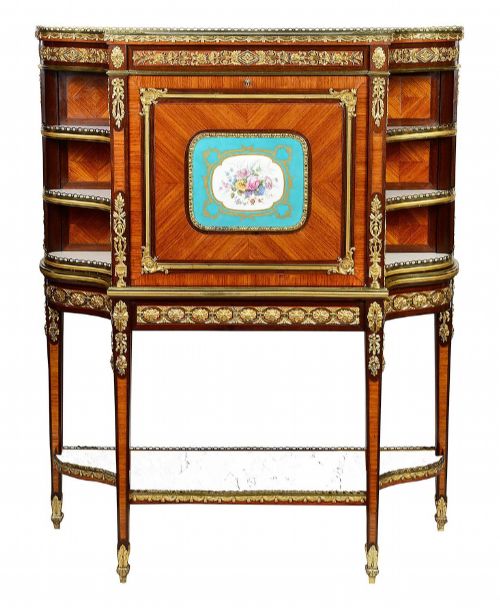


Parquetry Secretaire Desk
A parquetry secretaire desk is a fitted writing cabinet featuring geometric wood veneers, offering concealed drop-front storage for correspondence.
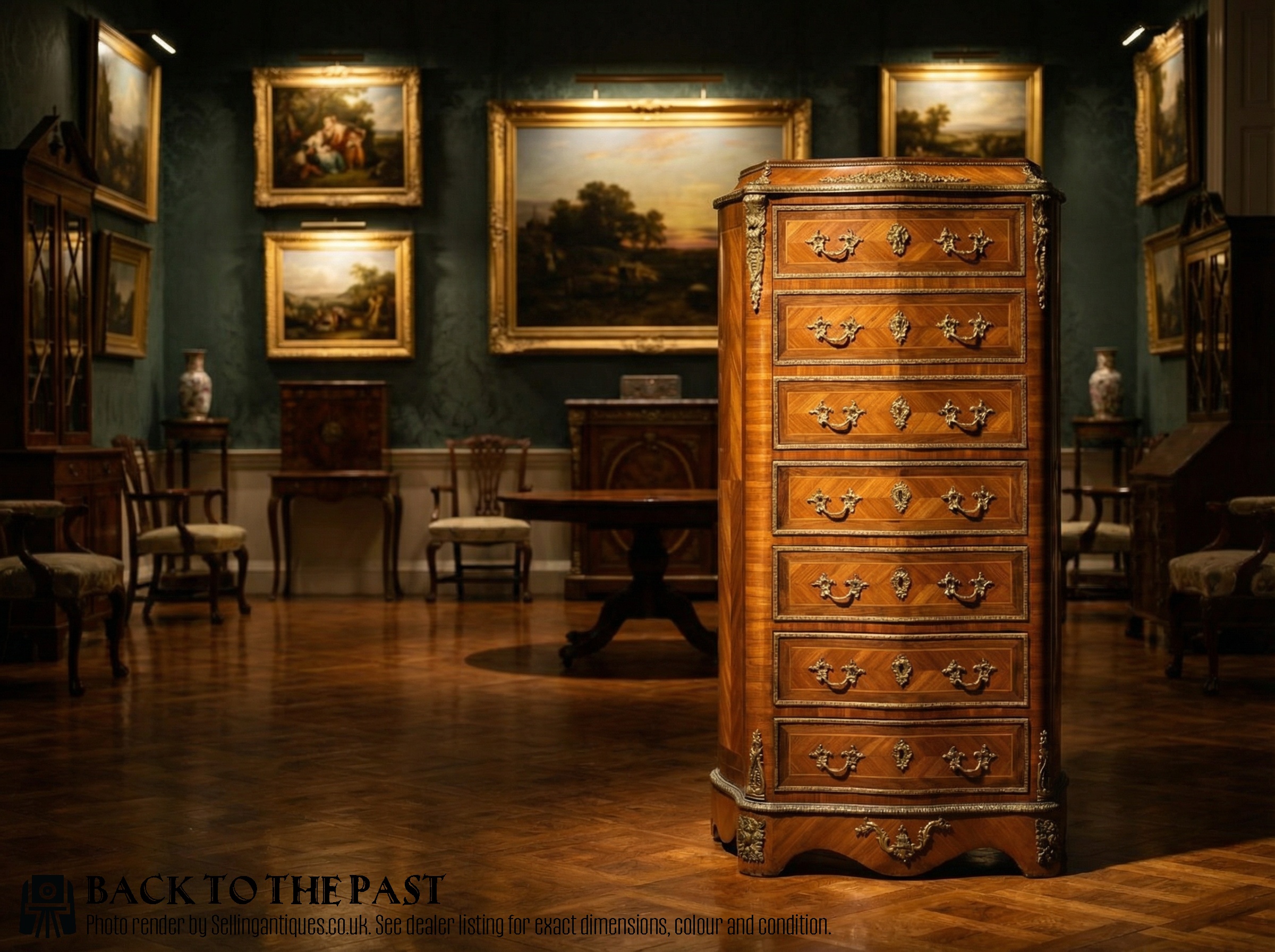
Parquetry Secretaire Desk
When you search for a parquetry secretaire desk, you encounter sophisticated writing furniture designed for private correspondence and secure storage. These pieces combine a vertical cabinet format or a traditional desk shape with a drop-front writing surface that conceals internal compartments.
The versions most commonly met on this page originate from the nineteenth and early twentieth centuries, spanning periods from eighteen-eighty to nineteen-thirty. They frequently draw upon French design vocabularies including Louis XVI revival, Louis XV styles, and Art Deco forms.
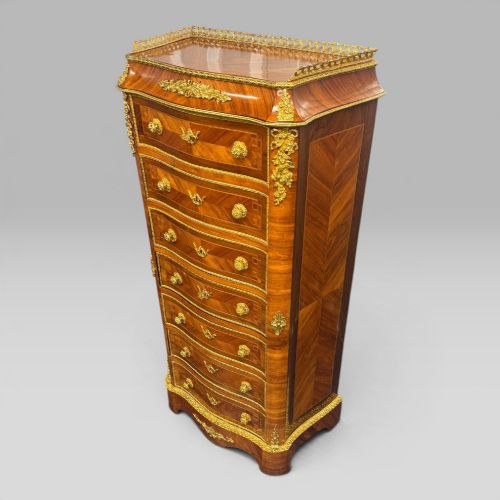
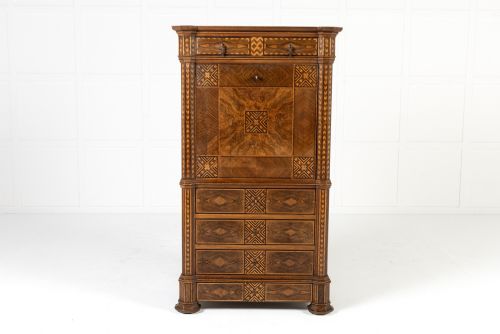
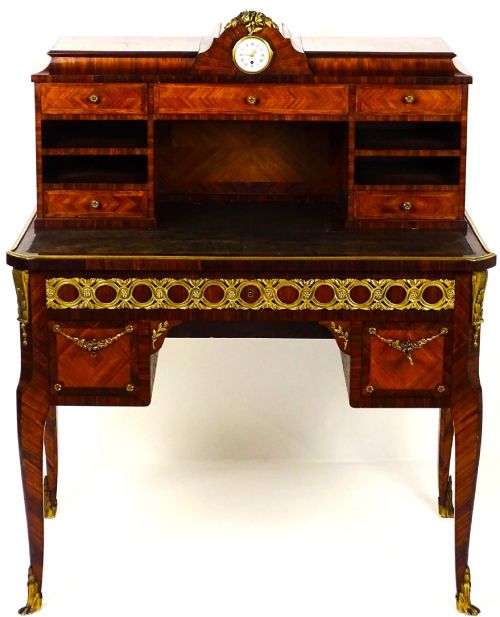
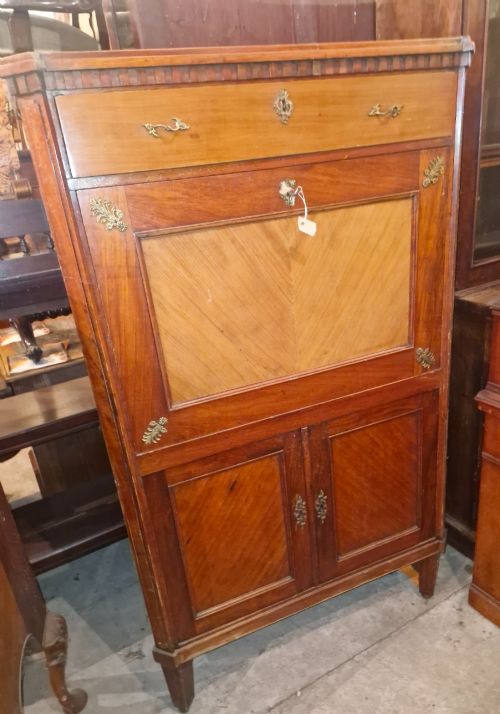
Many examples take the form of the secretaire abattant, featuring a tall upright carcase where the fall-front opens to reveal small drawers and pigeonholes. Others appear as writing desks and cabinets incorporating marble tops and specialised compartments.
Distinctions in quality
The refinement of the geometric parquetry pattern separates standard pieces from exceptional examples, requiring precise wood selection and alignment. Artisans who achieved subtle grain contrasts and tight joints produced surfaces that retain their visual cohesion over generations.
The weight and detail of the cast ormolu or gilt bronze mounts indicate the level of workshop investment. Crisp chiselling on the bronze elements and heavy, substantial marble tops distinguish finer nineteenth-century commissions from simpler production.
Parquetry Secretaire Desk Retail Price Guide 2026
Typical asking prices for parquetry secretaire desk among the pieces listed under this phrase on Sellingantiques today, from the lower quarter to the upper quarter. They describe what is for sale here now, not the wider market.
Listings feature nineteen-century and early twentieth-century pieces incorporating kingwood, tulipwood, ormolu, and marble.
Paul Sormani·Blake London·Millet
The Parquetry Secretaire Desk Glossary
- Parquetry
- Wood veneers arranged in geometric patterns such as cubes, lozenges, or herringbones. This technique creates decorative surface designs across the front and sides of the cabinet.
- Secretaire abattant
- A tall, upright fall-front desk featuring a writing flap that hinges downward to reveal an internal arrangement of small drawers and pigeonholes. It hides correspondence behind a locked vertical panel.
- Ormolu
- Gilt bronze mounts applied to the angles, feet, and friezes of French revival furniture. The technique involves applying finely ground high-carat gold to a bronze base.
- Kingwood
- A dense, richly figured hardwood imported from South America and utilised extensively for high-end French cabinetmaking. Its deep brown tones feature distinctive lighter streaks.
- Escritoire
- A portable or standing writing desk equipped with drawers and compartments for writing materials. The term often describes refined variants of the secretaire.
Parquetry Secretaire Desk: Frequently Asked Questions
How do I date a parquetry secretaire desk?
Dating relies on combining the stylistic vocabulary, such as Louis XVI revival or Art Deco lines, with the construction methods visible inside the carcase and drawer linings.
Material choices like kingwood and ormolu also point toward specific decades within the nineteenth and early twentieth centuries.
What is a secretaire abattant?
A secretaire abattant is a tall upright cabinet that looks like a chest of drawers or a cupboard until the central panel hinges forward to form a writing surface.
Inside, you find a collection of small drawers and compartments designed for stationery and letters.
Where were these desks made?
The majority of these pieces originate from French workshops following historical revival styles, alongside occasional English cabinetmakers.
Parisian makers produced many of the ormolu-mounted kingwood and tulipwood examples seen in this category.
How do I care for marble and veneer?
Keep wooden surfaces conditioned with appropriate furniture waxes and protect the parquetry from direct sunlight and dramatic humidity shifts.
Clean marble tops with a damp cloth and mild soap, avoiding acidic substances that can etch the polished stone.