






Vintage Seaside Landscape Artwork
These vintage seaside landscape artwork pieces capture coastal views from Cornwall to Scotland in oil and watercolour.
Vintage Seaside Landscape Artwork
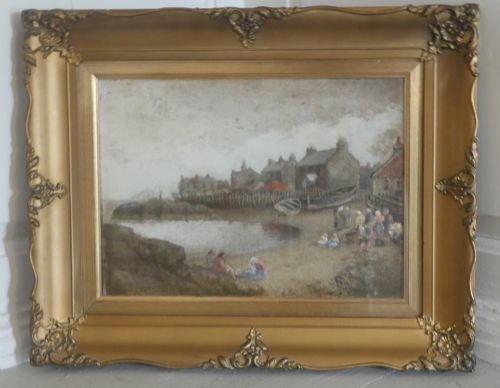
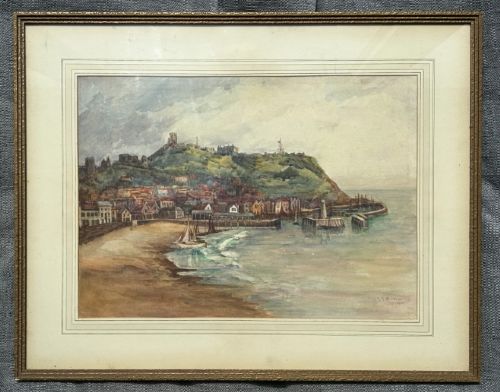
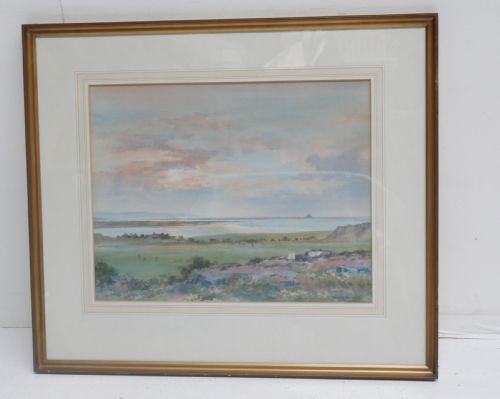
When you search for vintage seaside landscape artwork, you encounter framed coastal views, harbour scenes, and beach paintings spanning from the nineteenth century into the mid-twentieth century. The selection ranges from detailed Victorian watercolours of Devon and Dorset to impressionist oil paintings of Yorkshire fishing villages and French cliffs.
The most common formats on this page are traditional watercolours on paper and oil paintings on canvas or board, often housed in original gilt wood or simple frames. Subjects frequently focus on specific British and continental locations, including St Ives, Whitby, Scarborough, and Normandy.
These works reflect various historical movements, from Victorian fine art and Edwardian academic watercolours to British impressionism and mid-century modern interpretations. Each piece documents a specific coastal topography, capturing piers, cliffs, harbours, and shores through the lens of its particular decade.
How these pieces were made
Artists created these coastal works using traditional pigment applications, primarily oil paint and watercolour on supports such as canvas, prepared board, and heavy paper. Oil on canvas or board allowed painters to build textured layers representing churning waves, sandy shores, and rocky cliffs with visible brushstrokes.
Watercolour paintings utilised transparent washes on paper to capture the luminous light of coastal skies and tidal movements, often finished with fine pencil or ink detailing. Many pieces retain their period framing, utilising wood and glass to protect the delicate paper works or heavy moulded frames suited to substantial oil canvases.
Subject matter encompasses beaches, cliffs, harbours, and piers across British and French coastal locations.
What varies in quality
Quality in these coastal works rests upon the artist's handling of light, atmosphere, and spatial depth, distinguishing accomplished plein air observation from formulaic studio production. Stronger examples demonstrate confident brushwork or delicate washes that convey the specific moisture and illumination of marine environments.
Condition of the medium and the integrity of the support also define the tier of a piece, particularly regarding foxing on watercolours or stabilised craquelure on older oils. Original framing matching the period of the artwork adds cohesion, whereas unsympathetic later reframing can alter the visual balance of a painting.
Clifford Hanney·Edward Mills·William Banks Fortescue·F A Roylance·Lionel Horsnell·John Bedloe Goddard·Norman Lloyd·William J B Jenkins·William Raymond Dommersen·Frank Wood·H.E. Tidmarsh·Alfred Henry Vickers·Percy Brooke·Jack R Mould·James George Bingley·John Sanderson Wells·Robert Macaulay Stevenson·John Abernethy Lynas-Gray·William Greaves·James Watson·Edwin Bagshaw·Yves Brayer·George Marks·Alfred Egerton Cooper
The Vintage Seaside Landscape Artwork Glossary
- Watercolour
- A painting method where fine pigments are suspended in a water-soluble binder and applied to paper. It relies on the white of the paper to provide luminosity through translucent washes.
- Oil on Canvas
- A technique involving pigments mixed with drying oils applied to stretched woven fabric. This medium allows for rich texture, blending, and durability over centuries.
- Gilt Wood
- Timber framing or decorative elements covered with a thin layer of gold leaf or metallic gilt gesso. It was widely used for framing nineteenth and early twentieth-century fine art.
- Impressionism
- A nineteenth and twentieth-century painting style characterised by relatively small, thin, yet visible brush strokes and an emphasis on accurate depiction of light. It prioritised capturing the transient effects of weather and time.
- Topographical
- Artwork depicting specific, recognisable geographical locations and real views rather than imagined compositions. These pieces often serve as historical records of coastal towns and harbours.
Vintage Seaside Landscape Artwork: Frequently Asked Questions
How do I date a seaside painting?
Dating relies on stylistic clues, framing methods, and artist biographical records noted in the listing details. Victorian and Edwardian works often show specific clothing styles on figures upon the beach.
Changes in coastal architecture, such as the presence or absence of pleasure piers and harbour walls, also help narrow down the decade of creation.
What is Newlyn school art?
The Newlyn school refers to an art colony of painters based in Cornwall who worked in the open air during the late nineteenth and early twentieth centuries. They focused on naturalistic scenes of local fishermen, harbour life, and coastal landscapes.
These works are celebrated for their atmospheric treatment of West Cornwall light and maritime subjects.
How should I frame an antique watercolour?
Antique watercolours require acid-free mounts and framing under glass to prevent fading and paper degradation from ultraviolet light. Preserving the original mount board when possible maintains the historical integrity of the piece.
Keeping the artwork away from direct sunlight ensures the delicate pigments remain stable over time.
Are oil paintings on board durable?
Oil paint applied to wooden boards or panels provides a stable support that resists the sagging sometimes found in old canvases. These pieces require stable indoor humidity to prevent the wood from warping.
Cleaning should be handled carefully by professionals to avoid damaging the historical paint layers.