
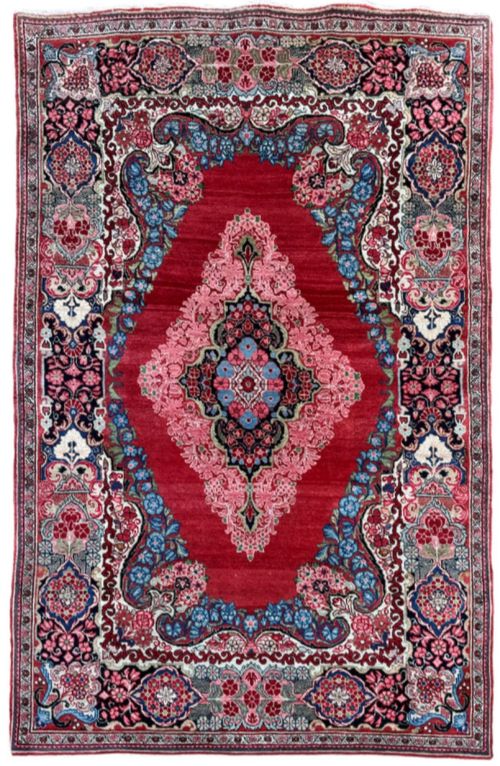

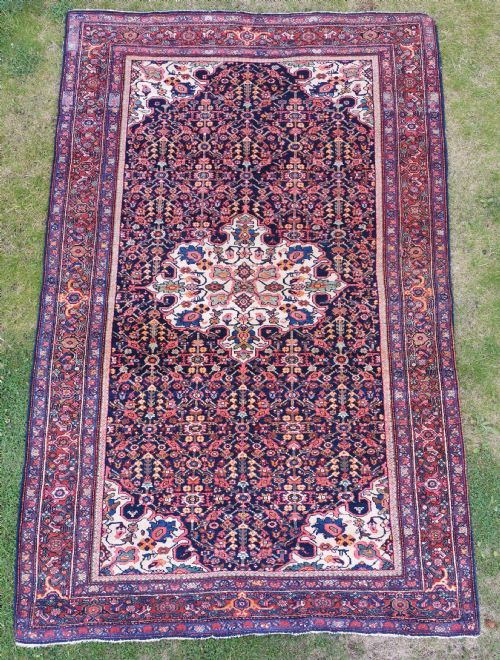
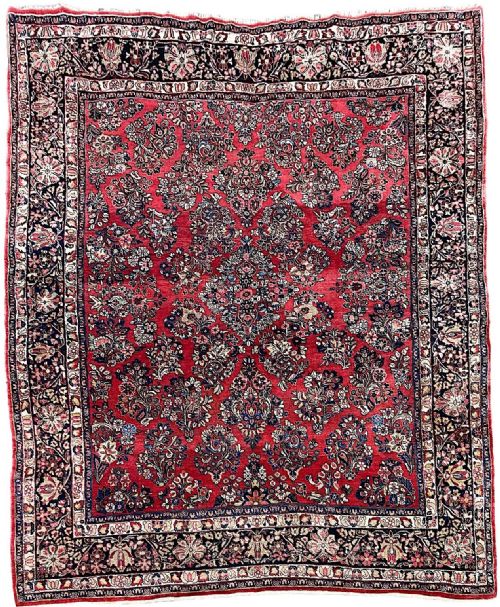


Vintage Sarouk Wool Rug
These vintage sarouk wool rug examples bring enduring Persian craftsmanship into a room, offering dense piles and rich traditional motifs.
Vintage Sarouk Wool Rug
A vintage sarouk wool rug originates from the west of Persia, encompassing village pieces, carpets, and runners from the late nineteenth century into the twentieth. You will frequently encounter examples dated around nineteen twenty, alongside older pieces reaching back to eighteen seventy.
The format varies from compact area rugs to exceptionally long narrow runners and large carpets spanning several metres. Traditional Persian designs dominate these listings, including specific village traditions like Jozan and Ferahan.
What varies in quality
The fineness of the weave distinguishes the standard of execution, with tighter knots yielding sharper pattern definition and greater durability. Finer examples display meticulous attention to detail in traditional Persian compositions.
Condition also plays a role, as heavier wear or extensive distress changes the character of the pile, whereas pieces maintaining their original density present a more uniform surface.
Keep an eye out for hidden birds perched among the pomegranates in the older village weaves.
The Vintage Sarouk Wool Rug Glossary
- Sarouk
- A type of Persian carpet originating from the Markazi region, known for dense wool construction and traditional floral or medallion designs.
- Jozan
- A specific village sub-type associated with Sarouk production, often recognised by distinctive local patterns and robust construction.
- Ferahan
- An older style of Persian weaving linked to the same broader tradition, frequently found in rugs dating to the nineteenth century.
- Boteh
- A teardrop or almond-shaped motif with a curved upper end, commonly repeated across Persian textile designs.
- Runner
- A long, narrow carpet format designed primarily for hallways or corridors rather than open floor spaces.
Vintage Sarouk Wool Rug: Frequently Asked Questions
How do I clean a wool rug?
Gentle surface brushing and professional specialist washing help maintain wool fibres without disturbing the foundation threads.
Harsh chemical treatments and excessive water immersion risk damaging the natural dyes and cotton warp.
Where were these rugs made?
Production centres were located in western Persia, particularly around villages and towns in the Markazi region.
Local workshops and weavers produced these carpets for both domestic use and export markets.
Can I place a runner in a hallway?
The narrow proportions of these long formats suit corridors and stair landings effectively.
An appropriate underlay prevents slipping and cushions the wool pile against heavy foot traffic.
How do I identify a Jozan piece?
Village pieces attributed to Jozan share stylistic traits with broader Sarouk output while retaining specific regional palette choices.
Structure and knotting density often point toward these specific West Central Persian origins.