


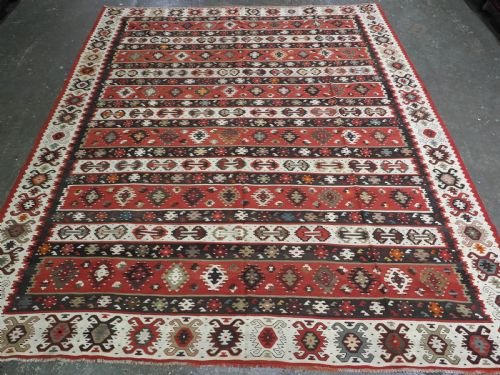
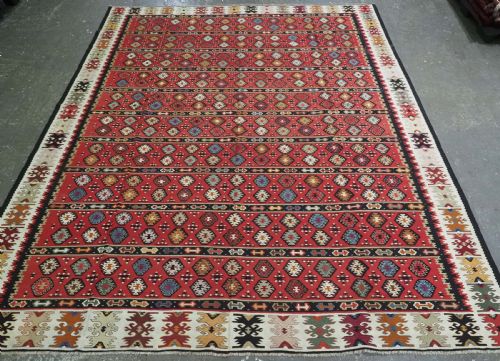


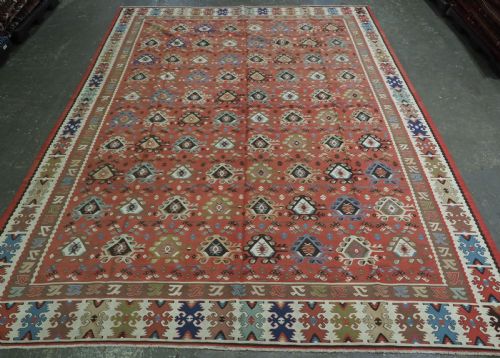


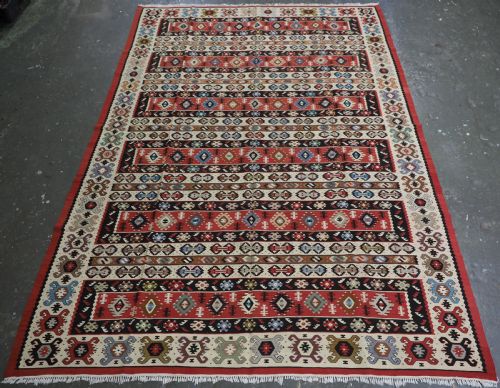

Vintage Sarkoy Carpet
These vintage sarkoy carpet examples bring bold Balkan folk art and traditional designs directly to the floor.
Vintage Sarkoy Carpet
When searching for a vintage sarkoy carpet, buyers encounter flat-woven kilims originating from the Balkans, often associated with Pirot styles. These rugs display distinct cultural patterns including classic designs, flowering trees, and repeat medallions.
The pieces available span from the mid nineteenth century through to the nineteen thirties, encompassing large room size formats as well as smaller rugs. Their visual language relies heavily on traditional Balkan folk art motifs.
Makers utilised wool and cotton materials to construct these flat-weaves, producing durable floor coverings with varied banded and lattice layouts. Most specimens found on this page date from around nineteen twenty.
Materials and methods
Weavers constructed these textiles predominantly from wool and cotton, combining the fibres to achieve structural integrity and distinct surface textures. The flat-weave technique allowed makers to impart sharp geometric boundaries without pile.
Natural dyes produced the soft reds, warm tones, and varied palettes seen across the classic and repeat medallion designs. Artisans arranged these colours within banded, lattice, and flowering tree compositions.
Current listings exclusively feature wool and cotton materials across nineteenth and twentieth century periods.
What separates quality tiers
The distinction between standard examples and finer items rests upon the complexity of the design, such as scarce lattice versus basic repeat patterns. Larger room size dimensions combined with well-preserved condition elevate certain pieces above others.
Colour variation also plays a role, with warm soft hues and outstanding contrasts marking out superior textiles. The precision of the flat-weave execution in traditional Balkan formats dictates the overall visual strength.
The Vintage Sarkoy Carpet Glossary
- Kilim
- A flat-woven carpet or rug produced without a pile. These textiles rely on tightly packed horizontal weft threads pulled across vertical warp threads.
- Balkan Folk Art
- Design traditions originating from the Balkan region incorporating geometric and symbolic motifs. This style characterises the regional expression found in the weave.
- Medallion
- A central decorative motif placed within the field of a carpet. It often anchors symmetrical repeat patterns across the textile.
- Banded Design
- A compositional layout featuring horizontal stripes or bands of ornament running across the rug. This arrangement structures the visual rhythm of the piece.
- Warp and Weft
- The foundational threads of a textile where vertical warps support horizontal wefts. Together they form the structural grid of the flat-weave.
Vintage Sarkoy Carpet: Frequently Asked Questions
What is a sarkoy carpet?
A sarkoy carpet is a flat-woven kilim originating from Balkan traditions, sharing aesthetic traits with Pirot weaving. These textiles serve as decorative floor coverings featuring folk art motifs.
They appear in various formats from large room sizes down to smaller rugs, constructed from wool and cotton.
How were these rugs used?
Historically, these flat-weaves functioned primarily as floor coverings or decorative wall hangings within traditional interiors. Their flat structure made them versatile for movement and placement.
Today, they continue to serve as durable area rugs that anchor room schemes with historical folk patterns.
How do I live with a wool kilim?
Placing a quality rug underlay beneath the flat-weave prevents slipping and reduces friction against hard flooring. Regular gentle vacuuming without a rotating brush roll helps maintain the wool and cotton fibres.
Keeping the textile away from direct sunlight protects the soft red hues and varied natural dyes from fading.
How do I identify a nineteen twenties piece?
Items from around nineteen twenty often feature specific compositional markers like classic banded layouts, flowering trees, or scarce lattice designs. Examining the wool and cotton materials provides clues to their age and manufacture.
Comparing the condition and colour palette against established historical periods helps confirm the dating of the weave.