




Vintage Salt Glazed Pottery
Vintage salt glazed pottery brings dense stoneware and tactile texture to utility, spanning German flagons to Doulton Lambeth jugs.
Vintage Salt Glazed Pottery
Vintage salt glazed pottery encompasses robust utilitarian vessels and decorative pieces made from vitrified clay, most frequently encountered in Victorian stoneware jugs, water filters, and garden jars. Buyers seek these items for their durable construction, earthy appeal, and distinct surface textures that reflect centuries of functional ceramic tradition.
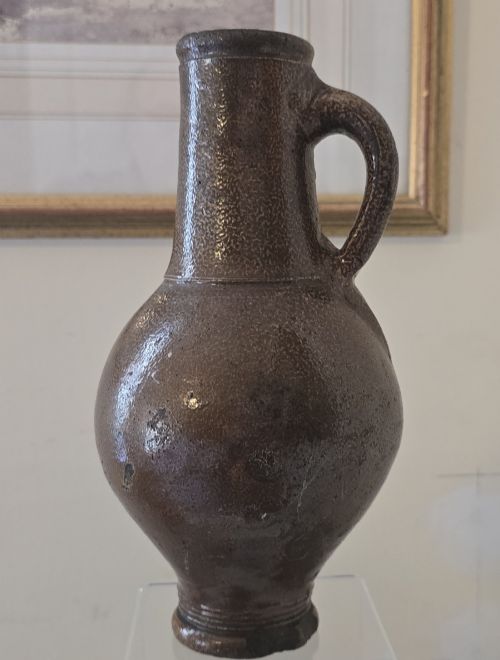
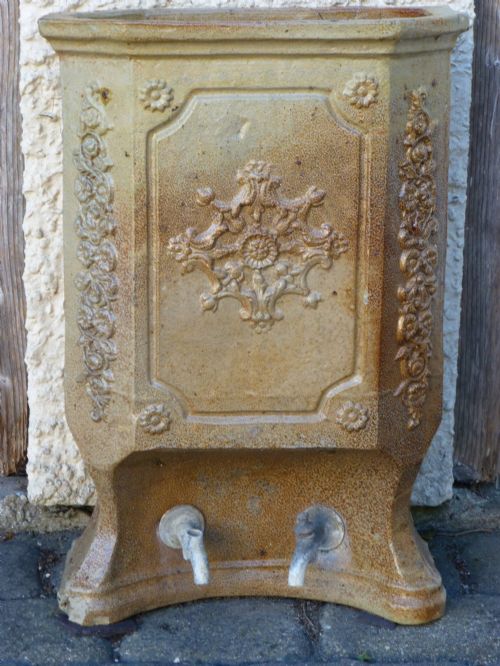
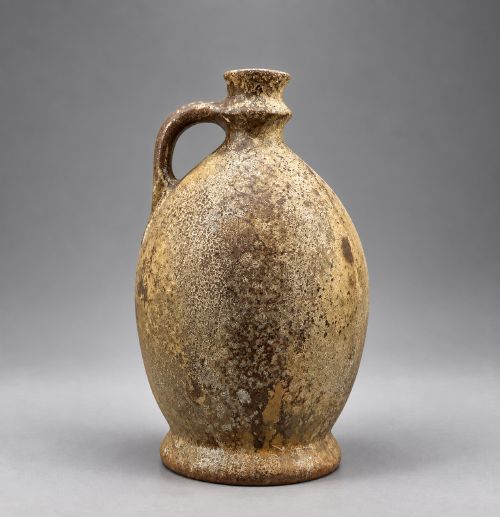
The selections span various forms ranging from 18th-century German wine bottles and French country water filtration fountains to large Victorian jardiniere stands and commemorative jubilee jugs. Stoneware dominates the inventory, accompanied by occasional earthenware and terracotta pieces spanning the nineteenth and early twentieth centuries.
Makers such as Doulton Lambeth feature prominently alongside continental workshops and French faience pieces, providing collectors with a diverse range of regional styles. Each piece demonstrates the heavy-duty practicality required for domestic storage, brewing, and table service across different European traditions.
How they were made
Potters threw dense clay bodies on the wheel or pressed them into moulds, forming thick walls suitable for holding liquids under pressure. Stoneware and terracotta served as the primary mediums, often reinforced with applied sprigged decorations or incised patterns before firing.
During the high-temperature kiln firing, common salt was thrown into the flames, where vaporisation caused sodium to react with the silica in the clay body. This chemical interaction produced a characteristic orange-peel textured glaze that sealed the ceramic pores permanently without requiring an internal slip.
Vintage Salt Glazed Pottery Retail Price Guide 2026
Typical asking prices for vintage salt glazed pottery among the pieces listed under this phrase on Sellingantiques today, from the lower quarter to the upper quarter. They describe what is for sale here now, not the wider market.
Listings feature stoneware, earthenware, and terracotta spanning the eighteenth to the twentieth centuries.
What varies in quality
Quality rests in the crispness of the salt glaze texture and the definition of applied sprigged reliefs, where sharper details indicate superior craftsmanship. Heavier bodies with balanced proportions and even orange-peel surfaces denote careful kiln placement and precise firing temperatures.
Exhibition pieces and factory-marked items from notable potteries display superior artistic ambition through intricate hand-carved ornamentation and careful cobalt blue or cream detailing. Simpler utilitarian vessels rely on sturdy weight and functional integrity rather than decorative embellishment.
Doulton Lambeth·HB Quimper·Roger Guerin·Moorcroft·C & A Painter
The Vintage Salt Glazed Pottery Glossary
- Stoneware
- A dense, vitrified ceramic fired at high temperatures until the clay body non-porous and watertight. It forms the backbone of heavy utility vessels and salt glazed storage jars.
- Salt glaze
- A glossy, textured surface finish resembling orange peel, created by introducing common salt into the kiln during high-temperature firing. This technique produces a durable vitreous coating fused directly to the clay.
- Sprigged
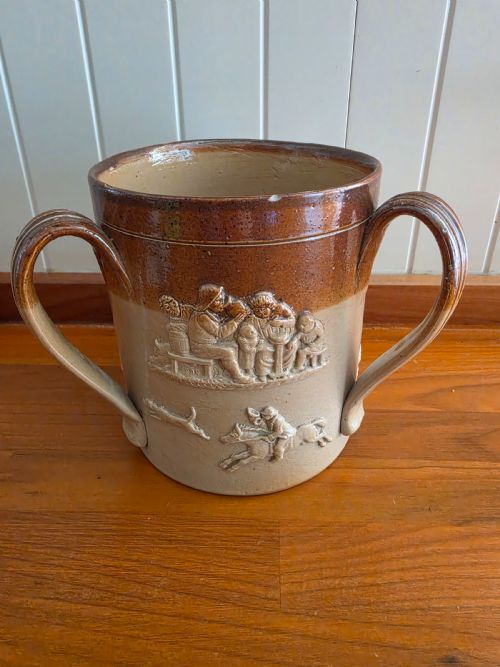
- A decorative technique where separately moulded clay reliefs are applied to the surface of an unfired vessel before glazing and firing. This method adds crisp ornamentation to harvest jugs and presentation pieces.
- Tyg
- A large drinking vessel featuring three or more handles designed for communal passing around a table. These sturdy pots appear frequently in early stoneware and earthenware forms.
- Jardiniere
- An ornamental ceramic pot or stand intended to hold a plant or floral arrangement. These larger vessels often showcase detailed relief work and coloured glazes suited for display.
Vintage Salt Glazed Pottery: Frequently Asked Questions
What is salt glazed pottery?
Salt glazed pottery is ceramic ware, typically stoneware, fired at high temperatures with common salt introduced into the kiln. The salt vaporises and bonds with the silica in the clay, creating a durable, pebbled surface.
This chemical process seals the vessel completely, making it ideal for holding liquids, preserves, and chemicals without requiring an additional interior glaze.
How do I date vintage salt glaze?
Dating relies on stylistic clues, manufacturer marks, and manufacturing techniques evident on the base and body. Victorian pieces often display factory stamps from established potteries, whilst earlier 18th-century pieces show hand-thrown irregularities.
Glaze texture and colouration also shift across decades, with 19th-century salt glazes frequently paired with cobalt blue highlights or cream sprigged reliefs.
Were these pots used for food?
Many of these vessels served heavy-duty domestic and commercial storage roles, including holding wine, oil, vinegar, and turtle soup. Their non-porous vitrified structure kept contents secure and uncontaminated.
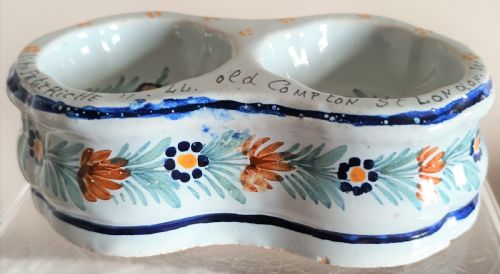
Table salt cellars, double salts, and water filters also brought this durable material directly into daily dining and kitchen routines.
How should I display stoneware?
Stoneware and terracotta vessels suit rustic interiors, farmhouse kitchens, and neutral display shelves where their tactile textures stand out. Large jardiniere stands and water filtration fountains function well as focal points in hallways or living spaces.
Grouping items by period or form, such as combining harvest jugs with flagons, highlights the variations in glaze and regional potting traditions.