


Vintage Salon Seating
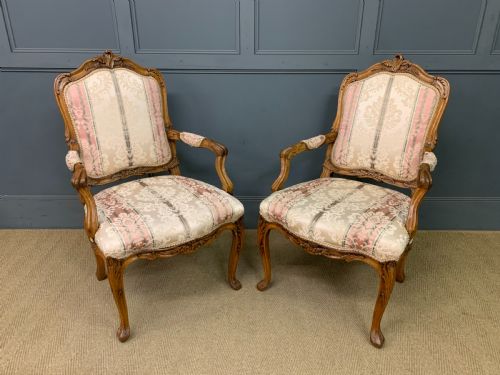
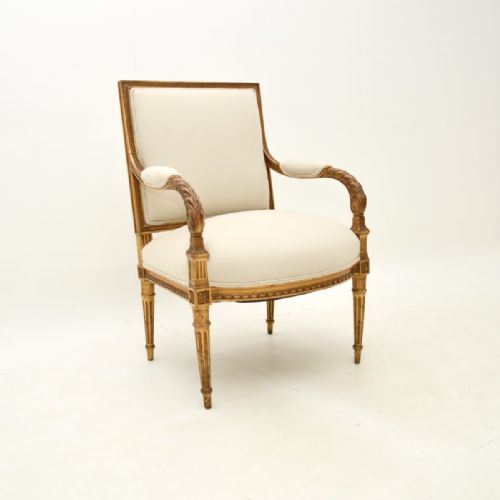
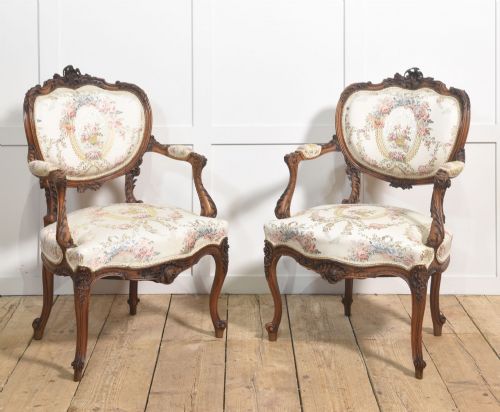
Vintage salon seating brings together French carved giltwood, Victorian walnut and Edwardian inlaid frames designed for formal reception rooms.
Vintage Salon Seating
Vintage salon seating encompasses formal chairs, settees and complete suites intended for reception rooms and drawing rooms. Buyers searching for vintage salon seating encounter a high proportion of French designs, alongside Victorian and Edwardian British pieces.
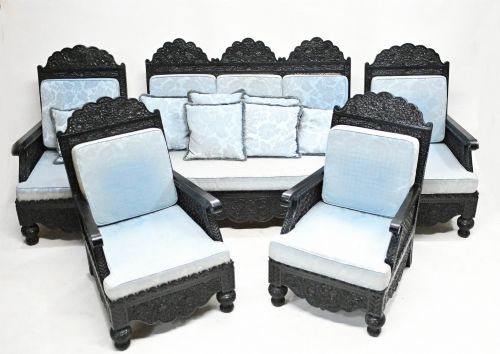
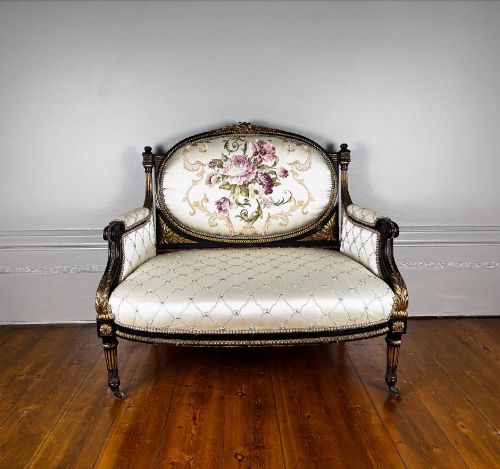
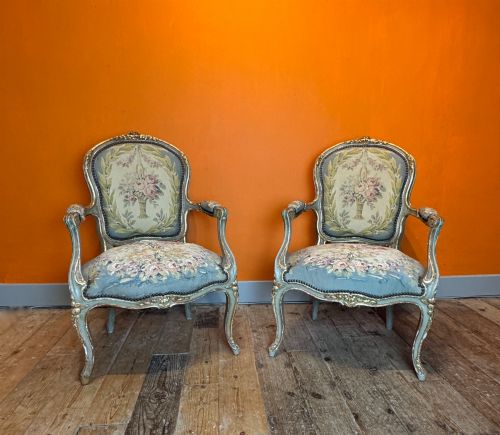
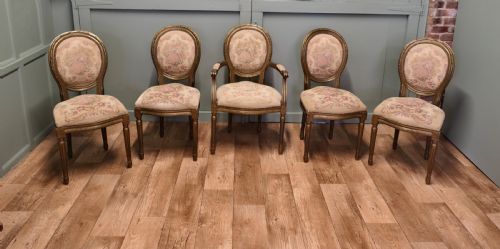
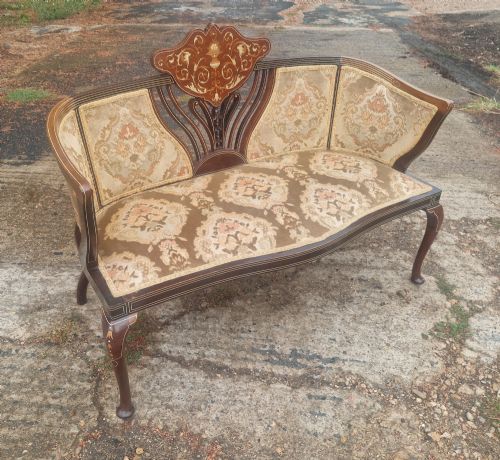
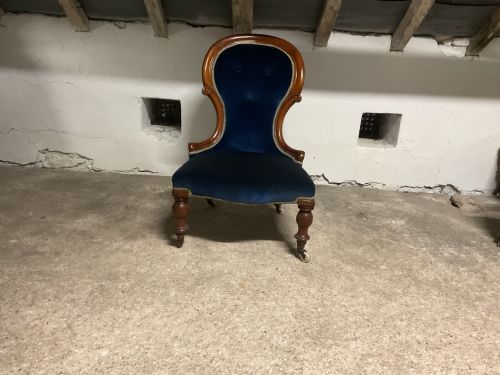
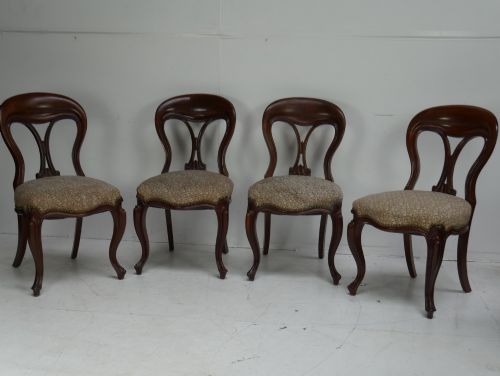
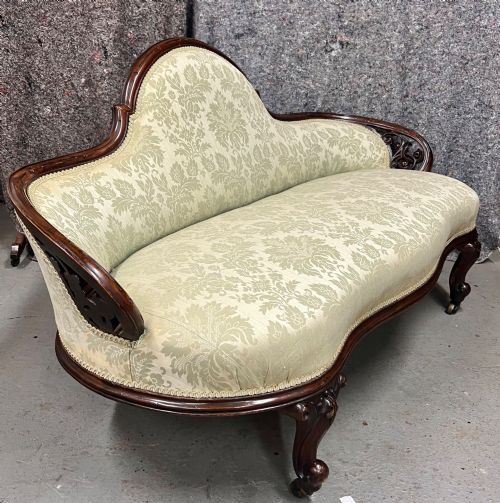
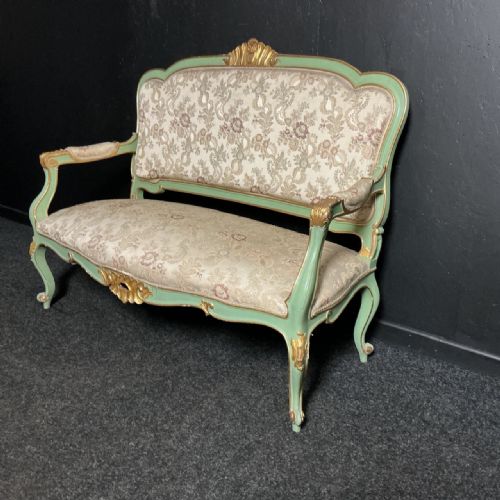
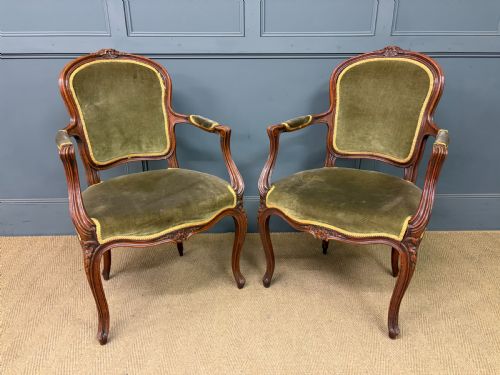
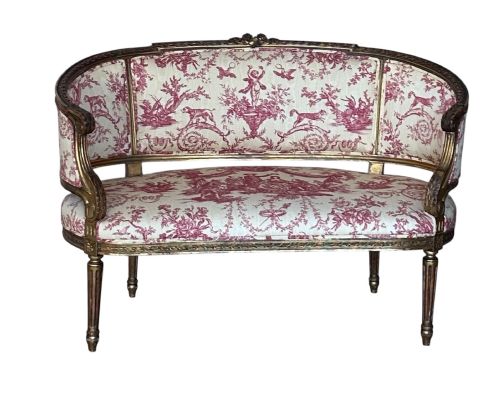
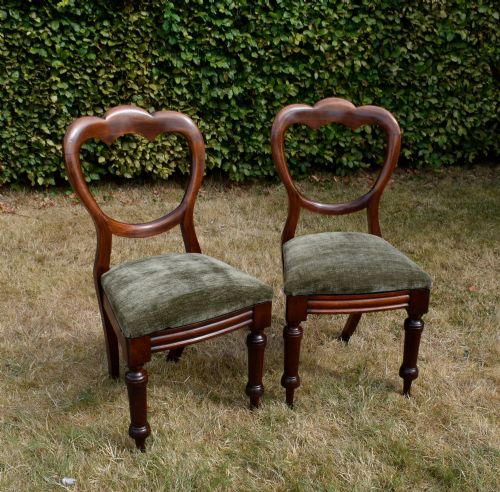
The inventory on this page consists predominantly of armchairs, small sofas, side chairs and multi-piece suites. Forms range from Louis XV style canapés and giltwood fauteuils to walnut nursing chairs and inlaid mahogany settees.
Origins stretch from nineteenth-century French workshops to Edwardian cabinet makers in Britain. These pieces span the Victorian, Edwardian and Art Nouveau periods, reflecting varied domestic fashions across decades.
Materials and construction methods
Frames rely on hardwoods such as mahogany, walnut, oak and kingwood, chosen for strength in carved components. Cabinet makers employed mortise and tenon joinery to stabilise complex curved rails on armchairs and sofas.
Surface ornamentation incorporates parcel gilt, paint finishes, parquetry and delicate string inlay. Metal elements include ormolu mounts and polished brass details fixed to structural corners.
Upholstery relies on traditional fabric coverings, including tapestry panels, needlepoint and patterned velvet. Interior stuffing required dense padding secured over webbing and springs within the timber frame.
Vintage Salon Seating Retail Price Guide 2026
Typical asking prices for vintage salon seating among the pieces listed under this phrase on Sellingantiques today, from the lower quarter to the upper quarter. They describe what is for sale here now, not the wider market.
Object forms include open armchairs, settee suites, nursing chairs and side chairs upholstered in tapestry and velvet.
Distinctions in quality and execution
Quality rests upon the crispness of the hand-carved detail in the wood and the integrity of the underlying joinery. Superior examples display deep relief carving in walnut or mahogany without distortion in the curves of the frame.
The refinement of surface finishes separates standard items from finer works. Giltwood pieces demonstrate precise application of leaf over preparatory gesso, whilst inlaid items show seamless alignment of veneers.
Textiles and upholstery execution dictate the overall finish. Original tapestry panels or needlepoint work executed with tight, even stitches elevate the piece above plain replacement fabrics.
The Vintage Salon Seating Glossary
- Fauteuil
- An open-framed armchair with wooden armrests, originating in France during the seventeenth century. These chairs typically feature exposed carved woodwork around the back and seat rail.
- Canapé
- A decorative settee or small sofa featuring an exposed wooden frame and upholstered back. They mirror the stylistic details of contemporaneous fauteuils.
- Ormolu
- Gilded bronze mounts applied to furniture for decorative effect. Makers used these cast metal ornaments to highlight the corners and aprons of high-status pieces.
- Parquetry
- Geometric patterns formed by fitted wood veneers laid onto a carcase. This technique appears on tabletops and chair rails using contrasting timbers such as kingwood and mahogany.
- Bergère
- An enclosed upholstered armchair featuring solid sides filled with cane or upholstery. The seat usually incorporates a loose down cushion over a sprung base.
Vintage Salon Seating: Frequently Asked Questions
How do I use salon chairs today?
Salon chairs function effectively as accent seating in living rooms, bedrooms or studies. Their modest scale allows them to fit into corners where larger armchairs prove too bulky.
Pair an open armchair with a small side table to create a functional reading corner. Avoid placing antique upholstered pieces in direct sunlight to protect fragile silk or tapestry fabrics.
What is a French salon suite?
A salon suite consists of a matching set of seating furniture, typically comprising a small sofa alongside a pair or set of armchairs. These suites were manufactured for formal drawing rooms to provide uniform seating for guests.
Matching suites offer a cohesive decorative scheme for large reception spaces. Individual pieces from a broken suite still function independently as statement chairs.
Can I reupholster antique salon seating?
Upholstery can be replaced when the existing fabric is worn or damaged. Traditional stuffing and webbing methods should be maintained to preserve the correct profile of the piece.
Select reproduction textiles such as tapestry, needlepoint or patterned velvet to match the historical period. Professional upholsterers ensure the tension remains correct across sprung seats.