





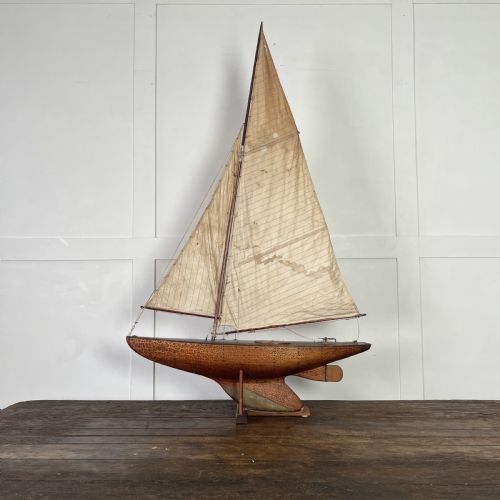
Vintage Sailing Vessel
These vintage sailing vessel works capture the drama of the sea through period paintings, models, and dioramas.
Vintage Sailing Vessel
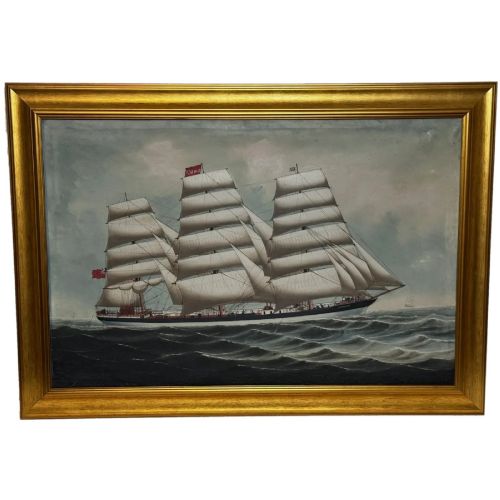
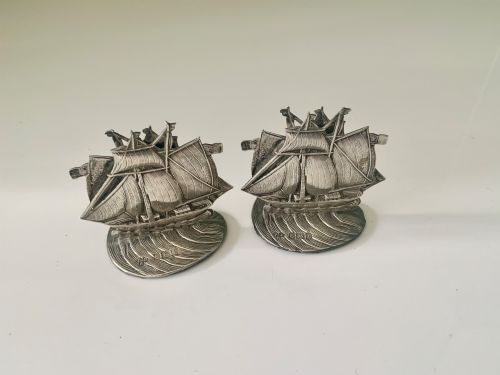
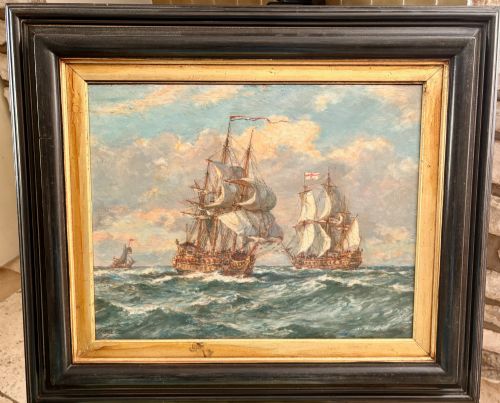
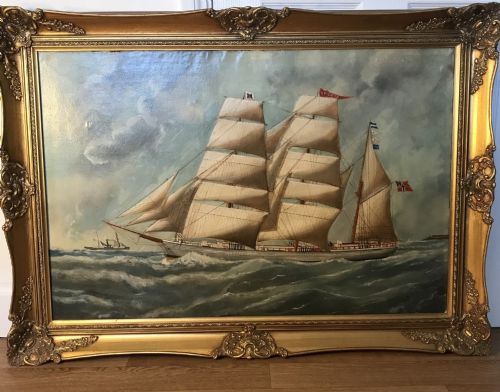
A vintage sailing vessel search brings together maritime oil paintings, watercolours, cased dioramas, and scratch-built ship models spanning the Victorian era through the mid-twentieth century. Buyers encounter depictions of named clippers, barques, and schooners alongside folk art pieces created in bottles and on wooden plinths. The selection reflects both formal academic marine art and vernacular craft from British, European, and international workshops.
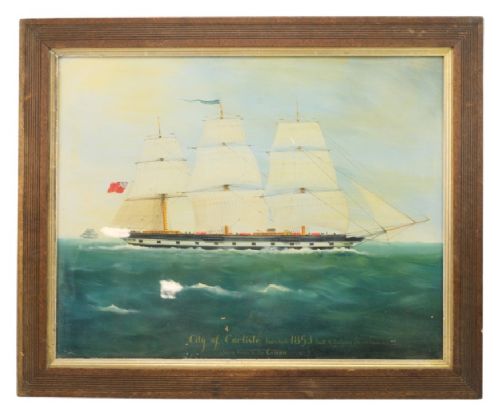
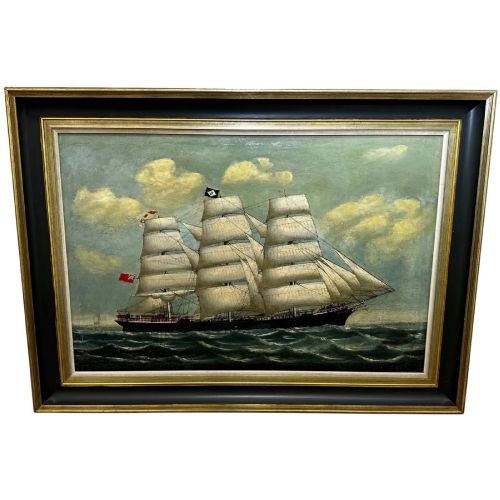
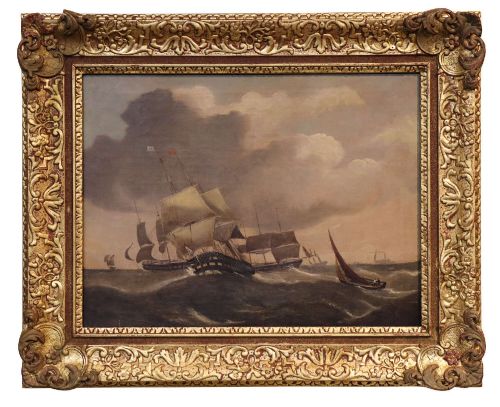
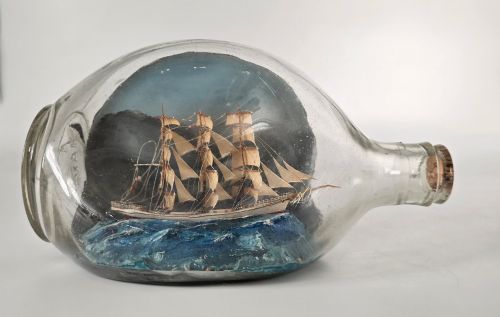
Oil paintings on canvas and board dominate the pictorial entries, frequently recording specific vessels like the Cutty Sark or the Thermopylae in choppy waters or coastal settings. Model ships enclosed in glass cases or glass bottles represent another major category, preserving intricate rigging and hull details through meticulous manual assembly. Together, these objects document maritime history across the nineteenth, Edwardian, and mid-century periods.
Materials and construction methods
Makers utilised traditional canvas, oil paint, and watercolour on paper to render seascapes and ship portraits, employing layered glazes to capture transparent water and dramatic atmospheric light. Canvas supports are often mounted on wooden stretchers, while works on paper utilise card or heavier waterleaf substrates.
Three-dimensional pieces rely on carved wood, paper, and canvas sails, assembled with cordage and paint inside wooden hulls. Dioramas frequently incorporate glass display cases and glass bottles to protect the delicate rigging and painted backdrops from dust and humidity.
Vintage Sailing Vessel Retail Price Guide 2026
Typical asking prices for vintage sailing vessel among the pieces listed under this phrase on Sellingantiques today, from the lower quarter to the upper quarter. They describe what is for sale here now, not the wider market.
Several makers squeezed full three-masted sailing ships through narrow bottle necks, leaving no obvious trace of how the rigging was raised.
Assessing quality in maritime works
Quality in painted depictions depends upon the artist's grasp of maritime architecture, rigging accuracy, and the natural movement of water and wind. Superior works demonstrate confident brushwork, accurate vessel proportions, and nuanced control of light during stormy or tranquil conditions.
For models and dioramas, craftsmanship is judged by the precision of scale, the neatness of rigging, and the preservation of original components. Pieces that maintain their structural integrity without replacement sails or modern adhesives show greater fidelity to their period of origin.
Reginald Arthur Borstel·Bernard Gribble·Lai Fong·William Frederick Settle·George Shaw·Frank Wood·Joseph Heard·Paul Jean Clays·Fred Mayor·Dion Pears
The Vintage Sailing Vessel Glossary
- Barque
- A sailing vessel with three or more masts having the fore- and mainmasts square-rigged and the mizzenmast fore-and-aft rigged. This rig allowed for efficient ocean-going trade during the nineteenth century.
- Diorama
- A three-dimensional scene enclosed in a glass-fronted case, often combining painted backgrounds with physical model ships and sculpted plaster waves. These displays created a convincing illusion of depth.
- Clipper
- A very fast nineteenth-century merchant sailing ship with three masts and a square rig, built for speed on trade routes. They are frequently depicted in high seas or entering harbour.
- Folk Art
- Objects created by self-taught makers using accessible materials like wood, glass, and canvas, often outside the formal traditions of academy painting. Ship models in bottles fall into this expressive category.
- Seascape
- A painting, photograph, or other work of art that depicts the sea, ships, and coastal views. These works range from calm coastal scenes to turbulent open ocean battles.
Vintage Sailing Vessel: Frequently Asked Questions
How are ship models preserved?
Most models remain protected inside sealed glass cases or glass bottles to shield fragile rigging from dust and accidental damage. Owners should keep these pieces away from direct sunlight and dramatic temperature fluctuations to prevent wood shrinkage.
Cleaning requires extreme care, utilising gentle air currents rather than liquids or cloths that might catch on fine cordage or painted surfaces.
What periods do these pieces represent?
The available selection spans from the early nineteenth century through the Edwardian period and into the mid-twentieth century. Victorian examples often feature detailed oil paintings of named clippers and heavy seas.
Later pieces from the 1920s and 1930s frequently include folk art models and watercolours that continue the maritime tradition.
How do I identify the ship in a painting?
Many marine paintings include inscriptions on the canvas, stretcher bars, or original frames detailing the vessel name, builder, or historic voyage. Researching the Harland & Wolff or specific shipping lines can also reveal the context of the depicted scene.
Signature analysis helps attribute the work to known marine artists of the nineteenth and twentieth centuries.
Where should I display a diorama?
Dioramas require stable surfaces away from high-traffic areas where vibrations might dislodge internal elements. Placing them on sturdy wooden plinths or dedicated sideboards ensures they remain secure.
Ambient indoor lighting works best to showcase the painted backdrops and sculptural waves without fading the pigments over time.