


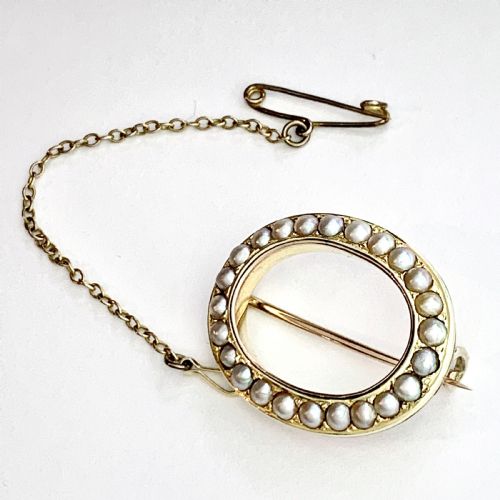


Vintage Safety Pin
A vintage safety pin, better known here in brooch and pin forms, brings precious gold and gems to everyday fastening with enduring charm.
Vintage Safety Pin
When you search for a vintage safety pin, you are looking at brooches and pins spanning the Victorian, Edwardian, Art Deco, and later vintage periods. These pieces take the familiar utilitarian fastener and elevate it into jewellery through precious metals and gemstones.
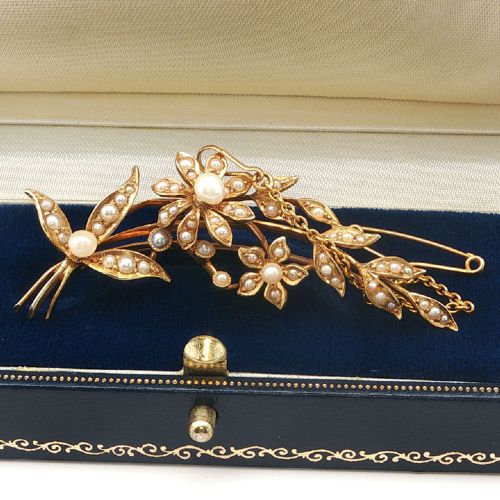
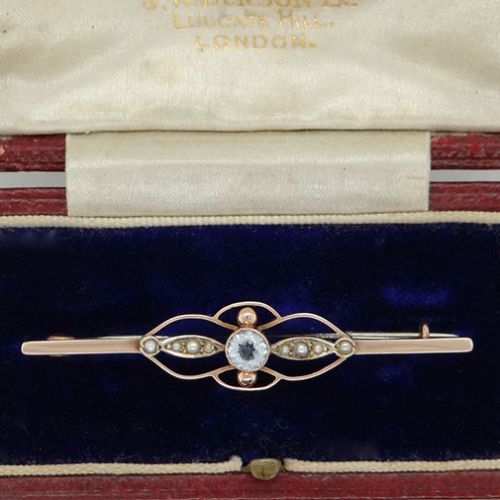
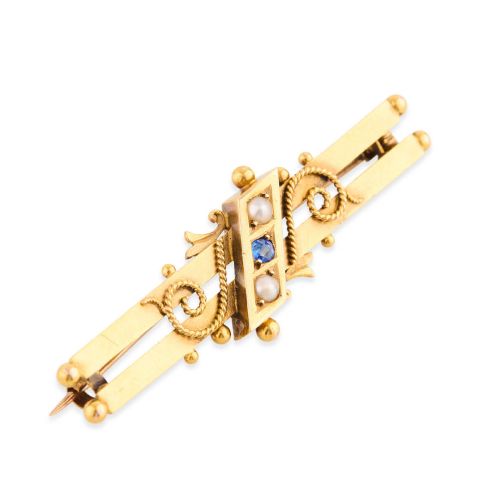
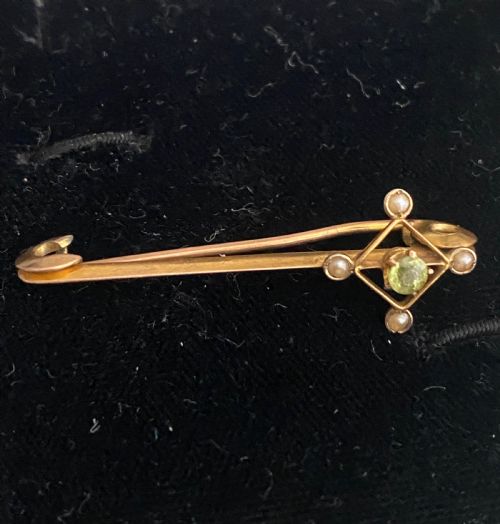
The version you are most likely to meet on this page is a bar brooch or cluster pin fashioned from nine-carat or fifteen-carat gold. They often feature delicate arrangements of pearls, seed pearls, aquamarines, sapphires, diamonds, and peridots.
Originating across the late nineteenth and well into the twentieth century, these items served both decorative and practical purposes on lapels and collars. Their enduring appeal lies in this combination of secure fastening and fine gem-set design.
How they were made
The foundation of these pieces relies upon yellow and rose gold, predominantly in nine-carat and fifteen-carat standards, shaped into pins, bars, and double bars. Goldsmiths soldered secure mechanisms and tiny bezels or settings to hold the stones firmly in place.
Gemstones including diamonds, sapphires, aquamarines, garnets, opals, and citrines were carefully cut and mounted alongside pearls and seed pearls. Enamel work also appears on select items, adding colour and contrast to the gold framework.
The current listings span periods from the Victorian era through the nineteen-fifties, featuring gold, pearls, diamonds, and sapphires in various brooch formats.
What varies in quality
Quality in these pins rests on the weight and purity of the gold used, with fifteen-carat pieces offering a richer metal content than standard nine-carat alternatives. The fineness of the goldwork dictates the overall substance of the item.
The selection and matching of stones also define the upper tier of pieces, particularly where matched pearls, bright sapphires, or old-cut diamonds are integrated. Superior craftsmanship shows in the neatness of the stone settings and the harmonious arrangement of floral sprays, crescents, or clusters.
The Vintage Safety Pin Glossary
- Seed pearl
- A very small, naturally formed or cultured pearl used in delicate clusters and floral motifs. They are characteristic of Victorian and Edwardian jewellery.
- Old cut diamond
- A hand-faceted diamond shape typical of older periods, featuring a smaller table and a higher crown than modern brilliant cuts.
- Cluster brooch
- A piece featuring a central gemstone surrounded by a border of smaller stones, such as pearls or garnets. This arrangement maximises visual impact on a garment.
Vintage Safety Pin: Frequently Asked Questions
How were these vintage safety pins worn?
These pieces served primarily as decorative brooches pinned to the lapel, collar, or breast of a garment. They often secured scarves or lace in addition to their ornamental function.
Victorian and Edwardian wearers utilised them to add a touch of gold and gemstone colour to daily attire, blending practicality with style.
What periods do these pins represent?
The listings encompass Victorian, Edwardian, and Art Deco eras, alongside mid-century decades up to nineteen-fifty. Each period brings distinct design characteristics.
Victorian and Edwardian examples lean towards seed pearls and floral motifs, while later pieces often showcase geometric lines or bolder gem groupings.
What materials are commonly used?
Gold forms the primary metal structure, seen in nine-carat yellow gold, nine-carat rose gold, and fifteen-carat gold standards. Certain items incorporate higher or unmarked gold content.
Gemstones featured include diamonds, sapphires, aquamarines, peridots, opals, garnets, and citrines, frequently accompanied by pearls and split pearls.
How do I care for a vintage pin?
Store each brooch safely in a lined box or pouch to protect the delicate goldwork and mounted stones from scratching. Avoid wearing them during physical activities.
Clean the metal and gems gently with a soft cloth, taking care not to submerge pearls in liquid cleaning solutions.