


Vintage Ruby Diamond Ring
A vintage ruby diamond ring brings together deep red corundum and brilliant diamonds in gold or platinum settings crafted across the twentieth century and earlier.
Vintage Ruby Diamond Ring
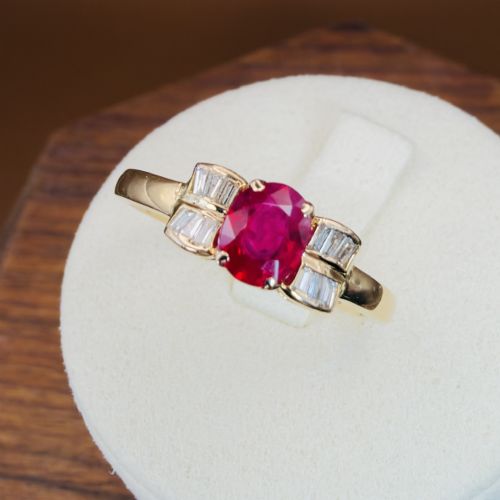
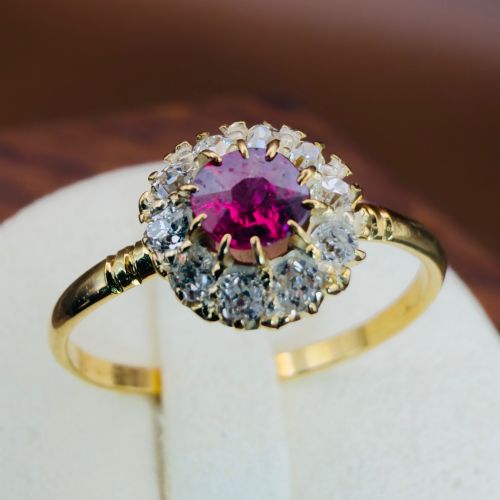
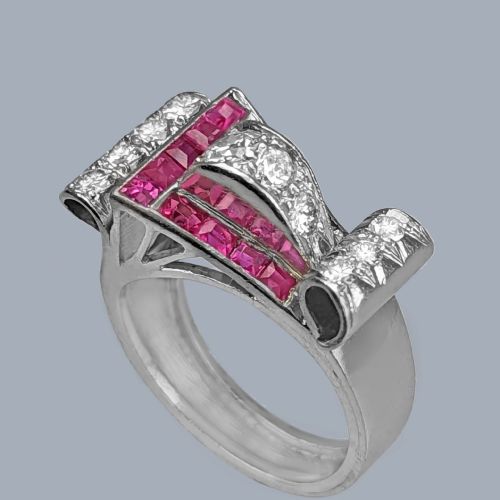
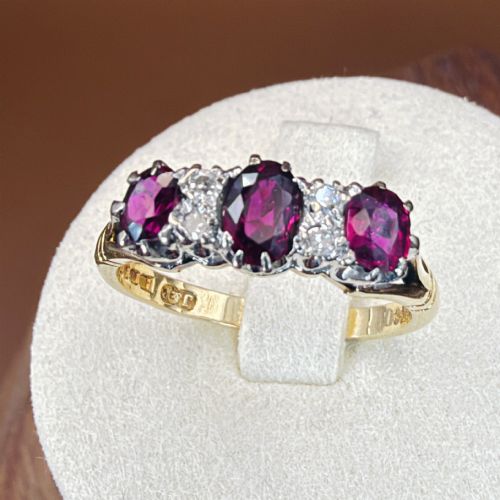
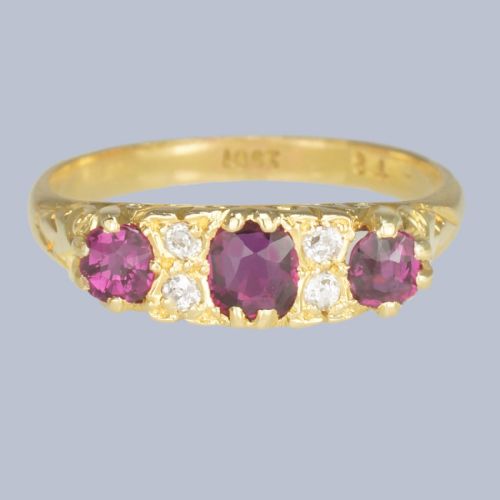
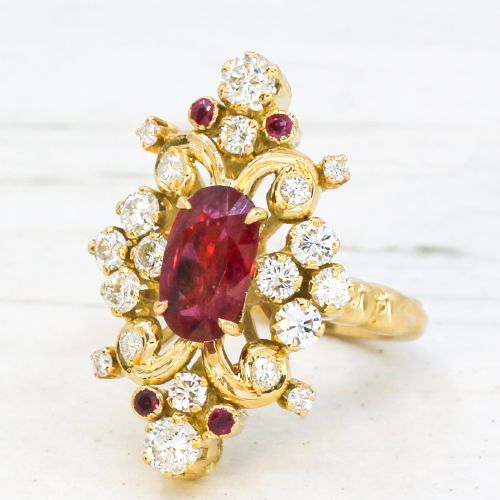
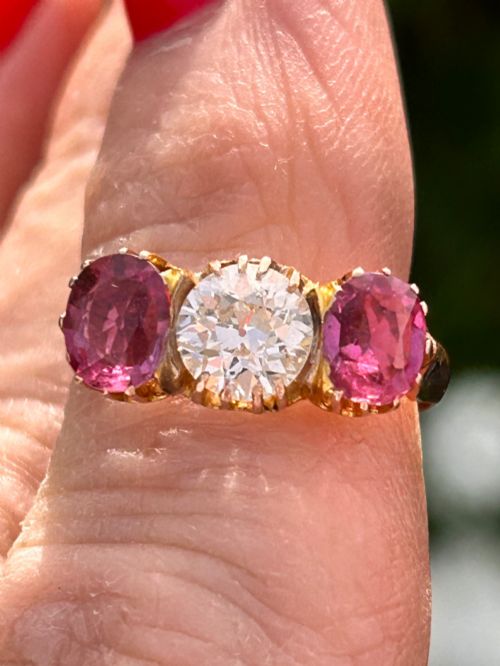
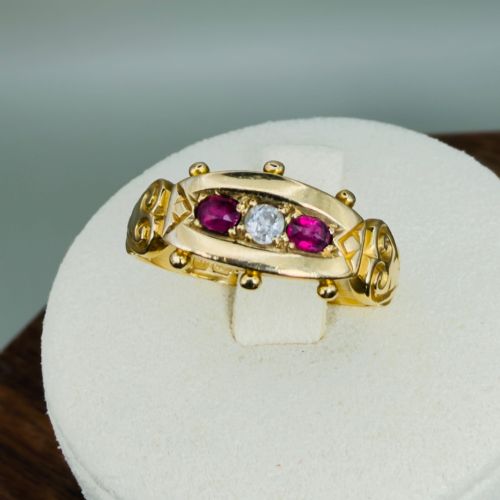
A vintage ruby diamond ring combines rich red rubies with contrasting diamonds, appearing primarily as cluster, halo, trilogy, and five-stone band configurations. These pieces span Victorian, Edwardian, Art Deco, and mid-century design periods.
Buyers encounter rings ranging from late nineteenth-century craftsmanship to mid-century modern variations, reflecting shifting aesthetic preferences through the decades. These items serve as both daily wear accessories and historic dress pieces.
How they were made
Makers set rubies and diamonds into 18ct yellow gold, 18ct white gold, and platinum using claw, bezel, and illusion settings that evolved from heavy Victorian castings to delicate Art Deco geometry. Craftsmen often paired platinum heads with yellow gold shanks during the early twentieth century to enhance white stone brilliance while keeping warm metal tones on the band.
Cut styles range from old mine and old European cuts in earlier pieces to baguettes and modern brilliant cuts in later decades, reflecting the development of lapidary techniques. Gemstones are frequently secured by hand-cut prongs or integrated into intricate milgrain-edged mountings characteristic of Edwardian and Deco workshops.
Vintage Ruby Diamond Ring Retail Price Guide 2026
Typical asking prices for vintage ruby diamond ring among the pieces listed under this phrase on Sellingantiques today, from the lower quarter to the upper quarter. They describe what is for sale here now, not the wider market.
Some rings tuck tiny diamonds right into the shoulders, whispering extra sparkle just for the wearer.
What varies in quality
The quality of a vintage ruby diamond ring rests upon the saturation and natural origin of the ruby, alongside the cut and clarity of the supporting diamonds. Burmese stones carrying specific geographic certifications often command higher interest among collectors compared to uncertified equivalents.
Metalwork execution dictates structural integrity, where sharp hand-carved shoulders, intact milgrain borders, and substantial shank thickness separate master-worked items from standard production pieces. Original hallmarks and clear maker stamps preserve historical context and confirm metal purity.
Kutchinsky
The Vintage Ruby Diamond Ring Glossary
- Cluster ring
- A design featuring a central gemstone surrounded by a border of smaller stones, commonly configured in floral or target arrangements.
- Old cut
- A diamond facet style hand-polished before modern machine standards, typically displaying smaller tables and larger culets.
- Navette
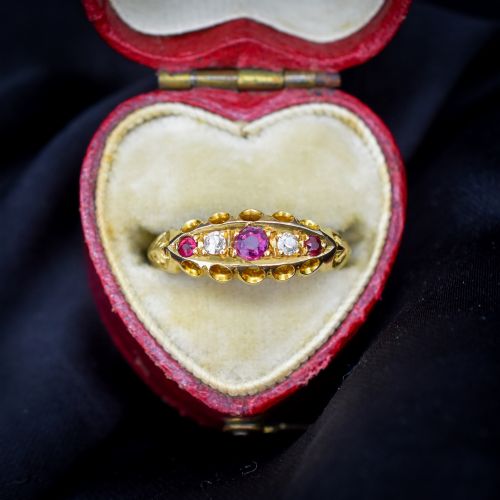
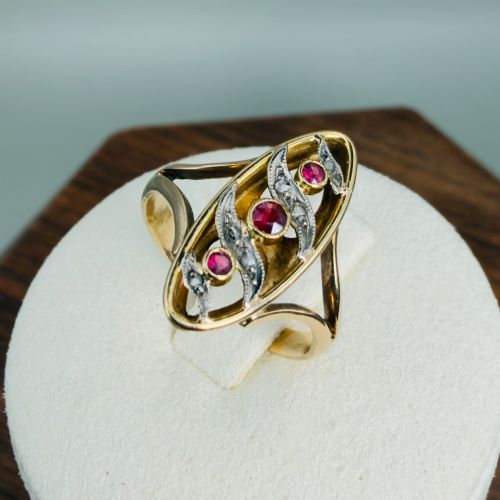
- A boat-shaped gemstone arrangement with pointed ends, popular during the late Victorian and Edwardian eras.
- Trilogy ring
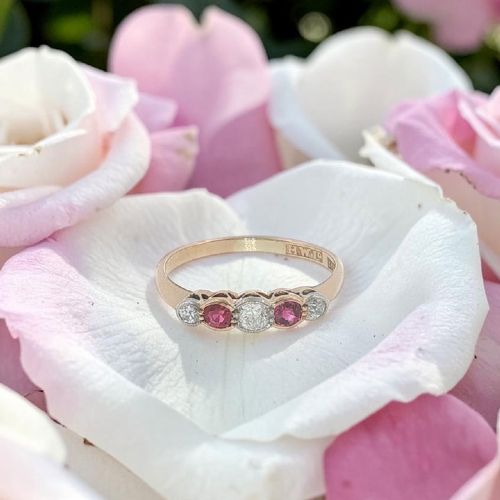
- A three-stone ring symbolising past, present, and future, frequently set with graduated diamonds and rubies.
- Milgrain
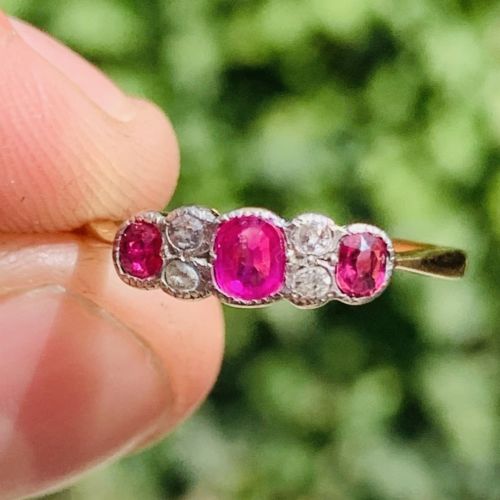
- A decorative border of tiny raised metal beads applied along the edges of platinum or gold settings.
- Gypsy ring
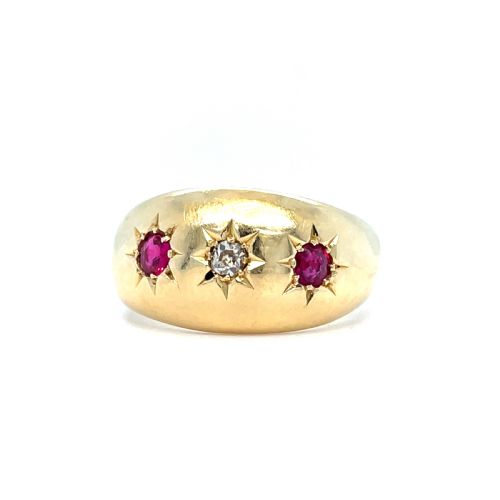
- A band style where gemstones are flush-set directly into the thick metal surface of the hoop.
Vintage Ruby Diamond Ring: Frequently Asked Questions
How do I care for a vintage ruby diamond ring?
Clean these pieces gently using warm soapy water and a soft brush, avoiding harsh chemical ultrasonic cleaners that might damage natural inclusions within the ruby.
Store the ring separately in a fabric-lined box to prevent harder diamonds from scratching neighbouring gold settings or softer gem surfaces.
Can these rings be resized easily?
Most gold and platinum bands can be altered by a skilled jeweller, though intricate shoulders or complete halo designs require careful handling to preserve structural details.
It is advisable to check the condition of the lower shank and any surrounding channel or flush settings before undertaking any adjustment.
What does unheated ruby mean?
An unheated ruby has not undergone thermal enhancement to improve its natural colour or clarity, retaining its original atomic structure formed within the earth.
Gemmological reports accompany many such stones to verify this natural state, which influences collector interest.
How do I distinguish Edwardian from Art Deco styles?
Edwardian pieces rely on platinum and yellow gold with lacy openwork, floral motifs, and soft curves that lean into romantic ornamentation.
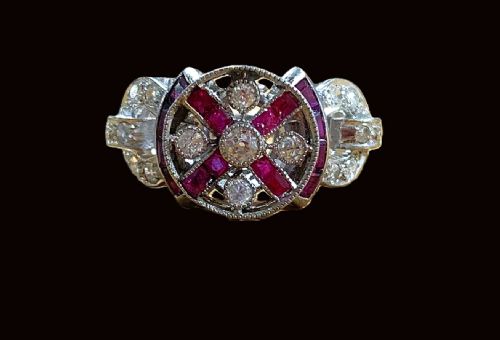
Art Deco examples introduce stark geometric lines, symmetrical baguette pairings, and crisp white metal structures that reflect modernist architecture.